In Brief
- Narrator: Adam Hanin delivers a measured, respectful reading that suits the biography's careful scholarship and avoids sensationalizing a story that contains plenty of sensational material on its own.
- Subjects: pop stardom and its psychological costs, sibling legacy and identity, addiction and the collapse of a career
- Tone: Elegiac and thoroughly researched
- Bottom line: For listeners who want the definitive account of Andy Gibb's short and genuinely turbulent life, this audiobook provides depth that the documentary treatments have not.
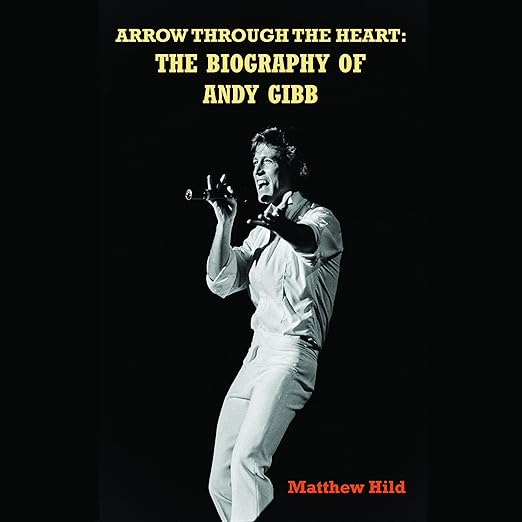
Andy Gibb's three consecutive number-one singles arrived between 1977 and 1978, and the fact that most people cannot name all three without prompting is itself part of Matthew Hild's argument in this audiobook biography. The book opens into a career that was genuinely enormous and then, with a speed that the biography treats as the central mystery, genuinely gone. Hild spent years assembling the account: archival interviews with Gibb and his family, nearly fifty new interviews with friends and associates, and the kind of research depth that puts an end to the question of whether this story had been told properly before. It had not.
Adam Hanin narrates across eight hours and fifty minutes. His voice has the quality of a careful reader rather than a performer, which is precisely what this audiobook needs. Hild's biography is dense with detail, and the material is emotionally complex in ways that operatic narration would distort. When Hanin reads through the list of Gibb's achievements, the Solid Gold co-hosting, the Broadway run in Joseph and the Amazing Technicolor Dreamcoat, the rapid subsequent collapse, the facts are doing enough work without additional emphasis.
From HBO Documentary to Deeper Research
Hild's research is the foundation that makes everything else possible. The archival interviews with Andy Gibb and members of his family, combined with new interviews from nearly fifty friends and associates, give Arrow Through the Heart a textural richness that distinguishes it from tribute writing. Reviewer "reader" captures something important when they describe being unable to put the book down after watching the HBO Bee Gees documentary, then finding "so many details" in Hild's book that exceeded what the documentary could contain. Reviewer Stephanie confirms the same trajectory: documentary first, then biography, and the biography answering questions the documentary raised.
That documentary context is worth acknowledging for listeners coming to this audiobook through a similar path. The Bee Gees: How Can You Mend A Broken Heart brought the Gibb family story back into wide circulation, and it generated renewed interest in Andy specifically, the youngest and most troubled brother. Hild's biography was positioned to answer the questions that documentary format cannot accommodate, and across nearly nine hours it does exactly that.
Solid Gold and Broadway Before the Decline
The biography's treatment of Gibb's television career is one of its stronger sections. His run as co-host of Solid Gold beginning in 1981, and his subsequent role on Broadway, represent a period of Gibb's career that is often overshadowed by the later narrative of collapse. Hild gives these years adequate space, which allows the later decline to register with more weight. The reader understands what was being lost as it was being lost, rather than only in retrospect.
The substance abuse narrative is handled without sensationalism. Hild is writing biography, not cautionary tale, and the distinction matters. Gibb's insecurity, depression, and cocaine use are documented as factors in a life rather than as the life's primary drama. This approach requires some patience from listeners who want the tabloid version, but it produces a more accurate and ultimately more affecting account of how a career and a life can unravel simultaneously. Reviewer Addison notes that the Victoria Principal relationship feels somewhat compressed, and this is a fair observation in an otherwise thorough account. At nearly nine hours, Hild covers extraordinary ground and the compressions are few; they stand out precisely because the surrounding research is so detailed.
Hanin Does Not Differentiate the Interview Subjects
Hanin's narration does not attempt to differentiate between the many interview subjects Hild quotes throughout the biography. This is an appropriate choice for a scholarly biography, but listeners accustomed to full-cast audio productions will notice the absence of vocal differentiation during extended quotation sections. The material is attributed clearly in the text, and Hanin's consistent delivery prevents confusion, but the distinction between Hild's narration and quoted sources is sometimes subtle in audio form. Listeners who find this distracting in the early chapters will find it less noticeable once the biography's rhythm is established, typically around the second hour.
At eight hours and fifty minutes, Arrow Through the Heart requires a commitment that mirrors the depth of the research. This is not a quick portrait. It is a full biography of a figure who has been underserved by prior coverage, and Hild takes his subject seriously enough to resist compression. Listeners who engage with the audiobook in sessions rather than marathon runs will find the episodic structure of Gibb's career provides natural stopping points across the nearly nine-hour runtime.
Documentary Fans Get the Depth They Wanted
Listeners who came to Andy Gibb through the HBO Bee Gees documentary and wanted more will find this audiobook provides exactly the depth that documentary format cannot accommodate. Fans of serious music biography, particularly biographies that engage with the psychological dimensions of celebrity alongside the factual record, will find Hild's approach more satisfying than most pop star biographies. The research is genuine and the argument is sustained across the full runtime.
Those looking for a quick introductory portrait of Gibb rather than a comprehensive biography may find the nine-hour runtime more than they need. And listeners who want the emotional register of tribute writing rather than scholarly biography should adjust expectations accordingly. Hild respects Andy Gibb enough to tell the difficult parts without softening them, and that honesty is the audiobook's greatest asset. The research depth visible on every page, and audible in every chapter Hanin reads, is what separates Arrow Through the Heart from the books it will be shelved beside.
Good to Know
How does this audiobook handle Andy Gibb's substance abuse and personal struggles?
Hild treats these as documented factors in a life rather than the primary dramatic engine of the biography. The approach is scholarly rather than sensationalist. The decline is given full coverage, but it exists within a context of achievement and complexity that prevents the audiobook from reading as a cautionary tale.
Does Adam Hanin's narration suit the subject matter of this audiobook?
Yes. Hanin's measured, scholarly delivery matches Hild's biography well. The narration resists dramatizing material that is already emotionally loaded, which is the correct approach for this kind of detailed, research-driven biography. Listeners expecting a more theatrical performance may find it restrained, but that restraint is appropriate to the content.