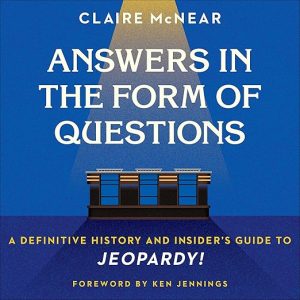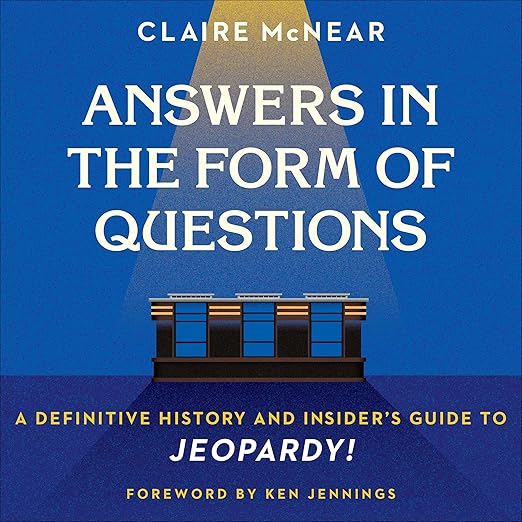
Alex Trebek's own voice runs through much of this audiobook, not literally, but through extended interview material Claire McNear gathered with the longtime host about his life, his legacy, and the show he anchored for decades. Answers in the Form of Questions is structured as an insider's history of Jeopardy!, built from access to producers, writers, and the contestants who became the show's most memorable champions, and that access is the book's real value proposition.
The Clue Crew's Near-Disaster on a Glacier
McNear's reporting ranges from the mechanics of assembling a single night's game to the culture surrounding the show, bar trivia circuits, training regimens contestants use to prepare, and the specific behind-the-scenes stories that never made air, including, per the synopsis, a near-disaster with the Clue Crew almost sliding off a glacier during a location shoot. That range of material, historical, journalistic, and anecdotal at once, is what separates this from a straightforward corporate-history book about a television franchise.
The book's final chapter looks forward rather than backward, addressing the show's transition into what the synopsis calls 'unprecedented change' after decades under one host. One reviewer specifically praised reading that chapter with the benefit of hindsight, since real events unfolded after the book's publication, suggesting Answers in the Form of Questions has aged into an even more useful document than it was at initial release.
An Amateur Farm League for Trivia Whizzes
The synopsis calls Jeopardy! a record-setting game show, and McNear backs that framing with real structural detail: the show's nearly four-decade run under one host before this book's own publication, its position as what the synopsis calls a proving ground for many of North America's best and brightest, and its transition into celebrity cameos and Saturday Night Live spoofs that turned a straightforward trivia format into a genuine piece of American television furniture rather than a niche daytime program.
The contestant-preparation culture gets real attention too: dedicated bar trivia circuits functioning as an amateur farm league of sorts, and formal training sessions where self-described trivia whizzes drill in preparation for an actual shot at the show. That reporting treats trivia mastery as a real, cultivable skill with its own subculture and training methods, rather than treating champions as simply gifted with random encyclopedic memory, a more interesting and more accurate frame than the casual viewer's assumption usually allows for.
Jeopardy!'s reach beyond the show itself gets real attention too, from its influence on trivia culture generally to its role as a genuine career springboard for some contestants; several past champions have gone on to media careers built substantially on their run on the show. McNear treats this ripple effect as part of the show's actual cultural footprint rather than a mere footnote to the gameplay itself.
Few American game shows have generated this much serious cultural writing, and the reasons are worth naming directly: Jeopardy!'s format rewards genuine knowledge over luck or physical stunts, which has made it a specific kind of cultural touchstone, a marker of intelligence and preparation rather than pure entertainment spectacle. McNear's book benefits from that reputation; an insider history of a show built around trivia mastery has a built-in audience that a similar book about a purely luck-based game show likely wouldn't attract at the same scale.
Writing about a show mid-transition is a real structural challenge for any nonfiction author, since the ending isn't settled the way it would be for a completed historical event, and McNear handles that uncertainty by grounding her forward-looking material in reporting and direct quotes from the people actually making decisions about the show's future rather than in her own speculation. That choice, sourced uncertainty over invented confidence, is a small but real craft strength worth noting.
One Listener Could Hear Alex's Voice
Devon Sorvari narrates, and this specific pairing of narrator and material has no track record to draw on yet in terms of prior reviewed work; that's worth stating honestly rather than assuming competence. What the reviews do confirm is that the material itself lands: one listener wrote they 'could hear Alex's voice' while going through the book, a strong sign that the narration successfully gets out of the way of Trebek's own quoted material rather than competing with it.
A Quick Read Despite the Long Runtime
At seven hours and three minutes, the book covers a genuinely large scope, the show's full history from the 1960s original format through the post-Trebek transition, without feeling rushed. One reviewer specifically wished for more after finishing, calling it a quick read despite the runtime, a good sign for a nonfiction title in this length range.
McNear reports as a journalist by trade, and that background shows in how the book balances affectionate fandom with genuine investigative distance; the material never reads as pure hagiography of the show, even while clearly written by someone who loves it. That balance is harder to strike than it sounds, and it's part of why multiple reviewers specifically call the book a definitive treatment rather than just an enthusiastic fan tribute.
At 4.6 from 537 ratings, reception sits solidly in line with well-regarded single-subject pop-culture nonfiction generally, a reasonable signal of quality for browsers who don't yet know McNear's reporting track record independently.
'The Definitive Guide,' and It Means It
This is explicitly a fan's book, built for people who already have some baseline affection for Jeopardy! rather than a general cultural history that happens to use the show as its subject. Listeners with no prior interest in the show specifically should expect the material to lean heavily on assumed familiarity with format, terminology, and famous past champions.
One reviewer called it 'the definitive guide' for fans specifically, covering everything from what it's like to appear on the show to alumni life to Trebek's personal story to strategic nuance in gameplay; that word, definitive, sets real expectations. Casual viewers looking for a lighter overview may find more depth here than they were looking for.
Answers as Questions, Turned Into a Metaphor
The show's format itself, contestants phrasing responses as questions, gives the book its title, and McNear treats that structural quirk as more than trivia; the synopsis frames the entire book as tracing where the show is going next, using the format's own internal logic, question and answer literally inverted, as a small, recurring metaphor for a show that has spent decades reinventing familiar material inside a fixed structure.
A Baseline of Affection This Book Assumes
Longtime Jeopardy! viewers, former or aspiring contestants, and trivia enthusiasts generally are the clearest audience, especially anyone who wants the specific texture of Trebek's own words on his life and the show's culture rather than a secondhand summary of it.
Skip it if you're looking for a general history of American game shows rather than a Jeopardy!-specific deep dive, or if you have limited existing interest in the show itself; the book's considerable strengths depend on a baseline of affection this specific audiobook assumes rather than builds from scratch.
Quick Take
- Narration: Devon Sorvari narrates without a prior track record on file, though listeners report the material lands cleanly.
- Themes: Television history, fan culture, behind-the-scenes reporting
- Mood: Nostalgic, detailed, built for genre fans
- Verdict: A genuinely definitive fan history of Jeopardy!, best suited to listeners who already love the show.
Frequently Asked Questions
Does this audiobook include Alex Trebek's own words and interviews?
Yes, extended interview material with Trebek about his life and the show's legacy runs throughout, and reviewers specifically note being able to hear his voice in the material even without him as narrator.
Is this Jeopardy! audiobook accessible to casual viewers or only devoted fans?
It leans toward devoted fans. The material assumes real familiarity with the show's format and history, so casual viewers may find some sections more detailed than they need.
Does the audiobook address the show's transition after Alex Trebek's death?
Yes, the final chapter looks forward to what the synopsis calls the show's period of unprecedented change, and at least one reviewer notes the chapter reads even more meaningfully with the benefit of later hindsight.
How long is the Answers in the Form of Questions audiobook?
Seven hours and three minutes, covering the show's history from its 1960s origins through its post-Trebek transition.