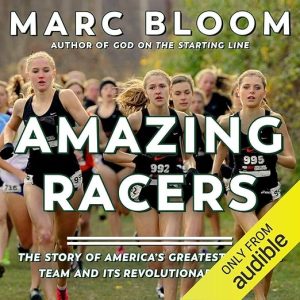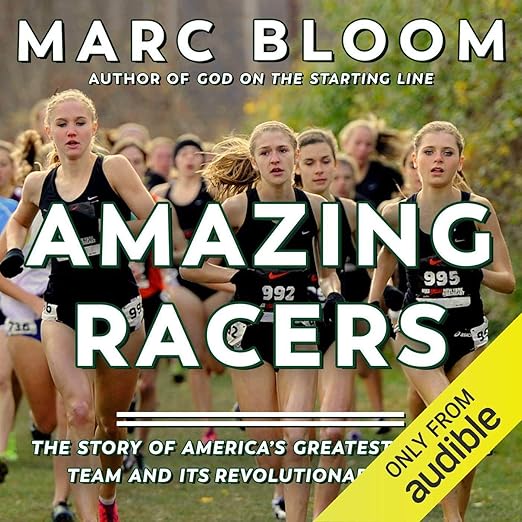
Sports writing at its best does not just document what happened; it explains why it happened in a way that makes you feel the specific gravity of the moment and the specific texture of the lives involved. Marc Bloom understood that contract when he spent years following the cross-country teams of Fayetteville-Manlius High School in upstate New York, and this audiobook is the result: sixteen hours that belong on the shelf of any listener interested in coaching philosophy, athletic culture, or the peculiar machine of American high school sports. Kevin Stillwell's narration carries the material with the right combination of urgency and affection.
The central fact of this book is simultaneously improbable and thoroughly documented: the Fayetteville-Manlius cross-country program, under coach Bill Aris, won nine out of ten national championships and produced teams whose performances defied the accepted parameters of American distance running. One year the F-M girls outran Kenyan counterparts who had come to Oregon as a showcase event. Another year they beat the second-place national team by an average of fifty-nine seconds per runner in a five-kilometer race, a margin that veteran coaches described as statistically inexplicable under conventional training models. The book's opening establishes these facts and then sets about explaining how they came to be.
Bloom is a veteran running journalist, and he is appropriately skeptical before he is persuaded. The early chapters establish what Aris is doing differently, drawing on elements that seem individually unremarkable: Spartan philosophical creeds, Kenyan training volumes adapted for American teenagers, rock music as motivational scaffolding, developmental psychology applied to gender-equal training structures. The suggestion is that their specific combination produces something genuinely new. The book does not oversell the mysticism of the Aris method. It shows the results and lets the reader draw conclusions.
What Stands Out
Kevin Stillwell handles the material with a voice that suggests genuine comfort with athletic environments, where effort is visible and measurable. His pacing across the sixteen-hour runtime is one of the audiobook's genuine strengths. Bloom's writing moves between race-day narrative, coaching philosophy, team psychology, and individual athlete portraits, and Stillwell finds the appropriate register for each mode. The race sections build urgency. The philosophical sections open up and breathe. The individual stories of specific runners, some of whom struggle initially and some of whom arrive already exceptional, land with appropriate emotional weight that Stillwell never oversells.
One reviewer who coaches high school cross-country describes enjoying the book for both its program-specific details and its broader coaching principles, noting that high school programs rarely get book-length treatment as serious subjects. That observation is right, and it points to something the audiobook does well: it takes the high school level seriously as an athletic environment rather than treating it as a prelude to college or professional competition. The F-M program is the story, not a background from which college careers later emerge.
The book also captures something beyond athletics, the specific quality of experience available at seventeen that is lost afterward. One reviewer quotes a passage about childhood perfection that resonated widely, and the book's best moments are those where Bloom captures not just athletic achievement but the texture of a particular moment in life before professional ambition arrives to complicate everything.
Things to Know Before Starting Amazing Racers
At sixteen hours and forty minutes, this is a substantial audiobook, and it earns most of that runtime but not all of it. The book follows the F-M program across multiple championship cycles, and some of the year-to-year coverage has a structural similarity that attentive listeners will notice around the midpoint. Race descriptions from one year to the next share narrative beats. Bloom varies the individual athlete stories enough to prevent full monotony, but listeners who are not intrinsically invested in the program's sustained dominance may find their attention tested during the middle section before the final championships deliver a satisfying payoff.
The book also sits squarely within the tradition of American athletic success narrative. The Aris method is presented as innovative and effective; the book does not spend significant time with programs that attempted to replicate it without comparable results, or with the questions about long-term physical development that intensive high school training programs periodically raise in sports medicine literature. Readers looking for a critical examination of American distance running culture will not find that here, but readers looking for an immersive account of a genuinely extraordinary program will find more than enough.
The gender-blind training element of Aris's program is also worth noting separately. F-M trains its boys and girls together for significant portions of the program, which was unusual in American high school athletics and which Bloom credits as a substantive factor in both programs' success. He spends time on the psychological and motivational dimensions of that choice, and coaches who have grappled with gender-segregated athletic development will find that section particularly worth attention.
Best Suited For
Runners of any competitive level will find this audiobook rewarding, particularly those interested in coaching philosophy and training methodology. High school and college coaches are the obvious target audience, but the book works equally well for recreational runners curious about what elite training looks like at a younger developmental level. Parents of student athletes in distance running events will find the account of Aris's approach to developmental psychology genuinely illuminating as context for their own athletes' experiences.
Listeners with no prior interest in running or athletic coaching may find the subject too specific to sustain engagement across sixteen hours. The book does not attempt to be anything other than a deep account of a specific athletic program and the people who made it extraordinary, and that specificity is both its strength and the limit of its appeal for non-specialist listeners.