- Narration: Hannah Church earns her starred Booklist praise, modulating between light anecdote and real hardship without jarring shifts.
- Themes: American celebrity biography, Nashville ambition and backlash, philanthropy and reinvention
- Mood: Warm but clear-eyed
- Verdict: A well-researched, emotionally honest biography carried by an unusually well-credentialed narration performance.
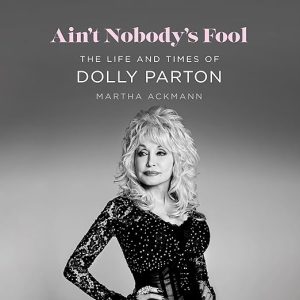
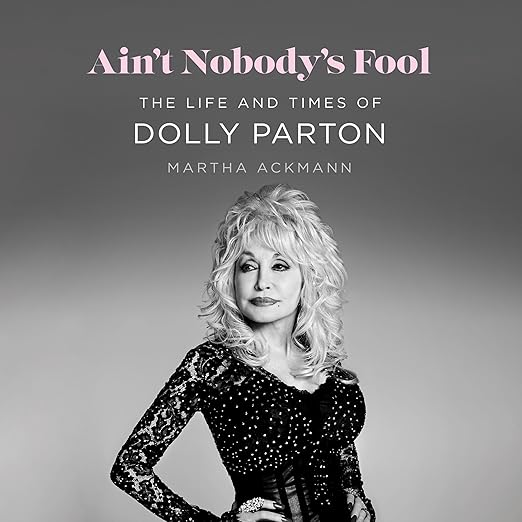
Dolly Parton's voice was dismissed once by a record executive as sounding like a screech owl, and Martha Ackmann opens her account of Parton's career with exactly that kind of contradiction between early rejection and eventual icon status. Ain't Nobody's Fool: The Life and Times of Dolly Parton traces the singer's path from an impoverished Smoky Mountains childhood to Dollywood, the Imagination Library, and a sixty-year recording career, and this audiobook arrives with an unusually specific credential already attached: a starred Booklist review praising Hannah Church's narration by name before most listeners have even pressed play.
A Starred Review That Names the Narration
That Booklist review is worth quoting directly, since it's rare for a synopsis to lead with this much narration-specific detail: Church 'delivers a performance that is both tender and resonant,' with her 'warm, emotionally nuanced voice' drawing listeners into Parton's story while 'capturing not just the facts of her life, but the spirit behind them.' The review specifically credits Church's pacing as 'thoughtful and deliberate,' allowing the emotional weight of Parton's harder chapters, depression, death threats, a near-collapse on stage, to fully register rather than getting rushed past.
Ackmann's research base is substantial: interviews with friends, family members, schoolmates, Nashville neighbors, band members, studio musicians, and producers all inform the account, and the synopsis is candid that Parton's ambition made her a target within Nashville's more conservative circles, drawing lawsuits and even a judge's threat of jail time along the way. That willingness to sit with the friction, not just the triumphant Dollywood-and-philanthropy version of the story, is what separates a genuine biography from a celebratory highlight reel.
Reframing a Career Around Its Quietest Chapter
The book credits Dollywood specifically as becoming 'the economic engine of East Tennessee,' a claim that reframes Parton's story away from pure entertainment biography and toward something closer to regional economic history. That's a more ambitious argument than most celebrity biographies attempt, tying personal wealth and fame directly to measurable local impact rather than treating philanthropy as a closing feel-good chapter tacked onto a music career.
The bluegrass return that closes the book's narrative arc is treated as more than a late-career curiosity: the synopsis calls these recordings 'the most celebrated of her unparalleled 60-year career,' a striking claim given how much commercial peak material, the pop crossover years especially, came earlier. Ackmann's willingness to let the quietest, least commercially calculated chapter of Parton's career stand as its artistic high point says something about what the book values most: authenticity over chart performance.
The book's full title places 'The Life and Times of Dolly Parton' as a subtitle rather than leading with it, letting the more evocative 'Ain't Nobody's Fool' carry the emotional pitch while the subtitle does the plain descriptive work. That's a fairly standard biography-title convention, but it fits Parton's own persona specifically well: a catchy, folksy phrase up front, real substance underneath.
The Screech Owl Line That Keeps Coming Back
SMS, reviewing as someone who grew up in East Tennessee near where Parton did, describes visiting Dollywood regularly throughout childhood and admits she never fully understood why Parton commanded such widespread affection until working through this account. That's a useful data point: even a reviewer with genuine regional proximity to the subject found new depth here, which suggests Ackmann's research turns up more than the standard biographical beats a casual fan would already know.
Amanda Larsen, who describes herself as not a huge country music fan, still calls Parton 'a very talented person' after finishing the book, crediting it with genuine learning about a career she hadn't followed closely. That crossover appeal matters for an artist as thoroughly woven into American pop culture as Parton is; a well-built biography should work for both the devoted fan and the curious outsider, and both perspectives are represented favorably among this book's reviewers.
William J. Krielow keeps his verdict short and direct, recommending it without reservation to any existing fan, a useful data point precisely because it's so uncomplicated: sometimes the simplest review, a straightforward thumbs-up from someone who already loves the subject, confirms a biography delivered exactly what its core audience wanted without needing much elaboration.
The reporting depth extends to Parton's earliest professional rejection, the record executive who compared her voice to a screech owl, and Ackmann doesn't use that anecdote as a simple underdog setup to be triumphantly disproven a chapter later. It recurs as a thread throughout the account of her Nashville years, a reminder of how thoroughly she had to out-argue skepticism before her voice, screech owl comparison and all, became one of the most recognizable in American music.
This arrives as a Macmillan Audio production from St. Martin's Press, worth noting as a signal of resourcing: major-publisher biographies of this scope typically come with fuller fact-checking, a dedicated audio-production budget, and wider institutional access for interviews than a self-published account could secure. That backing is likely part of why Ackmann was able to draw on such a broad interview list, schoolmates, band members, producers, rather than relying primarily on previously published material.
A 4.2 Average That Undersells the Reviews
At eight hours and fifteen minutes for a sixty-year career spanning music, film, business, and philanthropy, some chapters necessarily move faster than a listener hoping for exhaustive detail on any single era might want. The book's scope, from the Smoky Mountains through the Beatles era, into movie stardom, and up through her bluegrass return, is genuinely wide, and Ackmann's choice to keep pace across all of it means depth is distributed rather than concentrated in any one phase of the career.
The 4.2 average across 133 total ratings sits a touch lower than the enthusiasm of the individual written reviews would suggest, worth flagging honestly even though none of the visible reviews express real disappointment. It's possible some of that gap reflects listeners comparing this account to Parton's own memoirs or to documentary treatments of her life rather than judging Ackmann's book purely on its own terms.
The Nashville backlash material deserves its own mention as a genuine tension in the book rather than a footnote: Ackmann documents how Parton's ambition was read by parts of the industry as a betrayal of her country roots, drawing lawsuits and hostility rather than simple admiration. Listeners expecting a purely celebratory account should know Ackmann sits with that resentment honestly rather than smoothing it into an uncomplicated rise-to-fame narrative.
Audio Over Print, Thanks to That Review
Dolly Parton fans of any intensity level, from the East Tennessee native who grew up near Dollywood to the casual listener who mostly knows the hits, should find real value here, and the starred Booklist praise for Church's narration specifically is a strong reason to choose the audio edition over print.
A stripped-down music-industry retrospective with minimal personal or emotional material is not what Ackmann has written, so anyone hoping for that should adjust expectations accordingly.
Common Questions
What makes Hannah Church's narration stand out in the Ain't Nobody's Fool audiobook?
A starred Booklist review, quoted directly in the synopsis, praises her tender, emotionally nuanced voice and calls her pacing thoughtful and deliberate, letting Parton's harder chapters fully land.
Does this audiobook cover more than Dolly Parton's music career?
Yes. Martha Ackmann covers her business ventures like Dollywood, her philanthropy including the Imagination Library, and personal struggles like depression and death threats, not just her discography.
Is the Ain't Nobody's Fool audiobook based on new interviews?
Yes. Ackmann draws on interviews with friends, family members, schoolmates, Nashville neighbors, band members, studio musicians, and producers rather than relying solely on existing public material.
How long is the Ain't Nobody's Fool Dolly Parton audiobook?
Eight hours and fifteen minutes, covering a sixty-year career from an impoverished Smoky Mountains childhood through her recent bluegrass albums.