- Performance: Virtual Voice delivers the instructional content adequately in structured chapters, though the synthetic quality creates a slight tonal mismatch for a book about developing artistic vision.
- What it covers: Compositional artistry over technical mechanics, visual storytelling, the gap between competent and compelling
- Feel: Practical and efficiently paced
- Our call: A tightly focused 90-minute listen for intermediate photographers who already know the technical basics and want the principled framework for taking photos they're actually proud of.
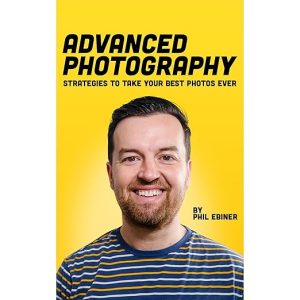
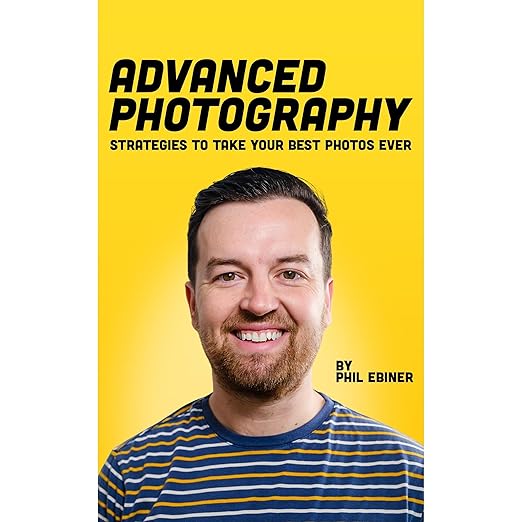
Phil Ebiner's Advanced Photography audiobook asks a question that separates this title from most of its category: if you already know what aperture, shutter speed, and ISO mean, what's actually stopping you from taking photos you're proud of? That pivot from mechanics to artistry is the organizing principle of a short, densely useful listen that runs only one hour and twenty-seven minutes. Ebiner has taught photography for over a decade, building a catalog that includes top-rated online courses alongside his books, and the editorial instincts developed in that teaching practice are evident here. He knows precisely which questions practitioners at the intermediate level are stuck on, and he structures the audiobook accordingly. The result is one of the more honest instructional titles available in the photography category, precisely scoped and free of padding.
The scope is declared upfront: this audiobook assumes you can already operate your camera, that you know how to compose and expose a shot, and that you can do basic editing regardless of whether you're using Lightroom, Photoshop, Affinity Photo, or a smartphone app. What it addresses instead is the gap between technically correct and genuinely compelling. Ebiner works through four areas in sequence: lighting, composition, storytelling, and editing, and in each he identifies the practical decisions that separate photographs that technically succeed from photographs that make people stop scrolling and look again.
Ebiner's Teaching Voice, Filtered Through a Synthetic One
One reviewer noted that the chapters are "short, to the point, and packed with essential information," and described the audiobook as "good for beginners and as a refresher for those who are more advanced." That dual utility is genuinely hard to engineer, but Ebiner manages it by staying at the level of principle while providing specific, replicable examples. Another reviewer praised Ebiner's teaching skills as "simple yet comprehensive," which captures what makes his approach distinct from the gear-focused content that dominates much of photography instruction. He's not telling you what to buy; he's telling you what to see. The practical nature of the advice is what distinguishes it from the more theoretical photography writing that tends to accumulate in this genre.
The Virtual Voice narrator is worth noting directly. This audiobook uses synthetic narration rather than a human performance, and that distinction matters differently depending on what you're listening for. For content that is primarily instructional and structured in short, discrete chapters, Virtual Voice keeps pace with the material adequately. It lacks the warmth and spontaneity of a human narrator, and for a book about developing an artistic eye, the slight clinical quality of the delivery creates a mild tonal mismatch. It doesn't prevent the content from being useful; it does prevent the listening experience from feeling as energized as Ebiner's teaching reputation might suggest. Listeners who have engaged with his online video courses will notice the gap between that register and what the synthesized narration produces.
The Storytelling Chapter Does What Camera Manuals Skip
At an hour and twenty-seven minutes, this is genuinely one of the more efficient learning investments available in the photography category. The tight runtime forces Ebiner to be disciplined about what makes the cut, and the result is a guide that respects the listener's time while covering the principles that actually move the needle for intermediate photographers. A reviewer described the experience as helping them "improve by understanding exactly what makes a great photo well, great," which is the clearest statement of the book's functional purpose.
The storytelling section, which addresses how narrative intent transforms a competent photograph into one that communicates something, is the strongest chapter in the audiobook. This is territory that most camera manuals and technical tutorials skip entirely, and Ebiner's treatment, connecting compositional choices to emotional effect and viewer engagement, provides the kind of insight that intermediate photographers typically arrive at through years of practice rather than through reading. Hearing it articulated clearly in the audio format makes the lesson more portable: you can listen while walking and carry the framework into your next shooting session the same day.
Descriptions Carry the Weight the Photos Would
The audiobook's greatest limitation is inherent to the format rather than to Ebiner's content: a book about visual artistry that can't show you images is working with one hand behind its back. The synopsis mentions "hundreds of beautiful photos" that appear in the print version, and those illustrations are absent in the audio format. Ebiner's descriptions of specific compositional techniques and lighting scenarios are clear enough to be useful without the accompanying images, but listeners who learn visually and want to see the examples alongside the explanation will want to supplement the audiobook with the print or ebook version. The conceptual architecture translates to audio; the gallery does not.
This isn't a caveat that undermines the audiobook's value, it's simply a calibration. The framework Ebiner builds around lighting, composition, storytelling, and editing is durable and applies immediately in the field. Knowing that the visual component lives in the print version allows you to plan accordingly rather than feel shortchanged mid-listen.
Not a Fit for Camera Beginners or Voice Purists
This audiobook is the right fit for photographers who have cleared the technical basics and want to understand what separates their work from photographs they admire. If you can already operate your camera confidently and your current frustration is about artistic decisions rather than settings, Ebiner's framework will give you a more useful lens for evaluating and improving your own work. Complete beginners will not find the entry point here; Ebiner is explicit that this is not a how-to-use-your-camera guide. Those who prefer human narration over Virtual Voice will want to be aware of the format before purchasing. For intermediate photographers who want a concentrated, principled discussion of visual artistry that fits into a short commute or a lunch break, the runtime alone makes this worth the listen.
A Few Questions About Advanced Photography
Is the Advanced Photography audiobook suitable for complete beginners, or does it assume prior technical knowledge?
It explicitly assumes prior technical knowledge. Ebiner states in the introduction that this is not a guide to camera operation. Listeners should already understand aperture, shutter speed, ISO, basic composition, and basic editing before this audiobook will be most useful to them.
Does the audiobook lose significant value without the hundreds of photos mentioned in the print version?
The conceptual framework, covering lighting, composition, storytelling, and editing, translates cleanly to audio. The gallery of example photos doesn't. Listeners who process visual information through examples will want to supplement the audiobook with the print version. The listening experience remains instructionally useful even without the images.
How does the Virtual Voice narration affect the listening experience for a creative arts audiobook?
Virtual Voice keeps pace with the instructional content, which is organized in clear, short chapters. However, the synthetic delivery lacks the warmth and spontaneity of a human narrator, creating a mild tonal mismatch for a book about developing artistic instincts. The content stands on its own; the experience is less personable than a human-narrated version would be.
At only ninety minutes, is this audiobook comprehensive enough to be worth the investment?
For its stated purpose, yes. Ebiner covers four distinct areas in specific, actionable terms, and the tight runtime is a feature rather than a limitation. Intermediate photographers who have read longer photography books and wanted more will find the efficiency of this audiobook refreshing rather than thin.