
Quick Take
- Performance: Suzanne Toren, whose other credits lean toward narrative history and biography, brings a register built for pacing sustained, unhurried real-world material rather than plotted fiction.
- What it covers: a full year inside horse racing culture, presumably drawn from Smiley's own recurring interest in horses and the track
- Feel: Unhurried, observational, hard to pin down without a real synopsis
- Our call: A Year at the Races asks for real trust given how little the listing actually confirms, but Jane Smiley's name attached to horse-racing subject matter is a legitimate reason to take that leap.
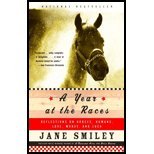
Here's what the A Year at the Races audiobook listing actually gives you to go on: a title, an author, a narrator, a runtime, and a genre tag. What it does not give you is a synopsis. The field where back-cover copy should live reads, in full, "A Year at the Races by Smiley, Jane. . Anchor, 2005," which is a bibliographic citation, the kind of one-line record a library catalog generates, not a description of what actually happens inside the book. Jane Smiley is the credited author, Suzanne Toren reads all ten hours and six minutes of it, and a 4.3 average sits on the page from 27 ratings, though not one of those ratings comes with any written explanation attached.
Is A Year at the Races Worth Your Time?
Working from a citation instead of a synopsis means being honest about the limits of what can be said here. The Equestrian Sports tag, paired with a title that names a specific stretch of time, a year, spent at the races, points toward a memoir or essay collection structured around a single racing season rather than a novel with a traditional plot to summarize. That's a reasonable reading of the available signals, not a confirmed description of the book's actual contents, and listeners deserve that distinction spelled out plainly rather than papered over with confident-sounding plot summary invented to fill the gap.
A title built around a single year also implies a specific shape: a calendar to move through, a season's rhythm of workouts, races, wins, and losses that a chapter-by-chapter structure could follow naturally from start to finish. That's speculation based on how similarly-titled memoirs in other subjects tend to be built, not confirmation of this book's actual table of contents, but it's a reasonable guess about why a writer would choose that specific framing device over a looser, undated collection of racetrack essays.
What can be said with more confidence is who's behind it. Smiley writing about horses and racing is not a stretch; the racetrack and the barn recur across Smiley's body of work often enough that a book with this exact title sits comfortably inside territory Smiley has spent real time writing about elsewhere. That context doesn't tell a listener what happens on any given page of A Year at the Races specifically, but it does suggest the subject matter is one Smiley approaches with genuine, sustained interest rather than as a one-off curiosity.
Ten hours and six minutes is a substantial runtime for a book this thin on public-facing metadata, which suggests real depth exists inside it even if the listing doesn't surface any of it. A memoir or essay collection built around a full year of racing would have room for the actual rhythms of the sport, workouts, wins, losses, the people around the horses, rather than a condensed highlight reel, and that kind of unhurried pacing tends to translate well to audio specifically, where a listener can sit with atmosphere and observation rather than skimming ahead.
Suzanne Toren's other narrative-nonfiction and biography work suggests a narrator comfortable pacing sustained, real-world material without needing a dramatic plot engine to carry a chapter, which is exactly the skill a season-long memoir structure would call on. Nothing in this listing's own data confirms how Toren handles this specific book, since no reviews exist to describe that performance here, but the general fit between Toren's track record and this book's likely shape is worth naming as a reason for cautious optimism rather than a guarantee.
Before You Commit to A Year at the Races
The publisher field itself carries a small but telling flaw: it opens with an invisible left-to-right marker character before the word Anchor, and the year runs straight into the imprint name with no space, "Anchor,2005." Combined with the citation-style synopsis, this all points to metadata pulled from a print or library-catalog source and stitched onto the audio listing without much cleanup. Page count and ISBN fields are both blank too, reinforcing that this listing is thinner on verified detail than most in this catalog.
No release date is attached to this audiobook edition either, which matters given that "Anchor, 2005" almost certainly refers to a print paperback printing rather than when the audio version itself became available. Anchor is a paperback imprint, and a book dated 2005 in that field could easily be an older backlist title receiving an audio edition well after its original print run, though nothing in the listing confirms exactly when that happened.
The 4.3 rating from 27 votes is real data worth reporting, but with zero written reviews behind it, nothing tells a listener what specifically people responded to, the writing, the narration, the subject matter, or something else entirely. A rating average without any visible reasoning behind it is a number, not evidence, and listeners should treat it accordingly rather than assuming it settles any question about quality.
The Right Listener for A Year at the Races
Anyone already following Smiley's career and curious about this turn toward the racetrack, and listeners specifically drawn to horse racing and equestrian culture as subject matter, are the natural audience here, especially given how few audiobooks exist in that particular niche. Ten hours is enough time for a genuine deep dive rather than a survey, which should reward listeners who want depth over breadth on this one specific world.
A clear plot summary or detailed content warnings simply aren't available here, so anyone who needs that before committing should look elsewhere first, and a blind purchase based on author reputation and genre tag alone carries more risk than picking a book with an actual synopsis and a stack of reviews to consult. Anyone unfamiliar with Smiley's writing may want to sample a preview before spending a credit on ten hours of unknown territory.
Frequently Asked Questions
Why doesn't the A Year at the Races audiobook listing include a real plot synopsis?
The synopsis field currently shows a bibliographic citation, title, author, publisher, and year, rather than back-cover description, which reads like a library catalog record rather than marketing copy. No plot summary, subject breakdown, or content description is available anywhere else in the listing either.
Is the A Year at the Races audiobook fiction or nonfiction?
The listing doesn't state this directly, but the Equestrian Sports tag and the title's structure, naming a specific year spent at the races, both point toward memoir or essay writing rather than a plotted novel, consistent with the kind of subject matter that recurs across Smiley's writing career.
Are there enough reviews to know how listeners feel about the A Year at the Races audiobook?
No. The listing shows a 4.3 average rating from 27 total ratings, but zero written reviews are attached, so nothing shows what specifically listeners liked or disliked about it, whether that concerned the writing, the narration, the pacing, or the subject matter itself.
How long is the A Year at the Races audiobook?
It runs ten hours and six minutes, a substantial length for a book this sparse on public metadata, which suggests genuine depth inside it even though the listing itself doesn't surface details about pacing, structure, or specific content covered across that runtime.






