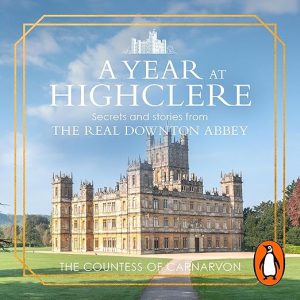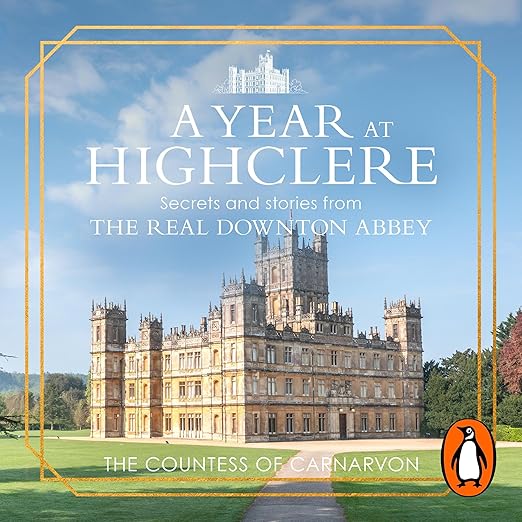
Highclere Castle earns its Downton Abbey fame honestly, and this audiobook, narrated by the woman who actually lives there, makes the case with more warmth than any tie-in book has a right to. Lady Carnarvon structures the audiobook around the turning seasons, gardening, entertaining, walking the grounds with the family's eight dogs, opening the gates to yet another film crew, and lets the twelve-hour runtime unfold the way an actual year at a five-thousand-acre estate would: gradually, seasonally, full of both grand history and small domestic detail. Lady Almina's legendary 1920s parties and the castle's resident ghosts get their due alongside more ordinary rhythms, and the combination lands closer to a genuinely lived diary than a polished corporate history.
Spring Planting Pivots Into Edwardian History
The book's structural conceit, following the literal calendar year rather than a chronological history of the estate, gives Lady Carnarvon room to move fluidly between eras without ever losing the reader's footing: a chapter on spring planting can pivot naturally into a story about Lady Almina's Edwardian-era household, then back to present-day logistics of hosting a film crew for weeks at a stretch. Susie's review describes trying to read 'month by month through the year, reading each month of the book as the calendar progresses,' which suggests the book rewards exactly the kind of paced, seasonal engagement its structure invites rather than a single marathon sitting.
Flowers Blooming Matter as Much as History
History and the present day sit closer together at Highclere than at most historic estates, and the book leans into that continuity rather than treating the past as a separate, roped-off exhibit. Kay Staton's review, written after watching Downton Abbey and seeking out the real history behind it, praises how the author's words 'just flowed off the page,' and calls the effort required to keep 'this majestic home and acreage growing into the future' genuinely amazing. That throughline, a real family still actively maintaining and living inside centuries of history, is what separates this from a standard heritage-site guidebook.
The book's willingness to sit with small domestic detail, exactly which flowers bloom in a given month, the specific rhythm of preparing the house for a film crew's arrival, is what separates a genuine diary from a curated highlight reel. Lady Carnarvon does not skip the unglamorous logistics in favor of only the grand historical anecdotes, and that inclusion is part of what makes the year-long structure feel authentic rather than assembled after the fact for marketing purposes.
Nobody Else Could Voice Her Own Ghosts
Self-narration is the obvious and correct choice for this specific book, and it is worth stating plainly why: nobody else can deliver lines about the family's own dogs, the specific ghosts said to wander specific hallways, or the logistics of a film crew occupying your actual home with the same lived authority. This is not a celebrity narrator reading someone else's research; it is the chatelaine of Highclere Castle describing her own daily life, and that distinction is audible in every chapter, less performed enthusiasm, more the specific, unhurried confidence of someone describing a place she genuinely knows better than anyone else alive. Even the passages covering centuries-old history carry a proprietary warmth that a hired narrator, however skilled, simply could not fake.
Penguin Audio Lets Her Own Voice Carry
The production, credited to Penguin Audio, gives the material real weight without over-produced polish, letting Lady Carnarvon's own voice carry the material rather than layering on unnecessary score or dramatization. For anyone who watched the recent Downton Abbey film and wanted more of the real place behind the fictional Crawley family, this delivers that connection directly rather than through a licensed tie-in written by someone else; the castle's actual owner is the one making the case for why it still matters, twelve hours of it, without ever feeling padded to reach that length. The seasonal structure also means the audiobook holds up well to being revisited a chapter at a time across an actual year, rather than demanding to be consumed in one extended sitting.
That same intimacy extends to how the book handles the family's eight dogs, a recurring presence across the seasons rather than a passing detail mentioned once and dropped, and small touches like that do more to establish a lived-in sense of place than any amount of formal architectural history could on its own.
A Gracious Host Giving a Private Tour
Tone stays consistently warm and hospitable throughout, closer to a gracious host giving a private tour than an investigative or warts-and-all memoir, and listeners should calibrate expectations accordingly. This is not a book interested in estate-management scandal, complicated inheritance disputes, or the genuinely fraught history of aristocratic wealth in Britain; it is a celebration of a specific place and the family's ongoing stewardship of it, told by someone with every incentive to keep the portrait affectionate. Readers wanting a more critical lens on inherited wealth and land ownership in modern Britain will need to look elsewhere for that argument entirely.
Steven Clem's review is brief but pointed, just three words: 'wife loved it'. That brevity is itself a reminder that this book's core audience skews toward an established fanbase already primed to love anything Highclere or Downton Abbey adjacent, rather than general readers coming in cold. That is not a criticism so much as a useful calibration: the twelve-hour runtime rewards existing affection for the show and the real estate behind it more than it works to build that affection from nothing for a genuinely unfamiliar listener.
The book also assumes at least some existing familiarity with Highclere's basic history and its Downton Abbey connection; listeners coming in with zero context for either the real family or the television show may find some references landing without full explanation, since the book is clearly written for an audience that already wants to be there rather than one that needs the premise justified from scratch.
Gardeners and Dog Owners Get Their Due
Downton Abbey fans are the clear, obvious audience, and the synopsis's own direct reference to 'the latest Downton Abbey film' confirms the connection is intentional marketing rather than incidental overlap. Beyond that built-in fanbase, anyone who enjoys British heritage and country-house history generally, or seasonal, diary-style nonfiction that unfolds gradually rather than argues a thesis, will find real pleasure here. Listeners who prefer their history delivered by the actual people who lived it, rather than an outside biographer's more distanced account, get exactly that throughout all twelve hours. Gardeners and dog owners will also find unexpected pockets of specific, relatable delight scattered through the grander historical material.
Unvarnished behind-the-scenes scandal, staff grievances, or hard questions about maintaining a five-thousand-acre estate's finances are simply not what this book is interested in; the tone stays consistently gracious instead, closer to a warm private tour than an exposé. Anyone with no existing interest in Downton Abbey or British country-house history may also find twelve hours a long commitment for material this genial in tone. For the target audience, though, it delivers real charm and a genuine, first-person connection to a place most fans only know through a television screen.