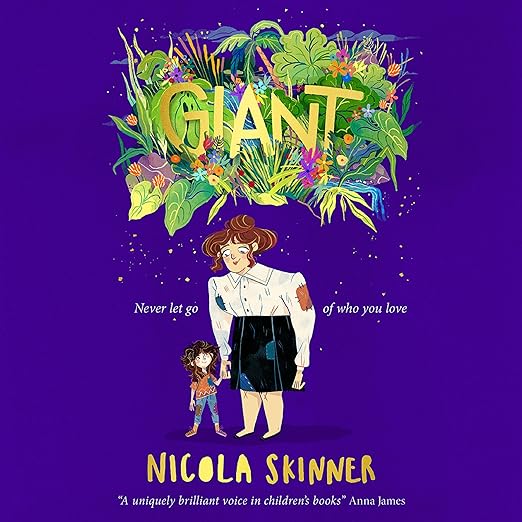
I came to this audiobook knowing very little about the story, and I am glad I did. A Giant Win, the novel by Nicola Skinner, pulled me in from the opening pages with a premise that sounds whimsical until you realize it is actually asking something quite serious: what do we owe the beings who protect us, and what happens when that obligation is built on a lie? Set on an earthquake-prone island where eleven-year-old Minnie is cared for by a giant named Speck, the audiobook establishes its emotional stakes quietly and then blindsides you with them.
Jessica Tomlinson narrates with genuine warmth and a performance that scales from the light comedy of Minnie's everyday world to the real grief of what Minnie discovers about her island's foundations. For young listeners especially, Tomlinson's clarity and tonal range make the emotional beats accessible without ever becoming condescending.
Why Listen to A Giant Win
The novel builds its world with a specific, strange precision. On Minnie's island, giants are not mythological creatures to be feared but caretakers bound to individual children. When a child turns twelve, they kiss their giant goodbye, turning the giant to stone, and that stone is used to repair buildings crumbled by earthquakes. It sounds like a fairy tale. It functions like one. But Skinner is doing something sharper under the surface: she is writing about the way societies teach children to accept arrangements that benefit institutions while masking the true cost.
Minnie's refusal to follow through, her decision to run rather than comply, sets off the book's central momentum. As one reviewer noted, the story is 'quite sad in some places but in a really lovely way.' That is an accurate description. The sadness is earned and honest, not manufactured for sentiment. The love between Minnie and Speck is drawn without saccharine excess, and Skinner trusts her readers to feel it without being told to.
The pacing in the audiobook format works well for Skinner's chapter structure. Each episode builds on the last, and Tomlinson handles the transition from domestic comedy to darker revelation with care, never jumping registers so sharply that younger listeners feel lost or older listeners feel patronized.
What to Watch For in A Giant Win
This is not a light read despite its surface charm. The thematic content, a child defying a community's fundamental social contract, will resonate differently depending on the listener's age. Young readers may experience it as straightforward adventure with a beloved character at its center. Adult listeners or parents listening alongside children may find the allegory considerably more uncomfortable, which is likely Skinner's intention.
Some listeners may find the secondary characters underdeveloped relative to Minnie and Speck. The island's adults function more as institutional representatives than as fully realized individuals, which serves the thematic point but can feel thin if you are reading for ensemble character work. Minnie's parents, in particular, are drawn primarily through their compliance with the system rather than their interiority.
The book's climax packs real emotional force. Tomlinson's performance during the final sequences is among the strongest in the recording. Be prepared for something that earns its tears.
Skinner's structural choice to build the book around a child's relationship with a specific giant rather than a generalized fantastical world is the right one. Speck is not a symbolic figure; he is rendered with enough specificity and warmth that Minnie's attachment to him feels personal rather than allegorical, even as the allegory is clearly present. That balance, letting the emotional logic operate at the level of individual relationship while the political logic operates at the level of society, is harder than it looks in middle grade fiction, and Skinner manages it throughout.
The audiobook format suits this novel particularly well. Tomlinson's narration gives Minnie a consistent and persuasive interior voice, and the oral storytelling tradition that fairy tales and fable literature emerged from sits naturally in audio. Listeners who discover Skinner through this audiobook should also seek out her earlier novel Bloom, which operates in a similarly inventive register. The world-building imagination that produces an earthquake island sustained by sacrificed giants is not a one-off; it is characteristic of how Skinner thinks about children's fiction, and it rewards following her work.
Janet Benge's Christian Heroes series, though different in format and audience, has produced similarly structured biographies of historical Christian figures, and Skinner's MG approach to moral complexity sits in that broader tradition of children's literature that does not simplify the cost of integrity. What distinguishes Skinner is that her prose also functions aesthetically, not just instructively. The image of stone statues holding up crumbling walls, composed of the very beings who once cared for children, is the kind of image that stays with readers well past the final chapter. Tomlinson's narration gives it the weight it deserves.
The Right Listener for A Giant Win
This audiobook is an excellent choice for families listening together, particularly for children around eight to twelve. It is accessible enough for younger listeners and layered enough to sustain adult interest. For solo adult listeners who enjoy allegory-adjacent literary fiction for middle grade, Skinner's world is inventive and her emotional logic is sound.
Listeners who want purely light entertainment without any emotional cost might find the darker undercurrents difficult. Those who prefer contemporary realism to fantastical world-building should look elsewhere. But anyone willing to follow a brave, imperfect eleven-year-old through a story that asks real questions about love, obligation, and what we let ourselves accept will find A Giant Win genuinely affecting.
What age group is the A Giant Win audiobook best suited for?
The book is written for middle grade readers, typically ages eight to twelve, but it works well for family listening. The themes around social obligation and institutional deception will resonate differently with adult co-listeners, which makes it a strong choice for shared listening experiences.
Is there anything a parent should know before listening to this audiobook with a child?
The central premise, that children are expected to sacrifice their giants as a social duty when they turn twelve, deals with themes of loss, obligation, and defying community norms. It is handled with care, but parents should be prepared to discuss those themes with younger listeners, particularly toward the emotional ending.