The Short Version
- Narrator: Allie Bailey narrates her own material, and the rawness in her delivery suits a book built on lived recovery experience rather than polished performance.
- Subjects: mindset coaching, recovery from addiction and depression, daily practice over quick fixes
- Tone: Blunt, urgent, occasionally profane self-help
- Bottom line: A useful daily companion for existing Allie Bailey readers, best paired with its included PDF rather than used as audio alone.
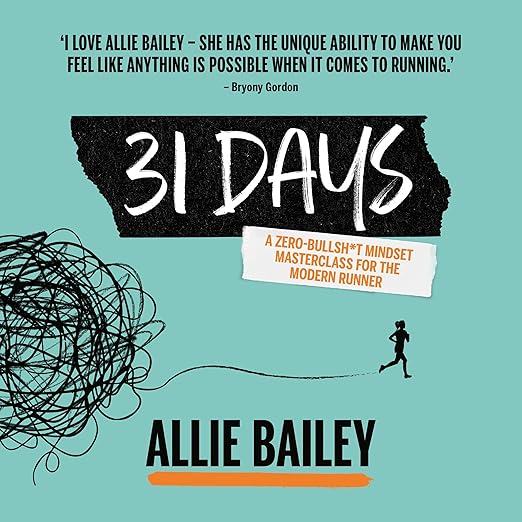
Allie Bailey's debut ultrarunning memoir ended with a blunt self-help rant, and this audiobook expands that final chapter into a full thirty-one-day mindset companion. Bailey is not gentle about her intentions. The framing throughout is explicitly against quick fixes: no motivational countdown to a finish line, no promise that running alone will save anyone, just thirty-one short, dense chapters meant to be worked through one per day, alongside a companion PDF included with purchase.
What separates this from a generic self-help audiobook is where Bailey draws her material from. She is an award-winning ultrarunning coach, but she is also open about being a recovering alcoholic and someone who has lived with depression, and the book leans on Acceptance and Commitment Therapy principles filtered through that lived experience rather than abstract theory. The pitch is blunt to the point of profanity: whatever you are avoiding, career, relationship, the voice that tells you that you are just built this way, the book wants you to stop negotiating with it.
Acceptance and Commitment Therapy, the framework Bailey draws from, is a real, evidence-based branch of cognitive behavioral therapy built around accepting difficult thoughts and feelings rather than fighting them, then committing to action aligned with your actual values anyway. Bailey is explicit that she is applying it through a coach's lens rather than a clinician's, which is precisely the distinction her critical reviewer raises.
Structurally, expanding a single closing chapter from an earlier memoir into thirty-one full chapters means the majority of this book's material is genuinely new rather than repackaged; Bailey has had to develop substantially more depth and specific practical application than the original rant-length version could have contained.
What Makes 31 Days Worth Hearing
Bailey narrates her own material, and that choice matters more here than it would for a conventional memoir. A self-help book built on personal recovery and coaching credibility benefits from hearing the author's actual voice deliver lines that would read as harsh or preachy from a hired narrator; coming from someone describing her own daily practice, the same lines land as accountability rather than lecture.
The thirty-one-chapter structure is a genuinely practical fit for audio specifically. Rather than a single long-form argument that demands sustained attention, this is built for daily five-to-fifteen-minute sessions, closer to how listeners already use meditation or devotional apps than to how most memoirs get consumed. That structure makes the short 4 hour and 27 minute runtime make sense; this is not a book meant to be finished in one sitting even though it easily could be.
The series_name attached to this listing, Non-fiction Running Stories, signals a specific publishing lane: short-form, personality-driven sports memoir and mindset content rather than a general self-help imprint. That context helps explain the book's tight scope and its comfort assuming some baseline familiarity with endurance sport culture even while insisting its lessons apply well beyond running.
Bailey's coaching background centers on ultra-distance and endurance events specifically, races that can run anywhere from 50 kilometers to well over 100 miles, and that context matters for the book's central metaphor: her mindset framework was built helping athletes push through distances where willpower alone consistently fails, which is precisely the kind of failure point the book applies to non-running struggles.
Things to Know Before Starting 31 Days
The most useful caveat comes directly from a critical review attached to this listing. One listener, who had read and liked Bailey's first book, says this one 'didn't land' for them, specifically flagging that the ACT therapy content feels diluted compared to how it is presented in dedicated therapeutic contexts. That is a fair distinction to flag going in: this is a coach's application of therapeutic concepts, not a clinical or academic treatment of ACT itself, and listeners who want the latter should look elsewhere first.
A real workbook tension is also worth naming plainly. Purchase includes an accompanying PDF, and a book explicitly built around daily exercises and tools you are meant to actually use gets a meaningfully thinner version of itself through audio alone. Listeners who want the full 'do the work' experience Bailey promises should plan to have that PDF open and actually use it alongside listening, not treat the audiobook as a complete substitute for the exercises.
It is worth naming plainly that this is a short audiobook by nonfiction standards generally, well under half the length of a typical full-length self-help title. That brevity is a deliberate structural choice tied to the daily-chapter format rather than a sign of thin content, but listeners expecting a comprehensive, book-length treatment of mindset work specifically should recalibrate expectations toward a companion or supplement rather than a standalone deep dive.
Who Allie Bailey Is Writing For
This fits listeners already familiar with Bailey through her debut memoir or her coaching work, and anyone drawn to a no-nonsense, occasionally profane approach to mindset work over a gentler self-help register. Runners specifically will recognize plenty of the framing, but the book's stated audience is explicitly broader: career, relationships, and whatever else you have decided you cannot change.
Skip it if diluted or repackaged therapeutic content is a dealbreaker, or if you would rather engage with ACT principles through a source built specifically around clinical application. Everyone else looking for a short, blunt, daily-structured mindset audiobook from someone who has actually lived through what she is coaching gets real value here, especially paired with the included PDF rather than as an audio-only listen.
Listeners who have cycled through more conventional self-help without lasting results are precisely the audience this approach is built to reach; the book's central bet is that bluntness succeeds where gentler encouragement has already failed to stick.
The book's short chapters also make it a reasonable fit for listeners who want to sample the material before committing further, since testing whether Bailey's specific voice and approach resonates only costs a few minutes per chapter rather than requiring a full-length memoir's worth of investment upfront.