Quick Take
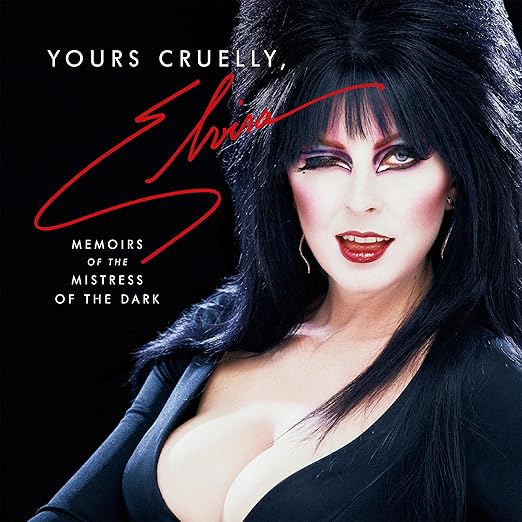
- Narration: Cassandra Peterson performs her own memoir with the same theatrical energy she brings to Elvira, campy, candid, and completely committed; the self-narration is essential to this material.
- Themes: Reinvention and survival, celebrity persona vs. personal identity, show business mythology
- Mood: Wild, confessional, darkly funny with genuine emotional depth underneath
- Verdict: One of the more genuinely surprising celebrity memoirs in recent years, earning its bestseller status through honesty rather than brand maintenance.
I was halfway through my morning commute when Cassandra Peterson described the moment a pot of boiling water changed the course of her life at eighteen months old. Third-degree burns covering 35% of her body, 25 miles from the nearest hospital in Manhattan, Kansas. I had to sit with that for a moment before she moved on, which she does with a briskness that says more about her relationship to adversity than any amount of reflection could. This is the emotional register of Yours Cruelly, Elvira: the revelation arrives fast, sits heavily, and then life continues at speed.
Peterson opens her memoir at that moment of catastrophic injury and by doing so sets the terms of everything that follows. The scarring that made her feel like a misfit. The Vincent Price model kits on a shelf of Barbie dolls. A complicated mother and a front door left behind at fourteen. By the time we arrive at the Dunes Hotel in Las Vegas where a seventeen-year-old Peterson is navigating Frank Sinatra and Sammy Davis Jr., we understand the internal logic of her life choices in a way that the Elvira icon never quite communicates on its own.
The Groundlings Years and the Shape of a Career
The section covering her time with The Groundlings is, for anyone interested in American comedy history, genuinely fascinating. Peterson working alongside Phil Hartman and Paul Reubens, learning the machinery of improvisation and character-building before she had any idea she would need to construct the most durable Halloween character in American pop culture history. The memoir is smart about how skills accumulate without intention. Nothing here is the product of a master plan. It is the product of someone who kept saying yes.
The Italian pop band detour, the European film work, the Elvis encounter she credits with redirecting her life, these chapters have the texture of a picaresque novel more than a celebrity memoir. Peterson is a natural storyteller in the old-fashioned sense, and her narration carries the quality of someone who has told these stories at dinners for decades and has worked out precisely where to pause and where to accelerate. The Audie Award finalist recognition for Humor in 2014 is not surprising once you hear her deliver the material.
The KHJ Audition and What It Actually Was
The creation of Elvira is handled with more vulnerability than fans might expect. A nearly-thirty actress described by the industry as past her prime, walking into a local LA channel audition for a horror movie hostess slot. The improvisation that won her the job on the spot is described as genuinely spontaneous rather than calculated genius. What Peterson is honest about here is that the character emerged from desperation as much as creative vision, and that honesty makes the subsequent decades of success land differently. It is not a story of inevitable triumph. It is a story of a specific person in a specific room making a specific choice that happened to work.
The memoir’s pacing is its greatest strength and its occasional weakness. Peterson covers so much ground across 10 hours and 42 minutes that some chapters feel compressed where they deserve expansion. The later sections, covering the consolidation of the Elvira brand and the personal revelations that reviewers describe as bombshells, arrive with the same brisk energy as the early material. This is not the paced introspection of a literary memoir. It is closer to a very long, very entertaining conversation with someone who has lived three separate lifetimes and is not particularly interested in your sympathy.
The Bombshell the Synopsis Promises
Multiple reviewers describe revelations they clearly did not anticipate, and Peterson does not shy away from the candid. One reviewer noted simply: never knew Elvira’s life was so interesting, who’d thought? That reaction, banal as it reads on the page, points to something real about how the Elvira persona functions as a kind of concealment. Fans who know the Queen of Halloween may be startled to discover the depth and specificity of the human life beneath the black wig.
The New York Times Best Books designation and the multiple bestseller lists are markers of reach rather than necessarily quality, but in this case the book earns the attention. It is genuinely better than the average celebrity memoir, primarily because Peterson appears constitutionally unable to manage her own image in the way that most celebrity memoirs do. She is too committed to the bit of being honest.
Who Should Listen and Who Should Skip
Listen if you have any interest in the mechanics of American show business from the 1970s onward, in the construction of enduring cultural personas, or in survival narratives that don’t ask for pity. Elvira fans are the obvious audience but not the only one. Comedy history enthusiasts and anyone who appreciated the Groundlings’ contribution to American comedy will find material here that goes well beyond what the title suggests.
Skip if you are looking for a comprehensive history of horror hosting culture; this is Peterson’s story, not a survey. Also skip if you need your memoirs to be more contemplative in pace. The audiobook moves fast and rewards sustained attention rather than half-listening.
Frequently Asked Questions
Does Peterson address the Elvira character directly as a separate identity from herself, or does the memoir blur those lines?
She addresses it explicitly and thoughtfully. The memoir is partly about the gap between Cassandra Peterson and the character she created, and how that gap shifted over decades. It is one of the more interesting structural elements of the book.
The synopsis mentions Elvis Presley changed the course of her life, how much of the memoir deals with that encounter?
It is a significant chapter rather than a brief anecdote. Peterson treats it with genuine weight, and it functions as a narrative hinge. It redirects her geographically and professionally in ways that make the later career difficult to imagine without it.
Is the audio version better than the print edition for this material?
Almost certainly yes. Peterson’s comedic timing and her command of emotional texture are products of decades of performance. The difference between reading a punchline and hearing her deliver it is considerable. This is material that lives in performance.
The memoir is listed as a humor title, is it actually funny, or is that a genre convention?
It is genuinely funny in places, particularly the Hollywood anecdote sections, but it is also darker and more emotionally direct than the humor label implies. Think of it as a dark comedy autobiography rather than a collection of showbiz jokes.