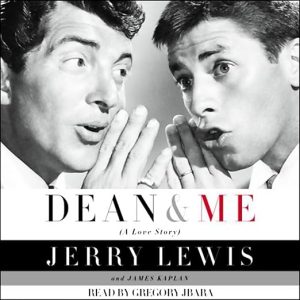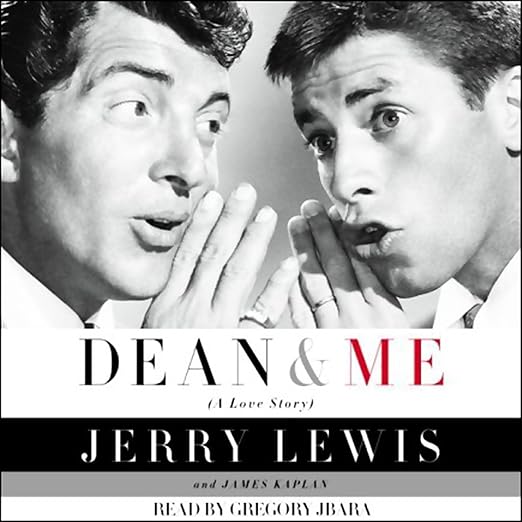
I came to Dean and Me with the usual skepticism I carry toward celebrity memoirs, the suspicion that you are going to get a carefully curated reel of highlights punctuated by selective self-deprecation. Jerry Lewis had every reason to mythologize his own story. He was, by the time he wrote this with James Kaplan, a comedy legend, a figure of near-religious reverence in France, and a man who had outlived his partner and survived decades of speculation about why the greatest comedy team in American history simply stopped one afternoon in 1956. What he gave us instead was something rarer: actual vulnerability.
I finished the bulk of this one on a rainy Saturday morning, the kind of day when you want something that moves between laughter and feeling without demanding too much of you intellectually. Dean and Me delivered that and then some. By the time Lewis describes sitting across from Dean Martin twenty years after their split, I was genuinely moved in a way that surprised me.
Stephen Hoye narrates, and his performance is one of the better celebrity memoir readings I have encountered. He does not try to sound like Lewis, that would be a fool's errand, but he finds the rhythm of Lewis's prose, which moves with the energy of a man who spent his career reading a room and knows when to let a moment breathe and when to push through it. The result is something that feels personal without being imitative.
Lewis makes a sustained case for Dean Martin as one of the most underrated comic talents of the twentieth century, and this argument is one of the book's most interesting threads. Martin's public image, the effortless cool, the glass of scotch, the half-lidded detachment, concealed, according to Lewis, a performer of genuine intelligence and precise instinct. Lewis loved him for this, and the book never lets you forget that the dissolution of their partnership left a wound that neither man fully closed.
Why Listen to Dean and Me
The audiobook format suits this memoir well. Lewis's writing has spoken-word energy, it reads like a man talking at you, which is exactly what it is. Hoye's pacing captures that quality, so the 8 hours and 42 minutes feel more like sitting across from someone at a diner than reading a book. Reviewers who knew Martin and Lewis from a lifetime of watching them describe feeling like they were hearing a friend speak; that intimacy is genuine, not manufactured.
The era the book covers, roughly 1946 to 1956, with significant time given to the aftermath, is one of American entertainment history's richest chapters. Radio, early television, nightclub culture, and the beginning of the movie industry's transition away from the studio system all form the backdrop. Lewis has the memory and the access to make this contextual material feel lived-in rather than researched, which is a significant advantage over most entertainment biographies of the period.
What to Watch For in Dean and Me
This is not a dispassionate account. Lewis is a narrator with a point of view and a score or two to settle, and the book reflects that. His portrait of the forces that drove them apart, ego, jealousy, management pressures, and the sheer weight of shared success, is illuminating, but it is worth remembering that this is one side of a story the other party could not tell. Dean Martin, who died in 1995, never wrote his own memoir.
The emotional register in the final chapters is genuinely unusual for the genre. Lewis does not sanitize his grief or package it into redemptive uplift. One longtime reviewer described the book as moving them even more on a second read, which tracks with my experience: the feeling it leaves behind is specific and lasting.
Who Should Listen to Dean and Me
Essential for anyone with an interest in mid-century American entertainment, the mechanics of comedy partnerships, or the particular kind of love that forms between creative collaborators who spend more time together than they do with their own families. Those who want tidy narrative arcs and clean resolutions should know that Lewis sits with ambiguity better than most memoirists, which is a virtue for some listeners and a frustration for others.
The Short Version
- Performance: Stephen Hoye handles Jerry Lewis's voice with warmth and a light comedic touch, capturing the memoir's mix of showbiz nostalgia and genuine heartbreak.
- What it covers: Creative partnership and its dissolution, the cost of fame on friendship, love between men in mid-century America
- Feel: Warm, funny, and quietly devastating by the final chapters
- Our call: A memoir that earns its subtitle, this really is a love story, and Hoye's narration makes it impossible to keep at arm's length.
Common Questions
Do you need to know Martin and Lewis's work to enjoy Dean and Me, or is it accessible to new listeners?
Lewis provides enough context that newcomers can follow the arc. That said, those familiar with at least a few of their films or television appearances will get substantially more out of the period detail and the specific comedic references Lewis makes throughout.
Does the book address the specific reason Martin and Lewis stopped speaking, or does it stay vague?
Lewis is more candid than many expected him to be. He addresses ego, the asymmetry of how they were perceived publicly, and the management dynamics that created friction. He does not offer a single clean explanation, because the reality was not that simple.
At 8 hours 42 minutes, does the pacing hold throughout, or does it drag in places?
The earlier chapters covering the height of their partnership are the most kinetic. The book slows somewhat when Lewis addresses the aftermath years, but most reviewers found this appropriate given the emotional weight being carried. It does not feel padded.