Quick Take
- Performance: Sloss narrates his own book with the same controlled build-and-release rhythm as his stand-up sets, making this the rare comedy audiobook that genuinely benefits from the author's voice.
- What it covers: the fragility and necessity of human relationships, mortality as clarifying force, the gap between how we present ourselves and how we actually behave
- Feel: Caustic and unexpectedly tender, like a roast that suddenly goes quiet
- Our call: More substantive than its title promises and more genuinely funny than most comedian memoirs; best for listeners who already know what Sloss does on stage and want to follow him into longer form.
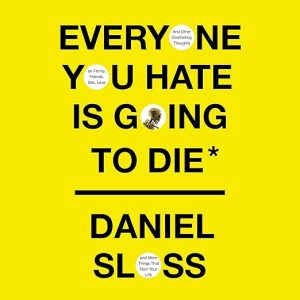
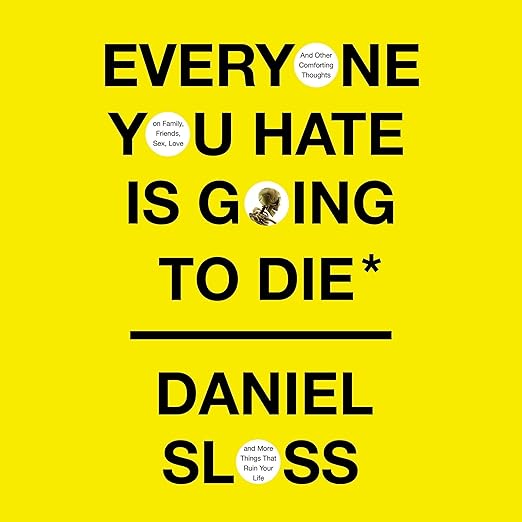
I started Everyone You Hate Is Going to Die on a long train journey, expecting something light and intermittently funny. By the time I reached the chapter on siblings, I was neither laughing nor looking out the window. Daniel Sloss is the Scottish comedian whose Netflix and HBO specials became notable partly because of what he claims to have caused: more than 300 divorces and 120,000 breakups from audiences confronting the reality of their relationships during his set on love. Whether that figure is precise or approximate, it signals something real about what Sloss does, which is use comedy as a delivery mechanism for things an audience would resist hearing delivered any other way.
This, his first book, expands that approach across six and a half hours and covers every relational category he can reach: relationships with one's country, with America specifically, with lovers of all kinds, with parents, with best friends, with children, with siblings, and with mortality itself. The book is organized loosely rather than argumentatively, following the essay model of moving through connected subjects rather than building a single sustained thesis.
The Review
The book works best when Sloss is doing what he does in his specials: introducing something that initially reads as a joke and then revealing, through the next several pages, that it is an actual observation about human behavior that happens to be delivered with comedic timing. Reviewer Kyle Vachon called him a critical observer for the modern era who makes valid points and then suddenly silences the room, and that silence-after-laughter quality translates surprisingly well to the written and read format. The moments where the humor drops out entirely and something raw surfaces are the book's most effective passages.
Reviewer KP, who is older than Sloss and has already acquired much of the life knowledge he discusses through experience, makes a useful distinction: for listeners under thirty, this book is particularly well-positioned to be useful in the way that hard conversations are useful. It names things that many people are thinking but find difficult to say. For older listeners the value is more about recognition than revelation, but the recognition can still be pleasurable.
Sloss narrating his own book is the correct call and not simply for the reasons one usually gives about self-narration. His stand-up rhythm is built into the prose itself: the setups, the pivots, the deliberate undercuts. Having him deliver that material in the voice that built those patterns over years of stage work means the comedic timing lands as intended rather than being guessed at by a professional reader. Reviewer Kyler Parson mentioned not being able to put it down and chuckling throughout while recognizing that something was being taught, which is exactly the experience Sloss is trying to create.
Reviewer MXER 7 made a point worth repeating: he is still happily married and sent his wife quotes from the book to discuss. The book is not an argument against relationships but an argument for approaching them honestly, which is different from the nihilistic posture the title suggests.
What to Watch For in Everyone You Hate Is Going to Die
The book does not have a consistent tone throughout, and that inconsistency is both intentional and occasionally jarring. The chapters on loss and on mortality are written in a register significantly different from the comedic opening sections, and the transition can feel abrupt. Sloss's willingness to write directly about grief and death is one of his most distinctive qualities as a comedian, but readers who expect the comedic frame to hold throughout will find the later sections demanding a different kind of attention. The title promises irreverence; the content delivers that and then undercuts it, sometimes in the same paragraph.
Is This One for You?
Existing Sloss fans who want his material in a format that allows longer development than his specials permit. Also worthwhile for listeners who enjoy comedians writing seriously, in the tradition of David Sedaris, though Sloss is considerably darker in tone. Reviewer Codey Cross recommended it specifically for fans of dark and inappropriate humor who want something with real substance underneath the surface, and that framing is accurate. Skip it if you want consistent jokes per minute, or if the premise of a comedian writing about mortality and relationship failure sounds more draining than interesting to you.
Before You Listen
Is Everyone You Hate Is Going to Die as dark as the title suggests, or does Sloss pull back from genuine bleakness?
It is genuinely dark in places, particularly the chapters on grief and mortality, but Sloss uses darkness as a lens for examining why relationships matter rather than as an argument that they do not. The title is more provocative than the book's actual emotional position.
Does Sloss's Scottish perspective create any barriers for American listeners unfamiliar with his background?
Occasionally, in the chapters about his relationship with Scotland and with America specifically. But these sections are written with enough self-explanation that non-British listeners can follow them without difficulty. The relational material, which makes up most of the book, is broadly accessible regardless of cultural background.