I was in my early twenties when I first heard the Seven Words routine, played for me by an older cousin who thought it was the funniest thing ever recorded. That cousin was not entirely wrong. I came to Last Words as someone who grew up with Carlin's later material, the angrier, more philosophical phase, and had always been curious about the man who got there. The autobiography answered questions I did not know I had, and posed some I am still thinking about.
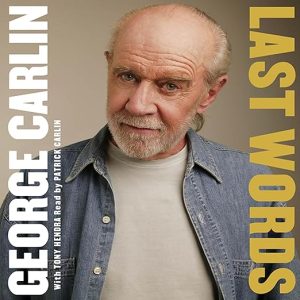
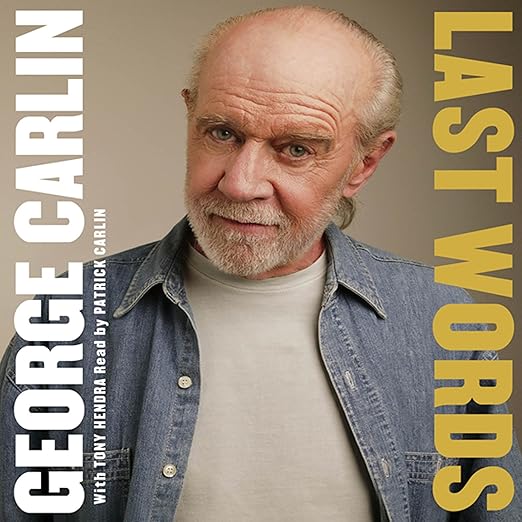
George Carlin worked on this book for the last fourteen years of his life, and it was completed and published posthumously with the help of Tony Hendra. Written from Carlin's perspective and delivered by his brother Patrick, it covers the full arc: Catholic school in Manhattan, early ambitions toward radio and acting, the army years, the long road through conventional comedy toward the transformation in the early 1970s that made him the figure most people now recognize.
The Verdict, Briefly
What makes this a genuinely good autobiography rather than a celebrity memoir is that Carlin does not protect himself. The substance abuse is not glossed. The failed marriage is not elided. The period in which he was commercially successful but creatively adrift is acknowledged directly, as is the specific frustration of knowing he had found his authentic voice while watching that voice displace some of the people who had helped him get there. One reviewer who had followed Carlin since adolescence noted relief at finding that the book is written "in a style that assures you that George wrote it", the voice is consistent with the public persona without being simply a reproduction of the stage material.
The most interesting thread in the book is not the famous routines or the Supreme Court case, though both are here in considerable detail. It is the account of the relationship between biography and material. Carlin is very clear about how specific life experiences became specific routines, and the tracing of that process, how the Catholic education became the religious material, how the drug period became the drug material, how the later pessimism about American culture was not an affectation but the logical conclusion of where he had been looking, gives the comedy a context that changes how you hear it afterward.
Patrick Carlin has appeared publicly in connection with his brother's estate and legacy, and his narration of the autobiography carries the specific weight of someone who was actually there for much of the story being told. He does not attempt to reproduce George's stage voice, that would be both impossible and wrong, but he reads with a dry precision that is recognizably familial. The choice is unconventional enough to be notable: most celebrity autobiographies are read by professional narrators or by the celebrity themselves. Having the brother read a posthumous autobiography creates an intimacy that is occasionally affecting in ways the text alone might not produce.
The thirteen HBO specials, the Grammys, the Johnny Carson appearances, the biographical facts accumulate across six hours and twenty-four minutes in a way that gives shape to a career that sometimes seems like it arrived fully formed. It did not. The long middle period, in which Carlin was successful by conventional measures but had not yet found the version of himself that would define his legacy, is examined with more honesty than most performers allow themselves in authorized biography.
Things to Know Before Starting Last Words
The account of Carlin's drug and alcohol years is not sensationalized, which makes it more effective than if it were. He is matter-of-fact about the timeline and the consequences in a way that is consistent with how he talked about difficult things generally, not avoiding them, not dramatizing them, simply looking at them directly. The recovery narrative is also handled without the evangelical quality that some addiction memoirs take on. Carlin does not present sobriety as salvation. He presents it as a condition that made certain things possible.
Who Will Get the Most From It
Carlin fans who have spent time with the material, especially the later HBO specials, the political comedy, the language routines, will find this an essential companion to what they already know. Listeners who are curious about the craft of stand-up comedy, and specifically about how a comedian finds and develops a voice over decades, will find it illuminating regardless of prior Carlin familiarity. Those approaching this without any background in his work should probably listen to one or two of the specials first, the autobiography assumes a reader who has at least a passing relationship with the material it is explaining.
- Narrator: Patrick Carlin, George's brother, reads the autobiography with evident love and dry wit that serves the material without trying to impersonate George's stage persona.
- Subjects: The formation of a comedic identity, the costs of self-invention, the relationship between life experience and stage material
- Tone: Candid and bittersweet, with the dark comedy you would expect from a man who spent fifty years finding humor in everything, including his own worst decisions
- Bottom line: An honest autobiography that earns its place alongside Carlin's stage work, best listened to by anyone who has spent time with his material and wants the story behind it.
Questions Listeners Ask
Why does Patrick Carlin narrate rather than a professional audiobook narrator?
The choice reflects the posthumous nature of the project. Patrick Carlin, George's brother, brings both familial knowledge of the material and a voice that carries a different kind of authority than a professional narrator would. Listeners who expected a performance-forward reading may need to adjust expectations, this is closer to a family member sharing a story than an audiobook production.
Does the book cover the FCC case and the Seven Words routine in detail?
Yes. The Supreme Court battle over censorship that followed the Seven Words broadcast is covered in the biography with specific detail about the legal proceedings and Carlin's understanding of its implications. The routine's origins are also explained.
Is Tony Hendra's involvement in the writing noticeable?
Reviewers generally report that the voice feels consistent with Carlin's public persona throughout, suggesting Hendra's collaboration preserved rather than displaced the subject's voice. There is no obvious shift in register that signals ghostwriting, which is a meaningful achievement in posthumous autobiography.
Does the book cover the full span of Carlin's career, including his final years?
Yes, from childhood through the final period of his work and life. The autobiography was a fourteen-year project completed shortly before his death in 2008, and it covers the later career, including the more politically dark material that defined his last decade, with the same directness as the earlier chapters.