Quick Take
- Voice: Kevin Federline's unpolished, self-narrated delivery reads as sincerity rather than a produced performance.
- Big ideas: Fatherhood under public scrutiny, media caricature versus private reality, survival after fame
- Atmosphere: Defensive but sincere, occasionally raw
- Worth it?: Worth a listen for anyone curious about his side of events, less so for listeners expecting polished storytelling.
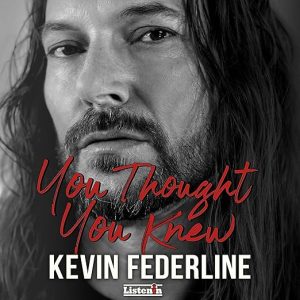
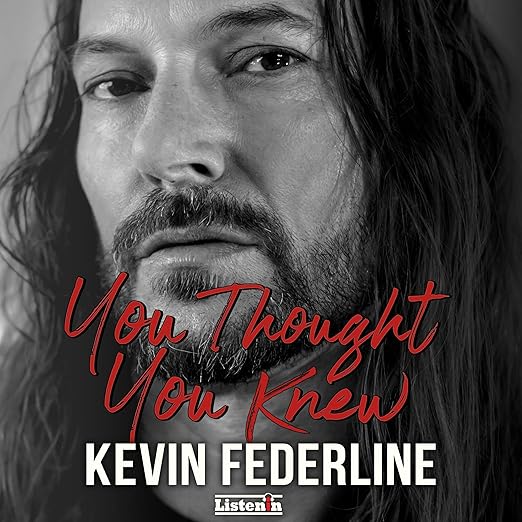
Does the nickname 'K-Fed' capture anything real about the man behind it? This audiobook is Kevin Federline's attempt to answer that question in his own voice, literally, since he narrates his own memoir rather than handing the material to a professional reader. Federline traces his path from backup dancer touring with Pink, Destiny's Child, and Aaliyah to the man tabloids reduced to a punchline the moment his marriage to Britney Spears became public property. The synopsis promises a story about fatherhood, resilience, and survival underneath the caricature, and the audiobook's real interest lies less in relitigating the tabloid years than in how a person rebuilds an identity after the public decided who he was.
Memoir Instead of a Rebuttal Tour
What's genuinely interesting about You Thought You Knew is how little time it spends trying to win an argument. Federline does not structure this as a rebuttal tour through specific tabloid headlines. Instead, the book moves chronologically through his own formation as a dancer, the disorientation of sudden fame through marriage, and the years afterward spent fighting custody battles and public scrutiny while trying to give his children something resembling a normal life. That structural choice, memoir over rebuttal, is the book's most credible decision.
The dance career material is the unexpected strength here. Federline's account of touring with Pink and Destiny's Child, learning the discipline of professional choreography before any of the tabloid narrative existed, gives the book a foundation the Britney-adjacent chapters can stand on. It reframes the 'accidental pop culture icon' language from the synopsis: before he was famous for his marriage, he had already built a real career, and the book is at its most convincing when it lingers there rather than rushing toward the more scandal-adjacent chapters.
When Fame Arrives Sideways Instead of Through Craft
Federline never set out to become famous in his own right; his profile rose entirely through proximity, first to the pop stars he danced behind, then to the pop star he married. That distinction matters more than it might first appear: the book's throughline is essentially about what happens to a person's sense of self when fame arrives sideways rather than through their own chosen craft, and that framing gives even the more tabloid-familiar chapters a genuine psychological thread rather than just a chronological recap.
The synopsis's closing line, that what listeners thought they knew was only half the story, is a deliberately pointed title choice, worth taking at face value rather than as marketing flourish. The book is not structured as a series of shocking reveals; it is structured as a slow accumulation of context, dance rehearsals, tour schedules, custody paperwork, that adds up to a fuller picture than any single tabloid headline could. Listeners expecting one dramatic revelation will not find it; listeners willing to sit with accumulated context will get more out of the book.
A Non-Negotiable Case for Self-Narration
Federline narrating his own material is close to a non-negotiable choice for this specific book. A professional narrator performing polish onto a memoir this explicitly about being misrepresented in public would undercut its own argument before it started. His delivery is unpolished in the literal sense, pacing that occasionally hesitates, a lack of trained vocal variety, but that roughness reads as sincerity rather than a production shortfall, especially in passages about his kids.
One listener review describes Federline as not being 'the BEST story teller' while still noting that the audiobook 'does feel like his version of it,' a fair and useful summary of the tradeoff here. You are not getting a slickly produced celebrity memoir performance. You are getting something closer to a long, occasionally unguarded conversation, and for a book explicitly arguing that the public version of Kevin Federline was never the real one, that unguarded quality functions as evidence rather than a flaw.
The book also touches on his life as a father to children from an earlier relationship, in addition to the two sons he shares with Spears, and that fuller family picture is part of what the synopsis means by wanting to give his kids a normal life. A hired narrator reading about custody battles and blended-family logistics secondhand would have flattened exactly what the book is trying to convey firsthand.
A Familiar Genre Pattern, Still Effective
This is not a neutral, fully balanced account, and it does not claim to be. The synopsis itself frames the book around correcting a public misreading, which means the version of events here is filtered through Federline's own experience of a genuinely painful public period. Listeners hoping for even-handed treatment of the more contested chapters of his relationship with Britney Spears should expect his perspective specifically, not an investigative account weighing multiple sides.
Runtime is also worth flagging: at five hours and fifty-three minutes, this moves quickly for a memoir covering dance career, marriage, custody, and fatherhood all at once, which means some chapters compress material that could have supported more depth. Listeners most interested in the early dance-career years specifically may find that section satisfying but shorter than they would like, since the back half shifts focus toward the more heavily scrutinized period of his life.
Celebrity memoirs from reality-television-era public figures follow a fairly established genre pattern: early rise, the specific incident that made them tabloid fodder, then a redemption or clarification arc. You Thought You Knew follows that shape closely enough that listeners who have read several books in this genre will recognize the beats, even if Federline's specific circumstances, dancer turned tabloid fixture turned full-time father, are unusual. That familiarity is not a weakness exactly, but it does mean the book's structure offers fewer surprises than its subject matter might suggest.
The book's timeline also skips fairly quickly past his earliest pre-fame years, and listeners hoping for extensive childhood or early-adolescence detail before the professional dance career began should know the story picks up its pace once Federline is already performing professionally, treating the earliest years mainly as brief scene-setting rather than sustained memoir territory.
Candor Over Polished, Ghostwritten Narration
This audiobook is best suited to listeners genuinely curious about Kevin Federline's own account of a period they mostly know through tabloid coverage, and to anyone interested in memoirs about parenting under extreme public pressure. It also works for listeners who followed his dance career before the tabloid years and want to hear that part of the story told in full for the first time.
Skip it if you are looking for a takedown of Britney Spears or new revelations about her specifically; the book keeps its focus on Federline's own experience and fatherhood rather than functioning as an exposé. Listeners hoping for polished, ghostwritten-smooth narration should also adjust expectations, since the appeal here is candor rather than production polish.
Does this audiobook go into detail about the Britney Spears conservatorship case?
Not as its central focus. The book stays centered on Kevin Federline's own experience of fatherhood and public scrutiny rather than functioning as a detailed account of the conservatorship proceedings themselves.
Is Kevin Federline's narration polished, or does this audiobook sound like a first-time narrator?
It sounds like a first-time narrator, unhurried and occasionally hesitant rather than professionally trained. Listener reviews describe it as feeling authentically like his own version of events rather than a slick performance.
How much of this memoir covers Kevin Federline's dance career versus his marriage to Britney Spears?
The dance career, touring with Pink, Destiny's Child, and Aaliyah, gets real, dedicated space early on and is arguably the strongest material, though the second half shifts focus toward the more scrutinized marriage and custody years.
Is this audiobook one-sided, or does Kevin Federline acknowledge his own mistakes?
It is told entirely from his own perspective and does not claim to be a balanced, multi-sided account, though it is framed around fatherhood and resilience rather than as a point-by-point rebuttal of tabloid claims.