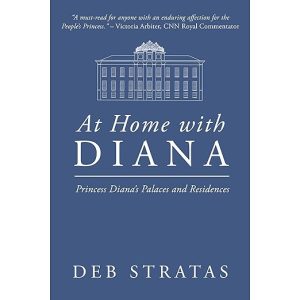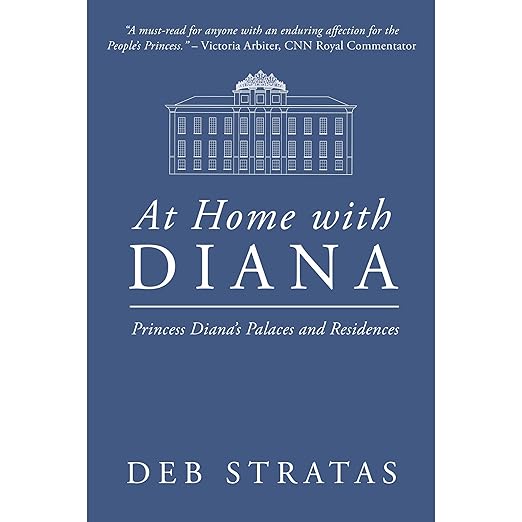
At Home with Diana takes a deliberately specific angle on Princess Diana's story: not the public narrative of royal marriages and charitable work, but the private geography of her life as expressed through the homes she occupied. Deb Stratas, who drew on personal visits to each of the thirteen residences she covers, structures this as equal parts biographical portrait and practical travel guide, a combination that CNN Royal Correspondent Victoria Arbiter described as packed with historical facts, touching anecdotes, and top tips for visiting. The audiobook format works for a project like this, though listeners drawn primarily to the visual element of royal residences should note that the accompanying information exists in audio description rather than imagery.
Stratas covers a span from Diana's childhood at Park House through her years at Kensington Palace, taking in Althorp, Clarence House, Highgrove, Balmoral, and ten other sites. Each chapter organizes itself around a particular residence, weaving biography, historical context, and the author's own reflective observations from her visits into a unified account. This is the fourth entry in Stratas's Diana Spencer Series, which suggests the project has sustained appeal for a specific and loyal readership.
Functional for Prose, Thinner in the Intimate Passages
The hybrid approach is the book's defining quality, and it is a genuine choice with real implications for different reader types. Fans of Crown-era royal biography who want the sense of inhabiting Diana's physical spaces will find the chapter-by-chapter residence structure satisfying. Each location carries its own emotional register in Diana's life, from the childhood home where she grew up as Lady Spencer to the rooms at Kensington where she navigated the most publicly scrutinized years of her marriage. Stratas connects those registers to the buildings themselves, which gives the biographical content unusual specificity.
The Virtual Voice narration, while adequately functional for biographical prose, does not fully serve the more intimate passages, where Stratas's personal reflections from her own visits to these locations come through. The conversational warmth of those sections would benefit from a human narrator who could shade the distinction between historical fact and personal observation. At four hours and fifty-four minutes, the runtime is compact enough that this limitation is not a dealbreaker, but it is a consideration for listeners sensitive to narration style.
The 214 ratings averaging 4.1 represent a broader and more varied response than most niche biography titles accumulate. The lower ratings tend to reflect expectations around photographic content, which is obviously absent in audio, and around the balance between travel guide practicality and biographical depth. Listeners who frame this as primarily a travel companion with biographical context will calibrate their experience more accurately than those expecting a deeply researched psychological portrait.
A Biography Told Through Architecture
The argument for the audio format here is the travel guide dimension. If you are planning a trip to England or Scotland with royal residences on the itinerary, having location-specific context available in audio form, organized by site rather than by chronology, serves a different practical function than a print guide you need to carry. The visiting tips, opening hours context, and practical advice that Stratas includes are more conveniently absorbed on the move than read at a desk.
For listeners who have consumed more conventional Diana biographies, or watched The Crown's interpretation of her life, At Home with Diana offers something these sources do not: the perspective of someone who has physically stood in each location and written from direct observation. The details that emerge from visiting Althorp's grounds or walking the spaces at Kensington are different in kind from archival research. One reviewer described feeling like she had stepped into Diana's world, which captures what Stratas's on-site approach produces at its best.
Stratas's reading of the homes as a biography-in-architecture, tracking Diana's movement from childhood spaces to adult ones as a way of tracing her emotional and social trajectory, is a distinctive interpretive frame. The homes are not just settings here; they are evidence of who Diana was and what shaped her.
Stratas's Warmth Doesn't Survive the Virtual Voice
Listeners should understand that the thirteen residences are covered in a compact four-hour-and-fifty-four-minute runtime, which means each location receives a relatively brief treatment. Listeners expecting deep biographical analysis of Diana's inner life, drawing on extensive source material, will find the coverage lighter than dedicated biography. Stratas's contribution is the on-site perspective and the travel-guide integration, not scholarly depth.
The Virtual Voice narration will register more noticeably in a project this personal than in more straightforwardly informational content. Stratas's voice as a writer, evident in the warmth and personal reflection that reviewers appreciate, does not fully survive the AI rendering. For listeners who find Virtual Voice narration disruptive, the print format would serve this particular title better.
The book is described as suitable for fans of The Crown and royal travel. Listeners who approach it expecting Crown-level dramatic depth or primary-source academic rigor will find both expectations unmet. This is a devoted enthusiast's careful on-site research project, and it is most satisfying when received as such.
A Supplement to Morton, Brown, or Lacey
Diana enthusiasts planning to visit England and Scotland who want location-specific context for their itinerary will find this the most directly useful kind of purchase. The travel guide element is most valuable for listeners who will actually use it, rather than those seeking pure biographical entertainment.
Royal biography readers who have covered Andrew Morton, Tina Brown, or Robert Lacey's accounts and want a supplementary, experiential perspective on the physical spaces of Diana's life will find Stratas's ground-level approach fills a specific gap those texts leave. Listeners new to Diana's story would be better served starting with a more comprehensive biography before coming to this one. Those primarily bothered by Virtual Voice narration should consider the print edition for a project this personal in tone.
The Short Version
- Narration: Virtual Voice narration suits the biographical and travel guide format reasonably well, though human warmth would enhance the more intimate portrait passages.
- Themes: Princess Diana's private domestic life, royal biography, royal travel
- Mood: Warm and reverential, with the intimacy of a fan who has visited each location in person
- Verdict: An enjoyable niche blend of royal biography and travel guide for Diana enthusiasts who want both historical context and practical visiting information.
Questions Listeners Ask
Is At Home with Diana an audiobook primarily for Diana fans, or does it work for general royal history readers?
It is oriented toward Diana enthusiasts rather than general royal history readers. The focus is specifically on thirteen residences associated with Diana's life, organized as both biography and travel guide. General royal history readers without particular Diana interest will find the scope too narrow, while fans will find the level of detail rewarding.
Does the audiobook include travel guide information that would be useful for visiting these royal residences?
Yes. Each chapter includes visiting tips, practical information about access, and observations from Stratas's own visits to each location. For listeners planning travel to England and Scotland who want audio-compatible site-specific context, this is one of the format's practical advantages.
What narration style does this audiobook use?
At Home with Diana uses Virtual Voice, an AI-generated narrator. The narration is functional for biographical and informational content, but the personal, reflective passages where Stratas writes from her own site visits would benefit from a human narrator's warmth. Listeners sensitive to AI narration may prefer the print edition.
Is this audiobook suitable as an introduction to Princess Diana's story for someone unfamiliar with her life?
Not ideally. The book assumes basic familiarity with Diana's life, public role, and the key people in her story. Listeners approaching the subject fresh would get more value from a comprehensive biography first, then return to At Home with Diana for the physical-spaces perspective it uniquely provides.