- Voice: Lisa Rinna self-narrates with exactly the bold, direct, celebrity-confessional energy her public persona promises, making this an audiobook that lives or dies entirely on your existing relationship with that voice.
- Big ideas: Reinvention and aging in Hollywood, grief and loss in the public eye, the cost and reward of unfiltered self-expression
- Atmosphere: Brash and candid, occasionally raw, consistently entertained by itself
- Worth it?: Rinna fans will find this audiobook delivers everything the title promises; listeners without that investment will find it works better in shorter sessions.
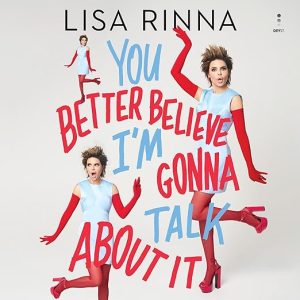
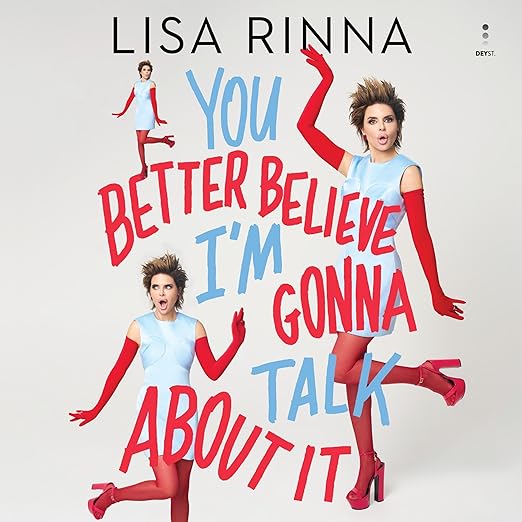
Lisa Rinna narrating her own memoir is one of those audiobook pairings that feels so self-evident it barely requires argument. You Better Believe I'm Gonna Talk About It is a book whose entire appeal is predicated on Rinna's voice, her specific brand of forthright, theatrical, self-aware candor, and in the audiobook she delivers it direct. At six hours and fifty minutes, it is exactly long enough to cover the ground the title promises: soap opera, reality television, fashion, marriage, grief, reinvention, and the particular experience of aging inside an industry that has always preferred the young and the polished. Whether that is enough depends almost entirely on how much you want to spend six hours inside that specific energy.
Rinna's career has been defined by a kind of deliberate overexposure that she is fully aware of and largely unapologetic about. From her years on Days of Our Lives as Billie Reed through her extended run on The Real Housewives of Beverly Hills to her presence as a social media provocateur and fashion figure, she has cultivated an image of someone who says what others are thinking and then stands by the consequences. The memoir extends that approach into deeper territory: the experience of losing her mother Lois, described as a Beverly Hills fan favorite; navigating her daughter's chronic illness; and reckoning with what decades of performing her own persona have cost and given her.
The audiobook is at its most valuable when Rinna is talking about the parts of her life that her public persona has protected rather than exposed. Her account of her mother's death and the particular cruelty of grieving publicly while her audience debated whether her reactions were authentic is among the more genuinely moving passages in the recording. Her reflections on aging in Hollywood, about what it means to build an identity around visibility and then watch that visibility become conditional on maintaining a specific kind of youth, are sharper than the promotional framing suggests. These are not the passages that generate the clips and the memes, but they are the ones that make the book more than a celebrity confessional aimed purely at existing fans.
One longtime viewer who had followed Rinna since her Days of Our Lives years described the audiobook as highly entertaining, particularly with Rinna herself as the narrator. That response captures the book's primary mode: this is entertainment first, with genuine substance appearing in specific passages rather than across the whole. A less committed listener who worked through the recording described pushing through certain chapters as too drawn out, which maps the experience accurately. The book is not uniformly tightly edited, and some sections extend beyond what their material requires, which the overall 3.9 rating across 336 reviews reflects honestly.
The Self-Narration Adds a Dimension Print Can't
The self-narration is the central reason to choose this audiobook. Rinna's voice carries decades of performing her own persona, and the memoir works best as performance rather than literature. When she describes the soundstages of daytime television, the drama of the Housewives franchise, or the experience of being defined by a pair of lips and a social media presence, she is not reading a script; she is inhabiting the material in a way that translates across the audio format. Several listeners have described the production as adding a dimension to the story that the print edition cannot replicate, which is the clearest endorsement for the audio-first approach to this title.
The breadth of subjects covered is worth noting. Rinna moves from career to marriage, from parenting to public grief, from fashion catwalks to Depends endorsements with the same tone throughout, and for listeners who find that consistency charming rather than relentless, the audiobook sustains itself across the full runtime. Her willingness to discuss aging in an industry obsessed with youth, and to do so without the usual careful packaging, is among the book's more surprising qualities for listeners who expect celebrity memoirs to stay safely on the promotional side of disclosure.
Candor That Sometimes Performs Its Own Candor
The memoir is candid about Rinna's inner life in ways that sometimes feel genuinely revelatory and sometimes feel like candor performing candor. The book is written with full awareness of its own image, and that self-consciousness is part of what makes Rinna a compelling cultural figure. But it also means that listeners hoping for the kind of deeply private disclosure that memoirs from less carefully constructed public personalities sometimes offer may find the protective layer of Rinna's persona present even in the most personal passages.
The specific chapters dealing with her daughter's chronic illness and with the public aftermath of her mother's death are the most emotionally substantial portions of the book. Listeners who want to understand the fuller human being behind the reality television figure should listen carefully to those sections, which Rinna navigates with less deflection than she applies to the entertainment industry material. The chapter pacing is uneven across the full six hours, with some stretches landing as more engagingly written than others, which accounts for the mixed response among listeners who are not already deeply invested in Rinna's story going in.
Built for Listeners Already Enthusiastic About Rinna
This audiobook was made for listeners who are already enthusiastic about Lisa Rinna, who have followed her career across soap opera, reality television, and social media, and who want to hear her version of events directly from her. The self-narration format is essential to the experience: this is not a book whose value survives a professional narrator reading it neutrally. It requires Rinna's specific voice and delivery to work as intended. Listeners with no existing connection to her public persona will find the cultural references thin and the entertainment value unevenly distributed. For the audience Rinna has built across thirty years in the public eye, this audiobook delivers exactly the access it promises, direct, unfiltered, and thoroughly committed to its own point of view right through to the final chapter.
Common Questions
Does Lisa Rinna actually narrate the audiobook herself, or is it read by a professional narrator?
Lisa Rinna narrates the entire audiobook herself. The self-narration is widely cited as the main reason to choose the audio over the print edition, as her voice and performance style are central to how the material works.
Is the You Better Believe I'm Gonna Talk About It audiobook suitable for listeners who are not familiar with Lisa Rinna's work?
It can be listened to without prior knowledge, but the entertainment value is substantially higher for listeners who have some familiarity with her career. Much of the audiobook's humor and emotional resonance depends on knowing the public events and performances she is contextualizing.
Does this audiobook address the more personal chapters of Rinna's life, or is it mostly focused on her entertainment career?
The audiobook covers both. The entertainment career sections are substantial, but Rinna also opens up about her mother's death, her daughter's chronic illness, and what aging in Hollywood has meant for her sense of identity. Those more personal passages are among the audiobook's most memorable.