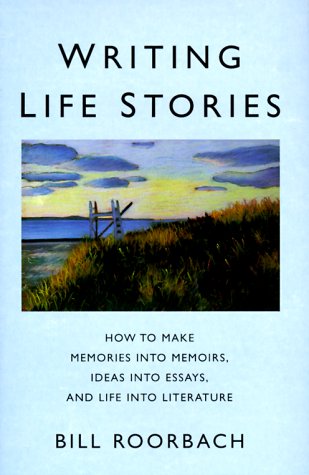
Bill Roorbach's Writing Life Stories audiobook is one of those rare craft guides that models the advice it gives. Roorbach writes with the kind of specificity and warmth he demands of his students, and John McLain's narration carries that spirit without adding distance. At over eight hours, it is dense with exercises, examples, and honest engagement with the problems writers actually face rather than the problems that make for elegant pedagogy. I reached for this one during a stretch when a personal essay had stalled, and within the first hour I had a notebook open beside me.
The format is deliberate: Roorbach does not lecture so much as accompany. He moves through the mechanics of scene-building, voice, structure, and revision the way a good workshop facilitator does, never letting the theory sit long without anchoring it in example. That approach pays off particularly well in audio, where a purely abstract discussion of craft can blur into background noise.
McLain's Pause Signals Which Lines to Replay
What separates this from the crowded shelf of writing manuals is the insistence on exercises as the primary delivery mechanism. Julia Atwood, one of the reviewers, notes using the exercises directly in the writing groups she facilitates, and that tracks with how the book is designed. Roorbach is not interested in handing you a theory of memoir and walking away. He wants you to write something before the chapter is done. The exercises range from short warm-ups to extended prompts that engage memory, place, and character in ways that feel genuinely generative rather than academic.
McLain's pacing through these sections is well-judged. He reads the exercise prompts with a slight pause and lower register that signals to the listener: this is the part worth replaying. That sensitivity to a book's functional structure is not always present in narrators tackling nonfiction how-to content, and it makes the audiobook format more practical than it might otherwise be. The reviewer Helena specifically credits the assignments in helping her write her own life story, which is the plainest possible measure of success for a guide like this.
From Foundational Questions to Ethics and Truth
The chronological structure of the book suits listening well. Roorbach moves from foundational questions about why we tell personal stories at all, through the mechanics of scene and summary, into the harder territory of truth, ethics, and what we owe the people who appear in our work. Each section builds on the last in a way that rewards sustained listening rather than dipping in and out. That said, the book is also structured so that writers with a specific problem, say, taming a sprawling timeline or finding the emotional center of a difficult memory, can locate the relevant chapters and return to them.
Roorbach's background as both a memoirist and a longtime writing teacher is evident in how precisely he diagnoses the problems writers actually face. The section on research and factual responsibility in memoir is particularly sharp, and holds up well as a listening experience even though it covers material that can feel dry when handled poorly. Natalie Norman Baer, who bought multiple copies to give to her writing group, is describing the kind of book that works communally as well as individually, and the audiobook version serves both contexts.
Keep a Notebook Ready for the Exercises
Audio listeners should know upfront that the exercises require some adaptation in this format. The wisest approach is to listen with a notebook or voice memo app ready, since pausing mid-exercise prompt and then resuming is going to be part of the experience. This is not a criticism of McLain's narration or Roorbach's structure; it is simply the nature of a craft book that does its best work when the reader acts on it. A listener expecting a purely passive experience will get less from this than they might from another format.
Roorbach's prose occasionally tips toward the lyrical when the analytical would serve better, and a few of the early chapters feel slightly discursive before arriving at their point. That is a minor friction in eight-plus hours of consistently solid material. The second half of the book, covering revision, ethics, and the deeper structural problems of memoir, is noticeably tighter and tends to be where writers who are already past the early-draft stage find the most traction.
Learning by Doing, Even for Karr Readers
This audiobook is well-suited to writers working on memoir, personal essays, or any form of nonfiction rooted in lived experience, whether they are just starting out or returning to a project that has stalled. Writing group facilitators will find immediate material they can adapt. Writers who learn well from a workshop model, with exercises that produce actual drafts rather than just stimulate thinking, will get the most out of the format.
Listeners who prefer purely theoretical treatments of craft, or who have already worked deeply with texts like Mary Karr's The Art of Memoir or Vivian Gornick's The Situation and the Story, may find some of Roorbach's ground familiar. That said, the exercises here are original and worth the time even if the framework is not entirely new. Roorbach is also refreshingly honest about the limits of what any craft book can teach, arguing throughout that the essential knowledge of memoir writing comes from the doing rather than the reading about it. That admission is rare in writing pedagogy and gives the book a credibility that more promotional guides sometimes lack. At just over eight hours with McLain's steady narration, this is a craft audiobook that earns its running time and delivers on the practical promise of its title.
At a Glance
- Narrator: John McLain delivers Roorbach's conversational, workshop-style text with clarity and a warm, collegial tone that suits the material well.
- Subjects: Personal narrative craft, memoir writing, the transformative power of storytelling exercises
- Tone: Encouraging and purposeful, like sitting with a trusted mentor
- Bottom line: Writers at every stage will find something immediately usable here, from the framework Roorbach builds around memory to the exercises that push you off the page and into lived experience.