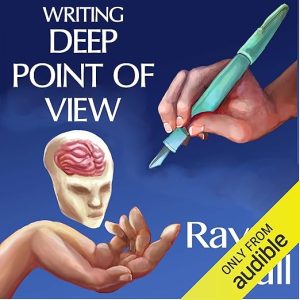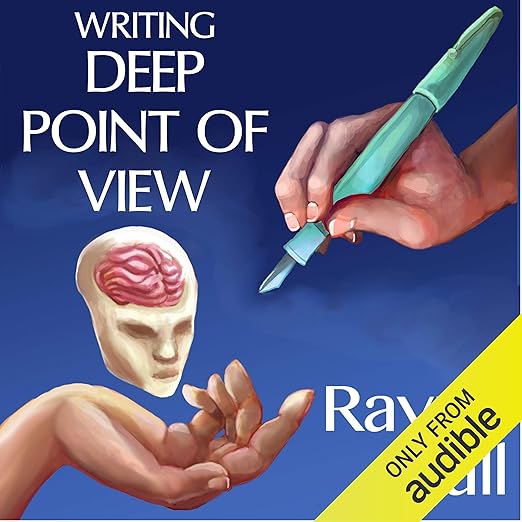
Gladiators, heiresses, explorers, courtesans: Rayne Hall uses these four archetypes to explain deep point of view early in this audiobook, and the choice signals exactly what kind of craft book this is. Writing Deep Point of View runs a lean two hours and twenty-two minutes, and it spends nearly all of that time on one specific technique, the kind of close, embodied narration that makes a reader forget they're reading about a courtesan in Renaissance Venice and instead feel like they've become her. Hall is upfront about who this audiobook serves. The synopsis states plainly that this is not a beginner's book. It assumes you've already mastered basic fiction craft and know how to build a compelling character, which means the whole recording moves at the pace of a working writer's continuing education, not an introduction.
Hall structures the material as a self-study class. Reviewer Ann F. lays out the underlying concept about as cleanly as anyone could: deep point of view means the reader is never aware of the narration itself, only of experiencing events through the lead character's perspective, which demands both evocative writing and the discipline to strip out anything that breaks that closeness. The audiobook opens with point of view basics, explicitly framed as a refresher for anyone who already knows the territory, before moving into the advanced strategies that make up the bulk of the runtime. That structure matters for pacing. Listeners who need the refresher get one without feeling talked down to, and listeners who don't can treat the early material as a quick warm-up rather than dead air.
The book's real subject is control: what to include in a character's internal experience, what to cut, and how sensory detail gets filtered through one consciousness instead of an omniscient narrator's. Reviewer RenoGardener calls it a great little book that pairs the basics with real examples, which is the right way to describe how Hall works. She doesn't just define deep point of view and move on. She shows the technique in action, contrasting flat narration against deeply embodied narration line by line, exactly the kind of side-by-side comparison that benefits from being read aloud rather than skimmed silently on a page.
Lookabaugh Shifts Cleanly Between Two Registers
That side-by-side comparison is where narrator Cat Lookabaugh earns her keep. A craft book that quotes short excerpts to demonstrate technique lives or dies on whether the narrator can shift registers cleanly between the instructional voice explaining a concept and the illustrative voice performing the example sentence. Lookabaugh keeps that boundary clear throughout, which sounds like a small thing until you consider how easily a flatter reading could blur an explanation into an example and leave a listener unsure which one they just heard. Her pacing also respects the density of the material. This is closer to a workshop lecture than conversational nonfiction meant for a passive commute, and she reads it at a speed that gives a listener room to actually absorb a technique before the next one arrives.
Reviewer Donald Hunt, who writes pulp fiction and reviews books for a living, calls deep point of view a must-have skill and describes it as multi-faceted and extremely complex, something a writer only improves at through repetition. That assessment lines up with how the audiobook is built: less a one-time listen and more a technique you return to, chapter by chapter, as you revise your own draft. For writers who already have pages written and are looking for a specific diagnostic tool rather than general encouragement, that repeat-listen structure is a genuine asset rather than a limitation of the short runtime.
You Cannot Do the Homework While Driving
The self-study framing comes with a real audio limitation. Hall built this as a class, complete with assignments at the end of each session, and a listener obviously can't complete a writing assignment while driving or doing dishes. The instructional content, the definitions, the examples, the technique breakdowns, transfers cleanly to audio. The hands-on practice does not, and anyone who wants the full self-study experience will need to pause and actually write between sections, which changes how you'd plan to listen to this compared to a passive nonfiction title. Treat the audiobook as the lecture half of the class and budget separate time for the exercise half, rather than expecting the listening itself to complete the training.
The other thing to watch for is scope. At just over two hours, this is a focused single-topic session, not a comprehensive course in fiction craft, and Hall's own synopsis is honest about that boundary. It's part of a larger Writer's Craft series rather than a standalone masterclass, and listeners hoping for broader coverage of plotting, dialogue, or structure will need to look at Hall's other titles. Within its narrow lane, though, the material goes deep rather than wide, precisely the tradeoff a listener should expect from a book built around one technique rather than a full craft toolkit.
One practical listening note: because the material is dense and technique-focused rather than narrative, many listeners will get more out of this by bookmarking specific technique explanations to return to later rather than treating it as a single linear listen. A definition of deep point of view heard once during a commute is easy to lose track of by the time you're actually revising a scene weeks later, so treat the two-hour runtime as something you might revisit in short chunks alongside your own manuscript rather than a single complete sitting.
This Rewards Writers Revising an Actual Scene
This audiobook rewards working writers who already have a draft, or at least a completed scene, sitting somewhere and want a specific lens for revising it. Self-editors, critique partners, and anyone stuck on why a scene reads flat despite technically correct grammar will get real, immediately usable value here. It's also a strong fit for writers who've heard the term deep point of view thrown around in workshops without ever getting a precise definition, since Hall and her reviewers agree on unusually clear terms for what the technique actually requires.
Skip this one if you haven't finished a full draft yet, or if you're still working out basic elements like character motivation and scene structure. Hall says so herself, and the reviews back her up: this rewards writers revising real pages, not writers looking for their first lesson in how fiction works. Absolute beginners will get more out of a foundational craft book first and can circle back to this one once they have a draft that needs this specific kind of scrutiny.
Quick Take
- Narrator: Cat Lookabaugh shifts cleanly between instructional explanation and illustrative example, which matters more than usual in a book built on side-by-side technique comparisons.
- Subjects: Point of view craft, reader immersion, self-editing technique
- Tone: Focused and instructional
- Bottom line: A sharp, single-topic craft session for writers revising a real draft, not a beginner's introduction to fiction.