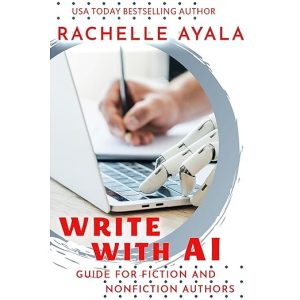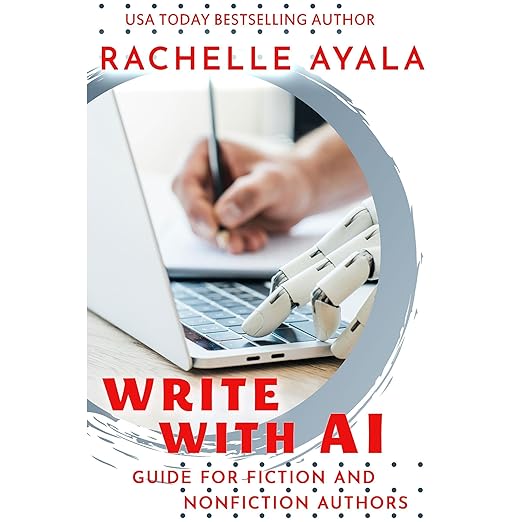
A 3,000-word opening scene, written live by ChatGPT under the author's direction, is the centerpiece demonstration in this audiobook, and it tells you exactly what kind of guide you're getting: hands-on, transparent about its process, and unafraid to show its work start to finish. Running a brisk 3 hours and 28 minutes, Rachelle Ayala walks fiction and nonfiction writers through using GPT-4 for premises, outlines, character development, and full scenes, with the actual prompts included so you can follow along or adapt them for your own project.
Ayala structures the book as a full pipeline rather than a loose collection of tips: idea generation first, then outlining methodology for both fiction and nonfiction, then scene and section drafting, then troubleshooting writer's block. The demonstration project, a young adult dystopian story, gets carried from a one-line premise through synopsis, characterization, a detailed outline, and finally that full opening scene, with every intermediate step shown rather than summarized. A parallel nonfiction article example runs alongside it, so the book never assumes you're only interested in one side of Ayala's dual promise.
What keeps this from reading as a generic AI hype book is the ethics section threaded through the practical material: Ayala addresses using AI 'ethically and effectively' rather than treating the technology as a free pass around craft. That framing matters for a listener wary of AI-assisted writing on principle. The book doesn't argue you should let ChatGPT write for you; it argues you should learn to direct it the way you'd direct a very fast, very literal research assistant.
The synopsis lays out seven specific promises the book makes: getting acquainted with AI without reservation, generating ideas, crafting content collaboratively, plotting structure and outlines, composing full scenes and sections, boosting creativity past writer's block, and adapting to an AI-driven literary landscape long-term. That's a lot of ground for a 3.5-hour book to cover, and Ayala manages it by keeping each section tightly scoped around one concrete skill rather than circling the same general advice repeatedly.
The rating on this listing, 4.1 from 74 ratings, sits slightly lower than some of Ayala's earlier writer's guides, which may simply reflect how new and unsettled the AI-writing-tools conversation still is; a book this tightly tied to a fast-moving technology risks feeling dated faster than a craft guide on plotting or character work would, a tradeoff worth naming honestly rather than ignoring.
Readers Confirm This Still Sounds Like Ayala
Ayala's track record as a writing coach carries real weight here. One listener, D Barker, compared this favorably to her earlier guides, Romance in a Month and 366 Ways to Know Your Character, noting the book keeps 'a friendly and fun tone (clearly her voice, not an AI!)' alongside genuinely actionable steps. That distinction between her voice and the technology she's teaching is worth sitting with, since it's the whole argument of the book in miniature.
Reviewer Barbie compared this directly against a competing title, Love by the Prompt, and found Write With AI 'shorter, much clearer and to-the-point,' calling it 'a great first step book for AI newbies.' That comparison is useful context if you're choosing between the growing stack of AI-writing guides currently available; this one prioritizes clarity and a fast read over exhaustive coverage.
Reviewer Sky King, describing themselves as 'a non-techy person,' credited Ayala with explaining AI writing tools 'in such a way even a non-techy person like myself understands,' calling this 'yet another super helpful book for writers!' That accessibility for readers without a technical background is a real asset given how quickly AI-adjacent writing advice can drift into jargon.
What separates this from a lot of AI-hype content is the specificity of the demonstration. Rather than gesturing vaguely at what AI can do for a writer, Ayala shows the actual prompt language, the actual generated text, and her own editorial judgment about what to keep or discard, which gives listeners a genuine template to copy rather than just an abstract endorsement of the technology.
Synthesized Narration Flattens Ayala's Own Personality
The Virtual Voice narration is the most honest tradeoff to flag. For expository, step-by-step instructional content like this, synthesized narration holds up reasonably well; the prompts and process steps come through clearly enough to follow. What it can't replicate is the 'friendly and fun tone' reviewers specifically credit to Ayala's own writing voice, so some of the personality that makes her other guides distinctive is inevitably flattened here. One small irony is worth naming without belaboring it: a guide about writing with AI, read aloud by an AI voice.
At this length, brisk by any writing-guide standard, this moves fast, and because the whole method depends on typing and adjusting prompts as you go, passive listening alone won't get you the full value. Keep the ebook or print edition open if you actually plan to follow the ChatGPT walkthrough rather than just absorb the concepts, since you'll want to copy exact prompt language rather than reconstruct it from memory after the fact.
This is the first entry in a planned Write With AI series, with a second book, An AI Author's Journal, following Ayala's own writing process expanding a manuscript over 14 days. Worth knowing if this first guide leaves you wanting a more extended, journal-style account of the method actually being used on a full manuscript rather than a single demonstration scene.
Because the book is explicitly built as a hands-on learning tool rather than pure theory, listeners who prefer to absorb craft advice passively before ever trying it themselves may find the emphasis on immediate application, following the prompts as you listen, more demanding than a conventional writing-advice audiobook asks for.
Aimed at Writers Anxious About Trying AI
Recommended for fiction and nonfiction writers at any experience level who are curious, or a little anxious, about incorporating AI into their process. Barbie's framing as a strong entry point for 'AI newbies' holds up; you don't need prior ChatGPT experience to follow along, and the dual fiction/nonfiction structure means genre writers and article writers both get direct, usable material rather than one audience being an afterthought.
It's also a good pick specifically for writers with some reservations about AI tools going in; Ayala's framing spends real time on ethical use rather than assuming enthusiasm, which makes this a reasonable choice even for a skeptical listener who wants an honest look before deciding how, or whether, to incorporate these tools.
Skip it if you want a technical deep dive into how large language models actually work; this is a craft and workflow guide, not an AI explainer. Also consider the print or ebook edition instead of, or alongside, the audiobook if synthesized narration is a dealbreaker for you, or if you know you'll want to pause constantly to type prompts rather than listen straight through.
Is Virtual Voice narration a problem for this kind of instructional audiobook?
Less than it would be for fiction. Expository, step-by-step content like this translates reasonably well to synthesized narration, though it can't capture the 'friendly and fun tone' reviewers associate with Ayala's own writing voice.
Do I need to already use ChatGPT or GPT-4 to follow this audiobook?
No prior experience is required. The guide is built for writers new to AI tools, walking through account basics and prompt-writing fundamentals before moving into the more advanced outlining and scene-drafting techniques.