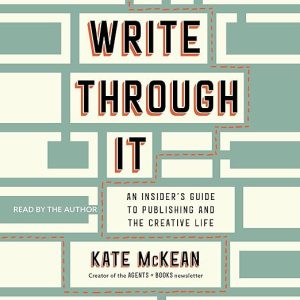
Kate McKean has spent years demystifying the publishing industry through her Agents & Books newsletter, and Write Through It is that project extended to full audiobook length. McKean is a literary agent who also writes fiction, which means she occupies both sides of the desk she is writing about, and that dual perspective shows throughout. At eight hours and twelve minutes, this is a substantive guide rather than a quick orientation - McKean is not interested in giving writers a feel-good survey of the publishing landscape. She is interested in helping them survive it, which requires telling them the truth about what it actually involves.
The book's central argument is that the practical and emotional dimensions of writing are inseparable, and that most writing guides make a mistake by addressing one without the other. The query letter mechanics matter, but so does the anxiety that makes you revise a query forty times without sending it. Word count targets matter, but so does the fear underneath the missed target. McKean moves through the full arc of the writing and publishing process with this dual awareness, treating each phase as having both a practical dimension and an emotional one that require honest attention simultaneously rather than sequentially.
What Actually Happens When an Agent Reads
One reviewer described this audiobook as balm to my poor, battered soul after reading it in under twenty-four hours while managing two young children - which tells you both about the urgency the material creates and about the emotional relief McKean's honesty produces. The relief is not the relief of false reassurance. McKean does not promise success or suggest the system is fair. What she provides is the specific relief of having someone acknowledge clearly that the process is genuinely hard, that the feelings are normal and expected rather than signs of weakness, and that the tactical problem and the emotional problem are both real and both addressable.
The coverage of what actually happens when an agent reads a query letter is among the most useful content in the book for writers who have been submitting into apparent silence. A reviewer who praised the clarity with which McKean took them through her experience of reading thousands of submissions described it as the most revelatory information in the text: understanding what the receiving end of a query actually looks like changes how the sending end approaches its work. That kind of insider translation is exactly what a newsletter like Agents and Books exists to provide, and McKean extends it here to the full arc of the writing and publishing relationship - not just querying but rejection, near-misses, the particular anxiety of a full manuscript request, and the elation and fear that arrive simultaneously with a book deal.
McKean Narrates With Her Newsletter's Blunt Warmth
McKean narrates this audiobook herself, and the self-narration is a genuine advantage rather than a compromise. Her voice in the newsletter has a particular quality - direct, slightly dry, warmly blunt rather than aggressively so - and that quality carries through the audio intact. When she describes reading thousands of submission queries, the accumulated professional experience is audible in her delivery. When she addresses the sting of rejection, she does not perform sympathy; she delivers it plainly, which is more effective than performance would be. The eight-hour runtime means she has space to develop ideas rather than gesturing at them briefly before moving on. Each stage of the publishing process receives enough attention to be genuinely useful rather than being reduced to a checklist item.
The coverage of emotional intelligence as applied to the writing life is one of the sections that distinguishes this audiobook from more tactical publishing guides. McKean addresses not just the positive emotions of achievement but the doubt and fear and hope that are present long before achievement arrives, and she does not treat those emotions as problems to be managed but as legitimate parts of the writing experience that deserve honest attention. That reframe is more valuable than it might sound, particularly for writers who have been treating their emotional responses to the publishing process as obstacles rather than as information.
This Book Assumes the Traditional Agent Route
This is a book explicitly addressed to writers navigating the traditional publishing route through literary agents. Writers pursuing self-publishing or hybrid models will find only partial relevance; McKean's expertise is the traditional system, and she does not spend significant time on other publishing paths. The emotional-intelligence framing, while genuinely useful, means that listeners looking for a primarily tactical reference - a step-by-step checklist approach to querying - may find the pacing more reflective than they want. The book is also honest that the traditional publishing path has no guaranteed outcomes regardless of craft or preparation, which is necessary information but occasionally uncomfortable for writers who hoped for more certainty from a practical guide.
For Writers Currently in the Query Trenches
Writers who are currently querying agents, who have been recently rejected, who are trying to decide whether their manuscript is ready to send, or who are simply exhausted by the emotional unpredictability of the writing life will find this audiobook addresses their actual situation with uncommon directness. McKean's insider perspective on what happens on the other side of the submission email is useful for anyone in the traditional publishing pipeline who has wondered what agents actually experience when reading queries. Writers who already have significant agent relationships or multiple publishing credits will find some of the material covers familiar territory. This audiobook is most valuable for the writer who knows the publishing world exists but has not yet made sustained, informed contact with it.