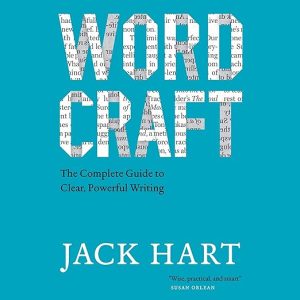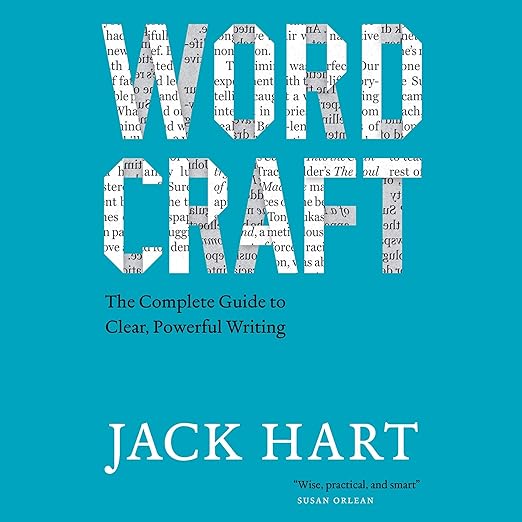
Twenty-six years at The Oregonian taught Jack Hart something most writing guides miss: craft transfers across genres. The audiobook edition of Wordcraft, narrated by Paul Bellantoni, updates what began in 2006 as A Writer's Coach into a guide aimed squarely at bloggers, podcasters, and anyone building a career on sentences, not just newspaper reporters chasing a byline. Hart spent his career editing copy for writers who went on to win Pulitzer Prizes, and that pedigree shows in how methodically he breaks the writing process into discrete, teachable stages, from generating an idea through the final polish. What struck me most is how little Wordcraft cares about genre. Hart insists that force, brevity, clarity, rhythm, and color are the same five qualities whether you're writing a magazine feature, a blog post, or a memoir, and the book spends its ten-and-a-half-hour runtime proving that claim with real, sometimes embarrassingly bad, examples pulled from actual published writing.
Fratzke Read This Twice and Bought Both
Reviewer Jenny Fratzke put it plainly in the title of her own review: Jack Hart's helpful and practical guide helped her more than all the craft books she'd read combined. She liked the material enough to buy both the print book and the audiobook, then read through the text twice, which tells you something about how dense and reusable Hart's advice actually is. That density is the book's biggest asset and its biggest listening challenge. This isn't a breezy motivational talk about finding your voice; it's closer to a structured course, with Hart walking through specific techniques for building narrative tension, choosing verbs that carry their own energy, and cutting the padding that creeps into first drafts. Another reviewer, Karin V, singled it out as essential listening for short-form nonfiction writers specifically, while noting that many of its lessons scale up comfortably to book-length work too, a claim the book's own structure backs up chapter by chapter.
Bellantoni's narration matches that instructional tone: even, unhurried, willing to let a technical point land without rushing toward the next one. I don't have a deep catalog of his other audiobook work to compare against, so I'll say this plainly rather than oversell it: nothing about his performance calls attention to itself, which is exactly the right instinct for a book built around specific, repeatable technique rather than personality or drama. When Hart walks through a weak sentence and rebuilds it piece by piece, you need a narrator who won't blur the line between the broken version and the fixed one, and Bellantoni keeps that contrast clean throughout the listen.
Bellantoni Lets You Hear the Rhythm Break
Part of what makes Wordcraft worth your time over other writing guides is Hart's range of source material. He isn't only quoting his own newspaper clips; the book pulls examples from novelists, magazine writers, and some of the more than one Pulitzer Prize winner he personally coached at The Oregonian and in workshops since. That range matters in audio specifically, because hearing bad and good versions of the same passage read aloud, back to back, makes the difference audible in a way that's harder to absorb silently on a page. You hear exactly where the rhythm breaks, where a sentence goes flat, where an unnecessary clause slows a reader down without adding meaning.
The book also belongs to a respected lineage: it's part of the University of Chicago Press's Chicago Guides to Writing, Editing, and Publishing series, a shelf that includes some of the more durable, unglamorous craft references in the business. Wordcraft earns its place there by refusing to treat writing as mysterious talent. Hart's approach is closer to a coach breaking down a golf swing: idea, structure, drafting, revision, polish, each stage with its own specific tools and diagnostic questions, which makes the book easy to return to for one particular problem rather than requiring a full cover-to-cover relisten every time you need it.
Force, brevity, clarity, rhythm, and color are not abstract virtues in Hart's telling; each gets its own dedicated stretch of the book with concrete diagnostic questions attached. Force means giving sentences an actor and an action rather than burying meaning in passive constructions. Brevity means cutting the throat-clearing most drafts open with. Clarity means untangling qualifier-heavy sentences until a reader doesn't have to work for the point. Rhythm means reading your own work aloud to catch where the sentence music breaks down, a technique Hart pushes hard throughout. Color means finding the one specific, sensory detail that makes abstract writing feel lived-in rather than generic. Hearing Hart apply this five-part framework to real, published examples, some of them his own early clips he isn't afraid to critique, is where the audiobook format adds something a silent read might not: you hear the rhythm problems he's describing as they happen.
Newspaper Craft Still Outweighs Fiction Technique
The instructional density that makes Wordcraft valuable also makes it a poor fit for passive listening during a commute where your attention is split. This is a book that rewards a notebook nearby, or at minimum a willingness to pause and think through an example before moving on. Listeners expecting a more casual, anecdote-driven memoir about a career in journalism, closer in tone to something like Bird by Bird, may find Hart more clinical and less personally revealing than they'd like. He's here to teach technique, not to tell stories about his own life at the paper, and the book stays disciplined about that boundary for its entire runtime.
It's also worth noting that Wordcraft was originally written with print journalists most in mind, and while this updated edition genuinely does broaden its examples toward bloggers and podcasters, some of the source material still leans on newspaper and magazine craft more than, say, screenwriting or fiction technique. Writers working purely in fiction may need to do some translation work themselves, mapping Hart's nonfiction examples onto scene and dialogue. That's a minor asterisk on an otherwise broadly applicable book, not a disqualifying flaw. A short closing chapter on revision strategy ties the whole method back together, which helps if you've been listening across several separate sittings rather than straight through.
Working Journalists May Already Know This
Working writers past the beginner stage, the ones who already produce clean copy but want to understand why some sentences work and others don't, are Wordcraft's ideal audience. So are podcasters and bloggers building a distinct voice, plus anyone coaching or editing other writers who wants a shared vocabulary for giving feedback. The ten-hour-plus runtime is justified by how much specific, actionable material Hart packs into it; this isn't a padded production stretched to hit a target length, and Bellantoni's narration never drags even during the more technical stretches on sentence mechanics.
Working journalists who already have their own established house style may find less genuinely new material here than beginning and intermediate writers will, since Hart's core principles overlap with craft advice many working reporters absorb on the job over years of editing. That doesn't make the audiobook less well constructed; it just means your mileage on new information will depend heavily on how much formal training you've already had before pressing play.
The Short Version
- Narrator: Paul Bellantoni keeps a measured, unshowy delivery that suits a hands-on craft manual, though no prior catalog track record is on file to compare against.
- Subjects: writing craft fundamentals, revision discipline, technique that transfers across genres and formats
- Tone: Practical and instructional, occasionally dry but never padded
- Bottom line: A genuinely useful listen for writers past the beginner stage who want to know why their sentences work, not just that they do.
Does the Wordcraft audiobook work for writers outside of journalism?
Yes. While Jack Hart's own background is in newspapers, this updated edition broadens its examples toward bloggers, podcasters, and general nonfiction writers, and the core principles of force, brevity, clarity, rhythm, and color apply across formats, though fiction writers will need to translate some examples themselves.
How long is the Wordcraft audiobook and is the runtime justified?
It runs just over ten and a half hours, and the length is earned; Hart packs in real-world examples of both strong and weak writing throughout, rather than stretching thin material to fill the runtime.