Quick Take
- Voice: Susan Marlowe holds the reading credit on a self-published production, with no cast and no archival audio to break up the survey.
- Big ideas: Women in combat and intelligence, recognition withheld, institutional change, from the trenches to drone warfare.
- Atmosphere: Brisk, admiring, and organized like a well-planned introductory course.
- Worth it?: A useful century-wide map for newcomers, and too thin for anyone who wants the individual lives.
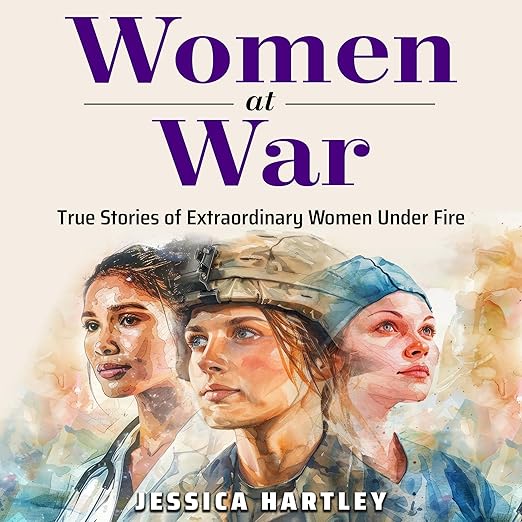
A century of war in five hours and forty minutes is a decision rather than an accident. Women at War runs from the trenches of the first world war through to drone operators on the Ukrainian front, and its own contents list names five eras to be covered inside that time. The audiobook is a survey, then, and the question worth settling before buying is whether a survey is what you came for, because the book's ambitions and its runtime pull against each other from the opening chapter.
Recognition Always Arrives Later Than the Service
Short chapters are the design solution, and a November 2025 five-star names them as the thing that works: focused, easy to enter and leave, with a tone balancing accessible storytelling against clear respect for the material. That same response credits the book for moving beyond a single theater or era to show patterns of courage repeating across conflicts. Pattern is the honest word for what a survey delivers. You do not get one woman's war in depth; you get the shape that recurs whenever women arrive at the same institutional wall in a different decade.
Contents are laid out plainly in the copy. Pioneers of the first world war serving as nurses, spies and combat soldiers. Resistance fighters, code-breakers and camp survivors in the second. Korea and Vietnam service members expanding roles while fighting for recognition and equal treatment. Desert Storm and the technological shift that opened combat support positions. Then Ukraine, where the copy points at drones and at women leading units. Five blocks, one century, and a through-line the book states outright, which is that recognition has always arrived later than the service that earned it.
Marlowe Delivered a Hundred Years Without a Cast
A February 2026 five-star puts the appeal precisely: military history usually keeps its attention on the men, and this book holds it on the women who were in the same rooms and the same trenches. That entry singles out how much ground gets covered, refusing to stop at the second world war code-breakers and resistance fighters and carrying the account through to women operating drones on modern front lines. Breadth is the selling point rather than the compromise, at least for a listener who wants the map before deciding where to dig.
Five hours and forty minutes across five sections works out at a little over an hour per era, which is both a manageable listen and an honest match for the format. Nothing here demands note-taking. The chapters close cleanly, the chronology moves in one direction, and the organizing principle is the calendar rather than an argument that has to be built and defended. Introductory history works in audio for exactly that reason, and this book is unusually well shaped for the medium it landed in.
Susan Marlowe takes the reading credit, and the format asks for consistency ahead of range: a hundred years of names, ranks, places and units delivered without a cast to share the load, across five conflicts whose vocabulary changes completely between sections. Survey history depends on a listener being able to keep track of who is under discussion at any moment. Short chapters help with that, since each closes its own subject before the next opens, and the copy's headings give away the structure in advance.
Expecting a Vignette, Finding an Overview Instead
One four-star, filed the day after release, describes the exact disappointment this format produces. That listener came expecting a vignette for each woman, a page or two of individual story with her actions and accomplishments attached, and found instead an overview of each period in which individuals appear in small passing paragraphs. Both descriptions are accurate. The book is organized around eras rather than around people, and anyone imagining a gallery of portraits should adjust expectations before buying, because the structure will not come to meet them later on.
The research claims deserve scrutiny. The copy calls this a meticulously researched chronicle drawing on personal accounts, archival research and expert interviews, while the publisher slot simply repeats the byline, so no house stands behind the editing or the checking. Audio compounds the problem: notes, a bibliography and source attributions are precisely what a recording cannot show you. A listener wanting to follow a claim back to its origin has nowhere to go from this page, and on the modern Ukrainian material that gap is the one that matters most.
The record straddles two shelves, biographies and memoirs on one side and history on the other, and the first of those misleads. No memoir appears here and no single life is followed from beginning to end. The record also carries a military and war tag that will attract readers of campaign history, who will find very little tactics and a great deal of institutional argument instead. Popular social history of an institution would be nearer the mark, and would put a buyer's expectations where the book actually stands.
Readers Who Noticed How Women Vanish From History
Start here if the subject is new to you and you want the century laid out before choosing where to dig deeper. Listeners who read military history and have noticed how consistently the women vanish from it will find the corrective useful, and the modern chapters on Ukraine are the part least likely to be covered elsewhere at this length. Anyone assembling a reading list gets a usable map of which eras and which roles are worth pursuing in longer books afterward.
Look for something else if you want one life told properly, since the survey shape gives each subject a paragraph where a portrait would need a chapter. Readers who need citations should wait for a print edition, where notes can at least be checked against something. And anyone expecting operational history, movements and campaigns and orders of battle, will find this book aimed instead at policy, recognition and the slow business of being permitted to serve, which is a different subject and in several ways a harder one.