
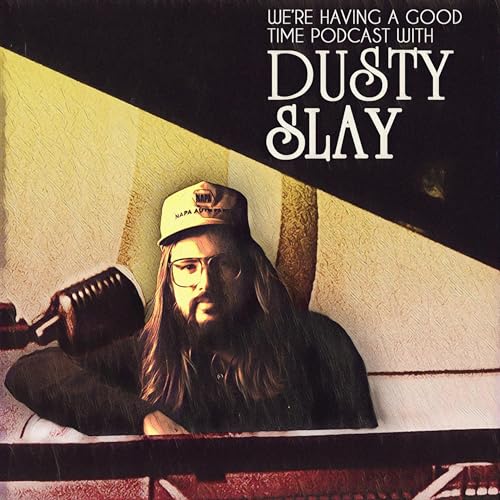
Dusty Slay's audiobook listing here carries an unusual amount of static in its own description. The synopsis attached to We're Having a Good Time describes a podcast about drinking, drugs, and religion, ten episodes making up a second season, originally published back in the summer of 2019, while the listing itself runs a single hour and nine minutes total, far short of what ten full podcast episodes would typically add up to. This audiobook appears to package a portion of Slay's stand up comedy adjacent podcast work rather than a conventional single narrative memoir, and that distinction matters enormously for anyone deciding whether to spend a credit on it.
Slay is a real, actively touring stand up comedian known for a folksy, unhurried delivery style built around road life and small town Southern material, and he narrates this release himself, which fits the podcast origin story the synopsis describes: conversational, in his own voice, rather than a scripted memoir read aloud by a hired professional.
Ten Episodes Promised, One Hour Delivered
Judged purely on its own terms as a short, informal release, closer to a backstage chat than a polished studio memoir, an hour and nine minutes of a comedian's own podcast style conversation about the realities of life on the road, this delivers exactly what stand up fans who already enjoy Slay's material would expect: loose, unscripted, self deprecating, and comfortable letting a story wander before circling back to the point.
What it does not deliver is a structured memoir in the conventional sense. No clear chapter by chapter arc is visible in the available synopsis, no stated throughline beyond the podcast's own original episode structure, and the mismatch between ten stated episodes and a single hour nine minute runtime suggests this specific audio product is either a highlights compilation or a single representative episode rather than the full season described.
A Recognizable Podcast-to-Audiobook Crossover Pattern
That kind of format ambiguity is not unique to this listing; podcast content repackaged into an audiobook storefront happens periodically across the industry, and it usually rewards buyers who go in with accurate expectations about episodic, conversational structure rather than a written and edited memoir narrative.
Podcast to audiobook crossover products have become a recognizable subcategory in their own right over the past several years, as touring comedians increasingly monetize the same conversational material across multiple formats, video, audio only, and now audiobook storefronts. Slay's entry into that space is consistent with a broader trend among road comics maintaining a podcast alongside touring, though the specific packaging choice here, one truncated release rather than a clearly labeled compilation or single episode, is less transparent than the format ideally calls for.
A Hired Voice Actor Would Flatten This
For an existing fan of Slay's stand up, the appeal is straightforward: more of his voice, more of his specific comic rhythm, in a format that lets his natural conversational pacing breathe without the constraints of a tight club set. Road comic memoirs in audio form generally benefit from self narration precisely because so much of the humor lives in delivery rather than the words alone on a page, and that holds here.
The subject matter itself, drinking, drugs, and religion, as the synopsis states plainly, suggests Slay is working through genuinely personal territory rather than staying purely on the surface with road life anecdotes, a more interesting proposition than a standard tour diary would be, assuming the full season delivers on what the short synopsis promises.
At just over an hour, this is also a low commitment way to sample whether Slay's specific comic voice, folksy, digressive, warm rather than sharp edged, works for you before deciding whether to seek out more of his stand up specials or other audio elsewhere.
Comedian memoirs narrated by the comedian themselves tend to outperform hired narration specifically because so much of stand up's appeal is inseparable from a specific voice's cadence, and Slay's read here is no exception; his delivery carries the same unhurried, story before punchline rhythm that defines his stage act, which a professional voice actor reading the same words from a transcript would likely flatten.
Sixty-Nine Minutes Against a Full Credit's Worth
The runtime to content mismatch is the single most important thing to know before buying. Ten stated episodes at a typical podcast episode length would run considerably longer than one hour nine minutes, so buyers expecting the complete second season described in the synopsis should confirm exactly what this specific audio product contains before committing a credit to it.
This title carries no independent listener reviews or ratings, an absence that stands out given how many touring comedians now package similar podcast material for audiobook platforms, leaving no outside confirmation of how the actual audio matches the synopsis description, worth knowing given how much ambiguity already exists in the format itself.
Anyone expecting a polished, professionally produced comedy memoir on the level of a major publisher's audio release should recalibrate; the podcast origin, the short runtime, and the informal episode structure all point toward something rawer and more conversational, closer to overhearing a comedian talk shop than a crafted literary memoir.
Given the amount of ambiguity in what this specific release actually contains, listeners with a strong interest in Slay's podcast work specifically may be better served locating the original podcast feed directly to confirm episode count and content before deciding whether this particular audiobook packaging represents good value relative to a full season's worth of material.
Value relative to runtime is also worth a direct mention: sixty nine minutes total sits closer to a single extended comedy set than a typical full length audiobook purchase, and listeners should weigh that math specifically against whatever a single credit or purchase price typically buys elsewhere in their listening library before deciding whether the format justifies the cost for this particular release.
Listeners New to Slay Should Start Elsewhere
This suits existing fans of Dusty Slay's stand up who want more of his voice in a low stakes, conversational format, and listeners generally drawn to comedian hosted podcast content who do not mind sampling something shorter than a typical full length memoir.
Skip it if you want a structured, chronological memoir with a clear narrative arc, or if the runtime and content mismatch described above is enough of a concern that you would rather wait for a more conventional audio release of Slay's material to come along.
Listeners entirely new to Slay's comedy might get more value starting with a full length stand up special first, since this short, context light release assumes at least passing familiarity with who he is and why his particular brand of folksy road comic humor has built a dedicated following.
Before You Listen
Is this audiobook the full second season of Dusty Slay's podcast?
That is unclear; the synopsis describes ten episodes making up a second season, but the actual runtime of one hour and nine minutes is far shorter than ten full episodes would typically run, so buyers should confirm exact contents before purchasing.
Does this audiobook work as a standalone introduction to Dusty Slay's comedy?
It assumes some existing familiarity with his style; newcomers may get more value starting with a full length stand up special first.
Who narrates this audiobook?
Dusty Slay narrates the material himself, consistent with its origin as his own podcast content.
What topics does this audiobook cover?
Per the synopsis, it addresses drinking, drugs, and religion alongside his life on the road as a touring comedian.






