Quick Take
- Narration: O’Donohue narrates his own work, and his lilting Irish accent and unhurried delivery are inseparable from the content. This is a recording you listen to slowly, ideally more than once.
- Themes: The invisible world as a source of orientation, beauty and paradox as spiritual practice, prayer and blessing as entry points into sacred presence
- Mood: Quietly luminous, contemplative, and deeply unhurried
- Verdict: An extraordinary piece of audio work that rewards return visits. O’Donohue’s voice carries a quality of presence that very few recorded texts achieve.
I first encountered John O’Donohue through Anam Cara, years ago, passed to me by someone who said only that it was different from other books about Celtic spirituality. That was accurate. O’Donohue was a poet and a Catholic scholar who had done serious philosophical work on Hegel before turning fully to the tradition he had grown up inside, and the combination of rigorous intellectual formation with genuine lyrical gift is what makes his writing unlike almost anything else in the field.
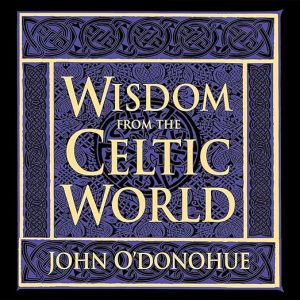
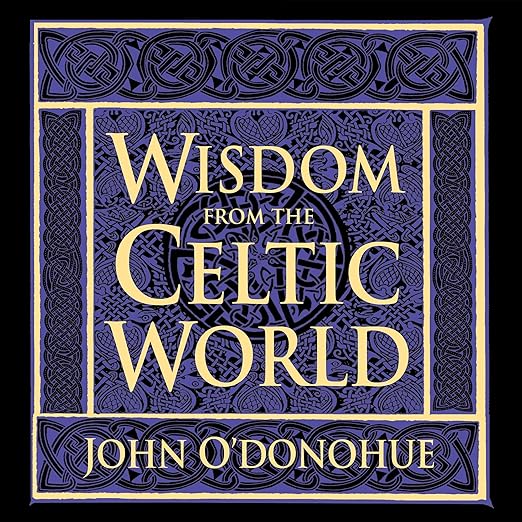
Wisdom from the Celtic World collects the Celtic Wisdom Trilogy in audio form: The Inner Landscape, The Divine Imagination, and The Invisible World. Over ten hours and thirteen minutes, it builds something that feels less like a listening experience and more like a sustained act of attention.
Our Take on Wisdom from the Celtic World
The three sessions move through different territories of what O’Donohue understands as the Celtic spiritual imagination. The Inner Landscape begins with self-exile and the Celtic way of welcoming paradox, which is a phrase that sounds abstract until O’Donohue populates it with images precise enough to make you recognize your own experience in them. The Divine Imagination takes on the question of sacred presence as something lyrical and tenderly creative rather than commanding and remote. The Invisible World addresses prayer not as petition but as a means of entering what he calls the secret immensity behind ordinary life.
One reviewer described O’Donohue as bringing the transcendent truth into incarnate ordinariness, with humility, humor, and the grace of compassion. That is a precise description of what he does, and it is also what makes this so difficult to categorize. It is not devotional in a conventional religious sense. It is not self-help. It is not academic. It sits in a space that the tradition it draws from knew well: the threshold between the visible and invisible, the articulate and the inexpressible.
Why Listen to Wisdom from the Celtic World
O’Donohue narrates his own work, and this is the only possible correct choice. His Irish accent is not an affectation; it is the sound of someone who grew up inside the language and the landscape he is describing. A reviewer described the experience as almost like having the great poet himself sitting with you reading his works, which overstates the intimacy slightly but captures the effect. His delivery is unhurried in a way that contemporary audio production rarely allows. He does not rush to the next point. He inhabits each image long enough to let it do something.
The recordings were made during O’Donohue’s lifetime, which means this is one of those rare cases where you can hear a voice that is no longer in the world. He died in 2008, and reviewers note their gratitude for these recorded treasures with a specificity that says something about how much his work meant to people who encountered it.
What to Watch For in Wisdom from the Celtic World
This is not background listening. O’Donohue’s arguments are not difficult in an academic sense, but they require attention. Reviewers who find the most in this work describe listening repeatedly, returning to individual passages rather than moving through it once and filing it away. One described how picking up the book even for a paragraph yields a new gem that shifts perception even further, and that rhythm of return is the one the work invites.
Listeners who come expecting the kind of accessible Celtic spirituality content that the wellness market packages will find O’Donohue more demanding and more rewarding than those packages typically are. He is interested in genuine encounter, not in comfort. Though he is not without warmth, he does not offer the book as reassurance.
Who Should Listen to Wisdom from the Celtic World
Anyone at a crossroads, as one reviewer put it, who is searching for hope and a framework that holds more than conventional religion or self-help has offered. Listeners drawn to Celtic spirituality, mysticism, or the intersection of poetry and theology will find this among the most serious and rewarding treatments available in audio form. Aspiring artists and scholars of literature who want to encounter a mind that has genuinely integrated multiple traditions will find O’Donohue a rare companion.
Listeners who want brisk pacing, practical takeaways, or spiritual content that stays comfortably within familiar frameworks should look elsewhere. This demands the quality of attention it is also trying to cultivate.
Frequently Asked Questions
Do the three sessions in the Celtic Wisdom Trilogy need to be listened to in order?
They move from inner landscape to divine imagination to invisible world in a sequence that has its own logic, but each session is also self-contained enough to revisit individually. First-time listeners will likely find the sequential approach more coherent.
Is this appropriate for listeners outside the Catholic or Christian tradition?
Yes. While O’Donohue is a Catholic scholar, his approach to Celtic spirituality extends well beyond doctrinal religion. Reviewers from various spiritual and philosophical backgrounds describe finding the work meaningful. The framing is broadly spiritual and poetic rather than doctrinally specific.
How does this differ from Anam Cara, O’Donohue’s most well-known work?
Anam Cara focuses specifically on the theme of soul friendship and its implications for how we understand connection and belonging. The Celtic Wisdom Trilogy is broader in scope, moving through inner life, sacred presence, and the invisible world. They are complementary rather than duplicative.
Is this a good first encounter with O’Donohue’s work, or should I start with Anam Cara?
Either works as an entry point. The Trilogy covers more thematic ground and may give a fuller sense of O’Donohue’s range. Anam Cara has the more focused argument. Several reviewers came to this collection after Anam Cara and found it deepened their understanding of the earlier work.