Key Details
- Narrator: Richard Moss reads his own book, a first recording arriving long after the text had found its readers.
- Subjects: Awakening as a stage of human development, consciousness reorganizing ordinary life, the healing use of what people keep hidden.
- Tone: Dense, earnest, emotionally exposed.
- Bottom line: Demanding spiritual writing that rewards patience; the audio edition answers the complaint readers have been making about it for years.
Every signed response on this listing was written before the recording existed, and most of them by a very long way. The oldest dates from May 2001 and the newest from September 2014, while the audiobook itself carries a February 2026 release. That gap is not a technicality in this case. The objection that turns up most often in the older record concerns difficulty on the page, which happens to be the one variable a spoken edition genuinely changes.
Where This One Lands
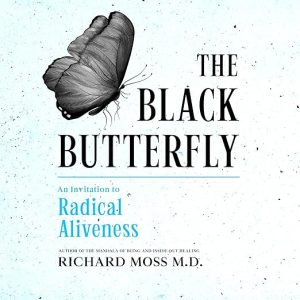
The claim the book makes for itself is enormous. Its subject is the awakening process treated as something built into human development, and the argument is that a fundamental shift in consciousness reorganizes your assumptions about culture, health and disease, sexuality, parenting, war, and above all relationships. Twelve hours and forty-nine minutes is not much room for a list like that, which tells you the treatment will be a way of seeing applied across domains rather than six separate treatises.
Filed under the handle tim_farrington back in 2001, the oldest five-star on the page describes what that feels like from inside. For anyone who has wandered past the usual borders of psychology and religion, that response says, this work is a gift and a place to heal, and Moss himself is straightforward, unpretentious and lucid, bringing transcendent material into ordinary life with humility and humor. Lucid is a strong and specific word, and it will matter later, because not every reader here agrees with it.
Worth noticing too is the pitch of the product copy, which does the book no favors at all. It promises a symphony of wonderment and beauty, then closes with a paragraph of third-person biography praising the author's courage and willingness to embody higher energy. The written responses are considerably more sober than that, and they are the better guide. Where the copy sells transcendence, the readers describe work, and work is what the book appears to ask for.
The Best Parts of The Black Butterfly
The most persuasive endorsement on this page starts from skepticism, which is why it carries weight. Writing in 2010, a reader with declared metaphysical leanings and a low opinion of most New Age and New Thought publishing praises this book for delineating states of spirituality that go deeper, and hurt more, than what the feel-good spin doctors are willing to discuss. The same response warns that the book will take you places emotionally that may be triggering. Take that seriously; it is not comfort literature.
Having the author read it changes the proposition. A text whose whole subject is a shift in consciousness described from the inside is unusually dependent on where the stress falls in a sentence, and Moss places it according to what he actually went through instead of according to a producer's reading of the paragraph. On a book of teaching that is closer to attending than to reading, and a recording made this long after publication carries the intervening decades into the delivery whether the text acknowledges them or not.
One caution about how you use it. A 2008 five-star describes a practice rather than a read: picking the book up, taking in a single paragraph, and finding one more idea that shifts perception again. That is a wonderful way to own a book and an awkward way to own a recording, since scrubbing back to a remembered paragraph is far harder than opening a page. Decide up front whether you want a continuous listen or a text to keep returning to.
What Gives Us Pause
Difficulty is the recurring objection, and the 2014 four-star states it without hedging: great ideas, very enlightening, marked down to four stars because it is a very heavy book that's difficult to read, and the message could have been delivered in a way that was easier to follow. That is a fair warning, and audio only half answers it. A spoken version smooths dense prose, but it cannot simplify a dense argument, and it removes your ability to reread a sentence without hunting for it.
Put that beside the 2001 verdict and you have a straight disagreement: one reader calls the writing lucid, another calls it heavy going, and thirteen years separate them. One against one is not a consensus in either direction. What it does tell you is that reactions to this prose diverge sharply, which makes the preview more useful here than the star average, and makes a few minutes of listening worth more than any summary anybody else writes. Note as well that the two verdicts were formed on the printed book, so neither one is testing whether a spoken delivery moves the difficulty in either direction.
Completion is its own risk. A 2011 four-star admits to not having finished: another book came along and interrupted the reading, with an intention to return that the review itself sounds unsure about. Books of this kind collect that outcome. The same response supplies the fairest statement of the entry condition anywhere on the page, describing a method for opening to the non-dual experience and adding that each reader has to decide alone whether that path is of interest.
Who Should Listen to The Black Butterfly
People already working in this territory are the natural audience: listeners who want the teacher's own voice rather than a professional's, readers who prefer spiritual writing that goes toward pain instead of around it, and anyone who has bounced off gentler books in the genre with a suspicion of being handled too carefully. The reclaiming of what the copy calls our darker secrets is the distinguishing promise, and it is why you would take this instead of something more consoling. Patience for abstraction is the other requirement, since the case gets built through accumulating description rather than through examples and exercises, and the payoff arrives late.
It will not suit anyone looking for evidence-based psychology, since the frame is transformational rather than clinical. It will not suit anyone who wants a numbered program, because what the description offers is a shift in perception rather than a curriculum. And if the emotional intensity flagged in the written record sounds like a risk rather than an appeal, that is a signal worth respecting.
Hearing it from the person who wrote it is the whole argument for this edition, and on a text this dense the argument carries further than usual.
Frequently Asked Questions
Is the audiobook a straight reading of the original text?
Nothing on the listing suggests otherwise, and the description is the same one the book has carried for years, right down to a closing paragraph of author biography. What has changed is the delivery: the material now arrives in the author's own voice, at his own pace, on a title whose readers have long described the printed version as demanding.
Would print serve better than the audiobook for this one?
It depends entirely on how you read. If you want to sit with a single paragraph and return to it repeatedly, paper wins easily. If the density of the writing is what has stopped you before, hearing it delivered by the person who wrote it removes exactly the obstacle that most complaints describe.