Quick Take
- Narration: Lameece Issaq brings linguistic authenticity and clear diction to Rahman’s scholarly prose; her reading suits the measured academic register of the text.
- Themes: The intellectual history of Islam from Muhammad to the twentieth century, the tension between tradition and reform, Islam as a living philosophical system
- Mood: Dense and scholarly, with the steady authority of a genuine insider
- Verdict: Fazlur Rahman’s Islam is essential listening for anyone who wants to understand how one of the world’s major traditions thinks about itself from within, though it demands patience and rewards attention.
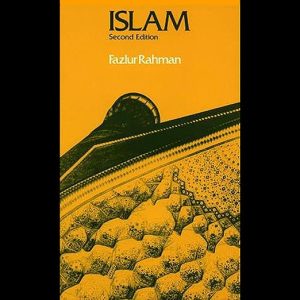
I return to Fazlur Rahman’s Islam periodically the way I return to certain works of intellectual history: not because I expect to be surprised, but because the questions the book raises have a way of feeling newly urgent depending on the moment I bring to them. I first encountered it during my editorial years, working on a series of books about religious intellectual traditions, and Rahman was consistently cited as the honest insider, the scholar who could describe the tradition with full fidelity while also engaging its contradictions without apology.
This audio edition from Audible Studios, narrated by Lameece Issaq, makes a genuinely important text accessible in a new format. Whether that format serves the material is worth examining carefully.
Our Take on Islam
Rahman’s book is not a neutral survey. That is precisely what makes it valuable. He is writing as a Muslim scholar, trained in classical Islamic sciences and deeply engaged with the reformist tradition, who wants to argue for a particular direction for Islam’s future. The description in the synopsis, an incisive and surprisingly comprehensive history and analysis of Islam, is accurate as far as it goes, but the word impassioned is the key one. Rahman traces the development of Islamic thought from Muhammad through the major intellectual movements, the Mutazilites, the classical jurists, the Sufi orders, the modernist reformers, and he does so with the kind of internal knowledge that no outside observer could replicate.
One reviewer, a non-Muslim, described the book as an excellent choice to learn about Islam without being overwhelmed or feeling propagandized. Another called Rahman an iconic name in Islamic studies and the book one for any serious academic. The 4.2 rating across twenty-two reviews understates the book’s importance, which has more to do with the narrowness of its natural audience than with any weakness in the text.
Why Listen to This Audiobook
Lameece Issaq is an excellent choice for this narration. She handles the Arabic terminology and proper names with the ease of familiarity, which matters enormously in a text where names like Mutazila, Ashari, and Mawdudi carry specific intellectual weight. Her pacing is measured without being slow, which suits Rahman’s careful, layered argumentation. The audio format makes this more approachable than the print edition for general listeners who would find the footnote apparatus of the written version daunting.
At thirteen hours, the runtime is appropriate for the scope of material covered. Rahman is not a breezy writer, and Issaq does not make him sound like one. This is audio for attentive listening rather than background play.
What to Watch For in This Audiobook
One reviewer noted the book moves along in a careful historical manner and can drag. That is honest. Rahman’s methodology is encyclopedic within its scope, and the sections covering medieval theological disputes, while intellectually rigorous, require patience from listeners who have not previously encountered these debates. The book also does not address contemporary terrorism or political violence, which one reviewer noted as an absence. Rahman was writing primarily about Islam as an intellectual and spiritual tradition, not about its political pathologies, and listeners who come hoping for engagement with that specific question will not find it here.
The book is also, in places, a polemic. Rahman has a clear position on what direction Islamic reform should take, and that position shapes his reading of the tradition. Listeners should engage it as a significant scholarly argument, not as a purely descriptive account.
Who Should Listen to Islam
Students of religious history, Islamic studies, and the intellectual traditions of the Muslim world will find this essential listening. General readers curious about how Islam understands its own intellectual development, as distinct from how it is described from outside, will find Rahman’s insider perspective genuinely illuminating. Those looking for an introduction to Islamic practice, prayer, ritual, daily life, should look elsewhere; this is a history of ideas rather than a guide to observance. Listeners who want engagement with contemporary political Islam will also need to supplement this with more recent scholarship. For the question it actually asks, how did Islam develop as a tradition of thought and what should it become, this remains one of the most authoritative voices in audio form.
Frequently Asked Questions
Is this book suitable for someone with no prior knowledge of Islamic history or theology?
It is accessible to motivated beginners, but the density of historical and theological content means some patience is required. One reviewer who encountered it as a college course text found it easy but slow going. A basic orientation to Islamic history beforehand will make the listening experience smoother.
Does Rahman address the relationship between Islam and violence or terrorism?
No. The book focuses on Islam as an intellectual and spiritual tradition and does not engage contemporary political violence or terrorism as subjects. Reviewers have noted this absence; it reflects Rahman’s scholarly scope rather than an evasion.
How does Lameece Issaq handle the Arabic terminology throughout the text?
With evident familiarity. Her pronunciation of Arabic names and terms is natural and consistent, which gives the audio version a significant advantage over non-specialist narrators who might approximate or stumble over this vocabulary.
Is this book sympathetic to all expressions of Islam, or does Rahman argue for a particular direction?
Rahman is a reformist scholar and argues for a particular direction for Islamic intellectual development. The book is not a neutral survey. It is a significant scholarly argument from inside the tradition, and listeners should engage with it as such.