Quick Take
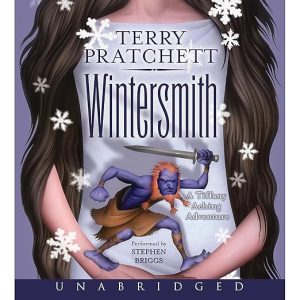
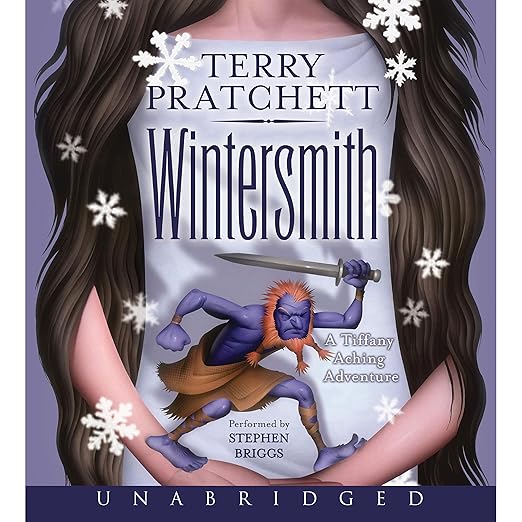
- Narrator: Stephen Briggs is the longtime voice of Pratchett's Discworld in audio and brings the same warmth and precision to Wintersmith that characterizes the best entries in his collaboration with the author.
- Subjects: The price of belonging to a Story, coming-of-age and witchcraft, the turning of seasons as metaphor
- Tone: Funny, thoughtful, and quietly moving
- Bottom line: One of the richer entries in the Tiffany Aching subseries, accessible to adult Discworld readers who might assume it is solely for younger audiences.
I came to Wintersmith having already spent time with Tiffany Aching in The Wee Free Men and A Hat Full of Sky, and I want to say something right away that I think is undersold in how this book is typically described: it is not primarily a children's book that adults can also enjoy. It is a Terry Pratchett novel about the nature of Story, the weight of seasonal mythology, and what happens when a young person accidentally becomes part of a narrative too large for them to step out of. That those themes are carried by a teenage witch does not make them lighter. It makes them more immediate.
The premise is elegant and tonally very Pratchett. Tiffany Aching, attending the Morris Dance that marks the transition into winter, makes the mistake of joining in when she is not supposed to. The Spirit of Winter, the Wintersmith, mistakes her for the Summer Lady and decides he wants her to stay. Forever. In his gleaming, frozen world. The cosmic scale of the problem sits alongside the very practical reality that if Tiffany does not survive until spring, neither does anyone else, because there will not be a spring.
What We Made of It
What Pratchett does brilliantly here, as he does throughout the Tiffany Aching novels, is hold comedy and seriousness in genuine tension rather than alternating between them. One reviewer described it as the disc being made of stories, which is exactly the thematic center of the book: the idea that stepping into the wrong dance at the wrong moment means you become part of a Story with a capital S, and those stories have their own logic and momentum that individuals cannot simply opt out of. For a novel aimed at younger readers, that is a genuinely sophisticated piece of literary thinking.
The Wee Free Men, the Nac Mac Feegle, are deployed with characteristic wit and serve a function beyond comic relief: they are the embodiment of a kind of loyalty and chaos that Tiffany needs precisely because it does not fit neatly into any Story's expectations. Granny Weatherwax, appearing as a mentor figure, adds the book's most carefully observed portrait of what it means to be a witch in Pratchett's sense of the word: someone who sees things as they are and acts accordingly, without the comfort of being understood.
Why Listen to Wintersmith
Stephen Briggs has been the primary narrator of Discworld audiobooks for decades, and by Wintersmith he has the voice of Pratchett's world so deeply internalized that the experience of listening rather than reading becomes genuinely preferable for some material. His timing with the comedy is precise without being mechanical, and his Granny Weatherwax is one of the performances that makes the audiobook catalog of this series worth returning to. The eight-and-a-half hour runtime covers the story without rushing.
Adult Discworld readers who have assumed the Tiffany Aching novels are below their reading level should be told directly: they are not. One reviewer who came to the series as an adult noted that it should appeal to adult fans of Discworld and the genre generally, and that advice is accurate. The books are written for younger readers in the sense that they do not assume prior Discworld knowledge, but the depth of what Pratchett is actually thinking about is not simplified for that audience.
What Might Not Land
This is the third book in the Tiffany Aching sequence, and while it can be read independently, the emotional weight of Tiffany's relationships and her development as a witch is considerably greater if you have followed her from The Wee Free Men. Listeners starting here will not be lost, but they will be missing context that deepens several key moments.
The tonal quality of this entry is somewhat more melancholy than its predecessors, which some readers find the richest version of Pratchett and others find less immediately satisfying than the first two books. The romance element, such as it is, involving the Wintersmith's infatuation and what it costs, is handled with Pratchett's characteristic light touch on emotional material, meaning it lands harder than it should given how gently it is delivered.
Should You Listen to Wintersmith?
Any listener who has already spent time with Tiffany Aching and wants to continue. Adult Discworld readers who have been avoiding the subseries because of its YA classification should reconsider. Listeners new to Pratchett entirely should start with The Wee Free Men or one of the main Discworld entry points. Anyone who wants their comic fantasy to also be genuinely thoughtful about the nature of myth and narrative will find Wintersmith operating at a level that exceeds its YA label.