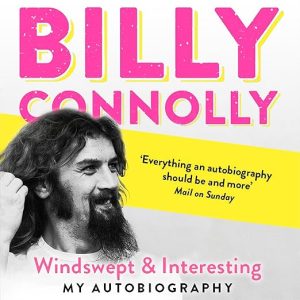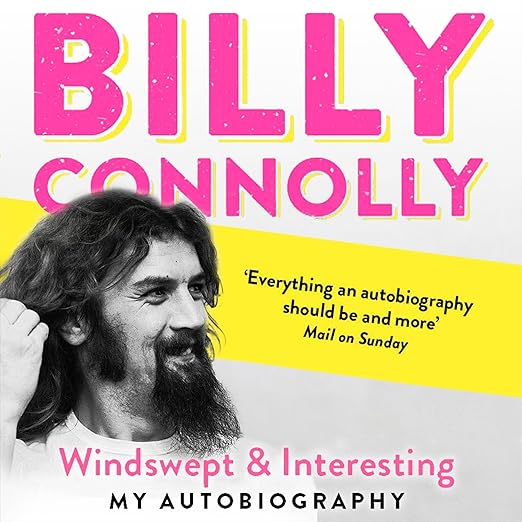
Billy Connolly survived a childhood that included being orphaned by age four and enduring abuse within his own family, then spent decades turning that material into the stand-up comedy that made him a household name across Britain. This audiobook is his first full-length autobiography, and he's explicit about why that matters: 'Other people have written about me - or for me - but this time it's just my own life in my own words.' Connolly narrates the whole thing himself across just over eight and a half hours, moving from a Glasgow tenement flat through his years as an apprentice welder, a folk musician, and eventually the comedian whose outrageous 1975 appearance on Michael Parkinson's chat show turned him into a national star.
From Shipyard Welder to National Comedian
What comes through immediately is how little Connolly softens the hard material. He doesn't rush past being orphaned or the abuse he says he suffered as a child, but he also doesn't dwell there for pity, he moves through it with the same instinct for finding the absurd angle that made him famous on stage. Reviewer Gina M. Graden captured that tonal mix well: 'sad parts but also funny,' adding that she wished she'd 'known of it sooner.'
The book covers extraordinary ground for one life, an apprentice welder on the River Clyde shipyards, a working folk musician playing banjo, then the stand-up act that broke every rule of what a comedian was supposed to look or sound like in 1970s Britain, complete with leotards and banana boots. Reviewer J. Thompson called Connolly 'one of the funniest people ever' while also noting how genuinely interesting it is to hear 'how Billy overcame the challenges of his raising and became the successful man he is,' which is really the whole appeal of a memoir like this one, the comedy and the hardship aren't separate stories, they're the same story.
One Parkinson Appearance Changed Everything Overnight
The 1975 Parkinson show appearance gets treated as the hinge point of the whole story, one outrageous, unplanned anecdote told live on air that turned a working folk musician into a household name almost overnight. Connolly narrating that memory himself adds a layer the printed page can't fully replicate, you can hear him still finding it funny decades later, not performing nostalgia but genuinely amused by his younger self's audacity.
The folk music years get less attention in most summaries of Connolly's career than the comedy that followed, but the book treats that period, playing banjo, working as what he calls a rambling man, as a genuine formative stage rather than a footnote before the real story starts. You can hear the through-line he draws himself: performing music in front of an audience taught him how to read a room long before he ever tried telling a joke on a stage built for laughs specifically, and that skill transferred directly when he made the jump.
Award-Winning Narration Wins Over a Skeptic
This audiobook won Audiobook of the Year in the Non-Fiction category at the 2022 British Book Awards, and hearing Connolly narrate his own material makes the case for that recognition immediately clear. A professional narrator could read these stories accurately, but only Connolly can deliver his own comic timing exactly the way he intends it, the same instinct for a well-placed pause or a sudden tonal swerve that built his stand-up career translates directly into the recording booth.
Reviewer Timothy Haugh, who describes himself as not even a huge fan going in, found the material won him over anyway: he calls Connolly 'very entertaining' and says the autobiography 'seemed like a good chance to know him better.' That's a useful data point for anyone hesitant to commit eight and a half hours to a comedian's memoir without being a devoted fan first, the book seems to work even for the mildly curious.
Fame Never Erases the Shipyards and Folk Clubs
What followed that breakthrough (television shows, documentaries, international fame, award-winning Hollywood film roles) could easily have been reduced to a highlight-reel victory lap in someone else's hands. Connolly instead keeps circling back to the shipyards and folk clubs that shaped him before any of that fame arrived, which gives the later career chapters weight instead of letting them coast on name recognition alone.
The audiobook format also suits a memoir this heavy on direct address and asides, Connolly talks to the listener the way he'd talk to an audience at a gig, digressions and all, and that conversational structure reads very differently on the page than it sounds coming directly from him. Reviewers describing the book as feeling like Connolly is genuinely present, rather than reciting a manuscript, point to a performance quality that a transcript alone wouldn't fully convey.
Cancer and Parkinson's Get Honest Treatment Too
At just over eight and a half hours, this is a substantial listen, and Connolly doesn't move through his life chronologically in a tidy, brisk way, expect digressions. The book's own framing promises countless digressions on fishing, farting, and the joys of dancing naked, and that's an accurate preview of the shagginess of the storytelling style. If you prefer a tightly structured memoir that hits its major beats efficiently, this loose, conversational approach may test your patience in places.
The book also doesn't shy away from Connolly's more recent health struggles, a double diagnosis of cancer and Parkinson's disease that ended his live performing career. Listeners expecting pure comedy throughout should know the book earns its emotional weight honestly rather than treating illness as an afterthought tacked onto the funny stories.
Given his stand-up reputation, expect the same unfiltered, occasionally crude sense of humor here that built his stage career, this isn't a sanitized or literary memoir voice. Listeners sensitive to frank language or bawdy humor delivered with real relish should know Connolly doesn't tone any of it down for the recording booth.
Comedian Memoir Fans Will Feel at Home
Existing Billy Connolly fans are the obvious audience, and they'll get exactly what they're hoping for: his voice, his rhythm, his own account of a career most of them have only experienced from the audience's side. But this book also works, per Timothy Haugh's experience, for listeners who only know Connolly by reputation and want to understand what made him a national figure in the first place.
Listeners who enjoy comedian memoirs generally, people who respond well to performers narrating their own hard-won life stories with humor intact, will likely find plenty to appreciate here even coming in as relative strangers to Connolly's stand-up work specifically.
Anyone hoping for a tidy, chronological career retrospective focused mainly on the famous bits, the movies, the TV appearances, should recalibrate expectations, since Connolly spends real time on the shipyards and the folk clubs before he ever gets near a comedy stage, and the digressions along the way are very much the point rather than filler to skip through.
- Performance: Billy Connolly narrates his own autobiography, and his stand-up comedian's instinct for timing and tonal swerves is the whole reason to choose audio over print here.
- What it covers: Self-made comedy legend, childhood trauma survived through humor, career-ending health diagnosis
- Feel: Funny and unflinching, sad in places without ever wallowing
- Our call: An award-winning, genuinely candid autobiography that earns its comedy and its grief in equal measure, essential for existing fans.