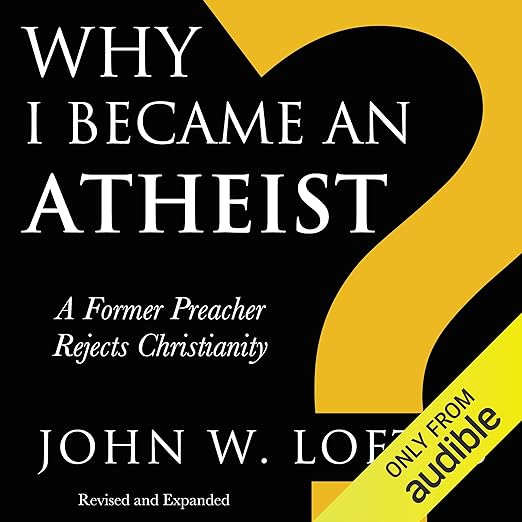
Quick Take
- Narration: Buzz Kemper delivers Loftus’s dense philosophical arguments with clarity and steadiness, a voice that suits the measured, academic tone of the material without adding dramatic flourish.
- Themes: Deconversion, counter-apologetics, philosophy of religion
- Mood: Dense and methodical, occasionally confrontational but scrupulously reasoned
- Verdict: If you want a rigorous, insider-written critique of Christian theism that engages seriously with its best defenders, this is the most comprehensive single-volume treatment available in audio.
I came to this one already familiar with the deconversion memoir genre, a category I find genuinely fascinating and often emotionally rich. John Loftus is something different. He is not primarily interested in sharing grief or relief; he is interested in being thorough. I started listening on a long drive through rolling countryside and found myself genuinely absorbed, not swept up in narrative momentum but locked into a sustained intellectual argument that kept demanding I pay attention.
What sets Loftus apart from the crowded field of popular atheist authors is his biography. He spent years earning graduate degrees in philosophy, theology, and philosophy of religion. He studied under William Lane Craig, widely considered the most formidable Christian apologist working today. When Loftus dismantles Craig’s cosmological and moral arguments, he is doing so from the inside, with the same vocabulary and the same texts. As one reviewer noted, Craig’s response to this book focused on Loftus’s personal failings rather than his arguments, which tells you something about the arguments themselves.
Our Take on Why I Became an Atheist
This is genuinely one of the most comprehensive works of counter-apologetics in existence, and the audio version covers it without flinching. Loftus structures the book in two broad movements: first the personal narrative of doubt and departure, then a systematic philosophical demolition of Christian theism. The personal sections are honest to a point of discomfort. Loftus admits to moral failures during his crisis of faith, and he does not hide behind them or use them as excuses. He presents them as context, then moves on to the arguments, which stand or fall on their own merits.
The philosophical material is genuinely demanding. Loftus works through the problem of evil, divine hiddenness, the reliability of the Bible, the historical Jesus, and what he calls the Outsider Test for Faith, an epistemological argument asking whether believers apply the same skeptical standards to Christianity that they would apply to any other religion. The revised and expanded edition used for this recording adds new argumentation responding to Christian critics of the original 2006 text, making it both more current and more thorough.
Why Listen to This Rather Than Read It
At over 31 hours, this is a serious investment. Buzz Kemper’s narration makes the length manageable. His voice is calm and measured, which suits material that could easily sound polemical in the wrong hands. He reads philosophical passages without rushing them, giving listeners time to track the logic, and he handles Loftus’s more personal reflections with appropriate gravity. For dense nonfiction of this kind, a steady, unhurried narrator is exactly what you want, and Kemper delivers that.
The audio format also works unusually well for the counter-apologetics sections because the book is structured for sequential argument building. You need to hear point A before point B lands with full force. Listening keeps you from skipping ahead in the way a physical reader might, and that discipline serves the text.
What to Watch For in the Philosophical Sections
One reviewer with a background in philosophy of religion flagged that Loftus’s use of rhetorical questions can feel excessive, and I agree that is the book’s primary stylistic weakness. At times the prose feels like a courtroom closing argument rather than a philosophical essay, and the cumulative effect of repeated rhetorical questions can undercut the careful reasoning that surrounds them. It is a minor complaint in a work of this scope, but worth naming for listeners expecting purely academic prose.
Also be aware that Loftus explicitly addresses the objection that his personal moral failures invalidate his philosophical conclusions. He handles it directly and briefly, then returns to the arguments. If you come in hoping to dismiss the book on personal grounds, he has anticipated that move.
Who Should Listen to Why I Became an Atheist
Listeners who will get the most from this are those already engaged with the apologetics debate, whether they are skeptics looking for the best organized case against Christianity, believers who want to understand the strongest objections they will face, or former believers who experienced deconversion and want a rigorous framework for the doubts they could only feel but not yet articulate. Multiple reviewers have noted that seminary and apologetics programs apparently use this book as a reference, which is a notable endorsement from the other side.
If you are coming in cold with no background in philosophy of religion, expect to work. This is not a casual listen. It rewards attention and patience, but it does not condescend, and Loftus takes pains to summarize positions fairly before attacking them. That intellectual honesty is the book’s greatest strength and the thing that distinguishes it from lesser entries in the genre.
Frequently Asked Questions
Do I need a background in philosophy or theology to follow Loftus’s arguments?
Some familiarity helps, but Loftus explains each position before engaging with it. He summarizes the key Christian apologetics arguments clearly enough that attentive listeners without prior exposure can follow along, though the full force of the counter-arguments lands harder if you already know names like William Lane Craig or Alvin Plantinga.
Is this a personal memoir or a philosophical treatise?
Both, in sequence. The first portion of the audiobook covers Loftus’s personal journey from ordained minister to atheist. The larger portion is systematic philosophical argumentation against Christian theism. The personal material frames the intellectual material but does not dominate it.
Does Buzz Kemper’s narration handle the dense philosophical passages well?
Yes. Kemper’s delivery is calm, unhurried, and clear. He does not inject editorial emotion into the material, which is exactly the right call for a text this intellectually demanding. The pacing allows listeners to follow logical chains without feeling rushed.
How does this revised edition differ from the original 2006 release?
The revised and expanded edition responds to criticisms Loftus received from both Christian apologists and skeptics after the original publication. It adds new argumentation, updated references, and refined presentation throughout. For most listeners, this edition is the one to start with rather than seeking out older versions.