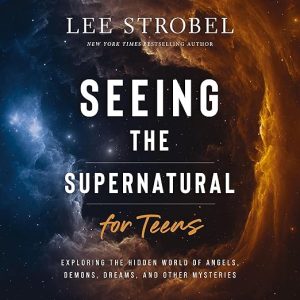
Jennifer Eivaz writes Seeing the Supernatural from a position of personal experience and practical ministry, and that combination gives this audiobook a credibility that purely theoretical treatments of spiritual gifts rarely achieve. Eivaz, described by listeners as a trusted prophetic voice, has operated in the gift of discerning spirits herself, and she is candid about the disorientation that accompanies it, including the striking detail that some who carry this gift have sought medical help and received diagnoses for what are, in her framework, spiritual experiences rather than psychological disorders. For the audience she is addressing, that kind of directness is exactly what makes this material valuable and trustworthy.
Making the Case for Discerning Spirits
The book's central argument is that the gift of discerning spirits is both underutilized and misunderstood within the church. Eivaz lays a biblical foundation for how the gift operates, works through what practitioners are actually seeing and hearing when it activates, and provides practical frameworks for identifying and responding to both demonic and angelic activity. The structure is clear and methodical, moving from theological grounding through personal testimony to practical application, with reflection questions at the end of each chapter that several reviewers highlight as particularly useful for personal or group study.
The tone sits firmly within charismatic evangelical Christianity. Eivaz does not hedge her claims or soften her convictions for a general audience, which will be exactly right for her intended readers and entirely misaligned for anyone approaching this skeptically. The book is not attempting to make a case for the existence of spiritual gifts to those who doubt them. It assumes belief and builds from there, which is a reasonable choice for a title aimed at believers who want practical instruction rather than apologetics.
Reviewers who carry this gift themselves describe the book as deeply resonant and practically clarifying. One listener describes feeling that the Holy Spirit was speaking throughout the reading experience, and another speaks of relief at finally finding a resource that made sense of overwhelming experiences they had not known how to interpret. That kind of response indicates the book is reaching the audience it was designed for with real precision.
The demonic and angelic material is handled with theological seriousness rather than sensationalism. Eivaz draws the biblical foundations carefully before moving into practical discernment of what these presences look like, feel like, and how to respond. The chapter structure allows listeners to move through the material incrementally, building a framework before encountering the more confronting experiential content. That pedagogical choice reflects pastoral instincts rather than a desire to provoke.
Larsen's Warmth Suits Under Five Hours
Lisa Larsen narrates with a measured warmth that suits the material without over-dramatizing. The content includes personal narratives, biblical exposition, and practical instruction, and Larsen moves between these registers without jarring shifts in tone. At just under five hours, this audiobook is compact enough to absorb in one or two dedicated listening sessions, which suits its use as a study resource. Listeners who engage with devotional and teaching content regularly will find the pacing familiar and comfortable.
The audio format serves this material particularly well. Eivaz's teaching is deeply rooted in oral tradition, and hearing her framework delivered by voice rather than reading it on the page feels closer to the sermon or conference teaching context from which this material originally emerged. The practice of spiritual discernment is itself oriented around hearing and perceiving, which means the listening format has an additional resonance here that print cannot fully replicate.
Catalog Listings Wrongly Credit Lee Strobel
The author field in some catalog listings shows Lee Strobel, but the book is written by Jennifer Eivaz, and all reviews, the synopsis, and the content confirm this. Strobel is best known for his apologetics work and is a different author entirely. Listeners searching specifically for Strobel's work should note the discrepancy before purchasing.
The book's framing will also be a limitation for listeners outside the charismatic tradition. Eivaz speaks directly to the experience of seeing, hearing, and sensing spiritual presences, and interprets those experiences through a specifically Pentecostal lens. Listeners from more cessationist theological backgrounds, who do not believe the sign gifts continue today, will find the premises challenging rather than instructional. The book does not engage with those positions; it proceeds from its own convictions with clarity and commitment.
The book's reach within its target community is notable. Eivaz draws on an unusually wide range of personal encounters and ministry contexts, not just her own experience but those of others she has counseled through the disorientation that accompanies this gift. That breadth gives the book a practical texture that more theoretically oriented treatments of spiritual gifts lack. She is not writing about what the gift might look like in an idealized context; she is writing about what it actually looks like in the lives of people who have it and are trying to understand it.
Not Built for Skeptics or Outside Traditions
Charismatic Christians who operate in or feel drawn to prophetic ministry and want a practical, experience-rooted guide to the gift of discernment will find this precisely what they need. Small group leaders looking for a short, reflection-question-equipped study on spiritual gifts will find the format suitable for structured group use. The compact runtime and chapter-end prompts make it genuinely workable as a shared study tool rather than merely personal reading.
Those outside charismatic or Pentecostal traditions will find the premises misaligned with their theology, and those hoping for engagement with skeptical perspectives or psychological accounts of spiritual experience will not find that here. Within its intended audience, Seeing the Supernatural operates with clear purpose, genuine pastoral intent, and the credibility of someone who has lived what she is teaching.