Quick Take
- Narration: Author-narrated with a reverent, measured pace suited to scripture. No theatrical range, but the gravity of the material is honored rather than performed.
- Themes: Ethiopian biblical canon, apocryphal scripture, ancient spiritual tradition
- Mood: Contemplative and devotional, suited to slow, attentive listening
- Verdict: A substantial audio presentation of texts rarely encountered in Western biblical tradition, best approached by listeners with genuine interest in the source material.
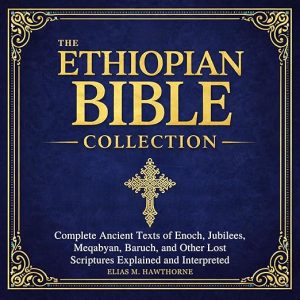
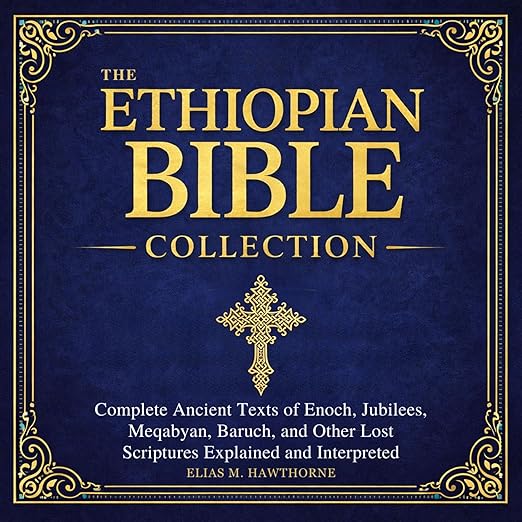
I reached for this one on a Sunday with no particular agenda, which may be exactly how a collection like this should be approached. At nearly 22 hours, The Ethiopian Bible Collection is not background listening. Elias M. Hawthorne’s project is to present sacred texts from the Ethiopian Orthodox tradition in modern English, texts that include the Book of Enoch, the Books of Jubilees and Meqabyan, the Prayer of Manasseh, and several others that Western biblical canon largely excludes. This is substantial content, and Hawthorne treats it with corresponding weight.
The framing in the synopsis positions these texts as living testimonies rather than historical curiosities, which shapes the listener’s relationship to the material from the start. Unlike a scholarly audiobook that might present these scriptures with critical apparatus and historical footnoting, this collection is presented devotionally. Hawthorne is not distancing the listener from the texts but inviting encounter with them.
Our Take on The Ethiopian Bible Collection
The Ethiopian Orthodox Tewahedo Church has maintained one of the most complete biblical canons in Christian tradition, including texts that were widely read in early Christian communities before Western councils narrowed the scriptural tradition. The Book of Enoch alone, referenced in the New Testament letter of Jude, exerted enormous influence on apocalyptic literature for centuries before its near-disappearance from Western Christianity. Having these texts collected and presented in accessible modern English is genuinely useful for listeners who have encountered references to them in theology or religious history and never had easy access to the primary sources.
Hawthorne self-narrates the collection, which is also self-published. That combination means there is no external editorial or critical mediation between the texts and the listener. The presentation is earnest and unhurried. The narration suits the material without adding performance to content that does not call for it. What you get is the texts themselves, introduced with sufficient context to orient a listener unfamiliar with Ethiopian scriptural tradition.
Why Listen to The Ethiopian Bible Collection
The 22-hour runtime reflects the breadth of what is collected here. The Three Books of Meqabyan alone are rarely available in any Western audio format, and the Ethiopic Didascalia is similarly obscure outside specialist scholarship. For a listener who has read theological histories referencing the Ethiopian biblical tradition without having access to the primary texts, this collection fills a significant gap. The audio format makes dense scriptural material easier to absorb than sustained silent reading of unfamiliar ancient texts, particularly for books like Enoch whose visionary structure benefits from vocal pacing.
The decision to present these texts with interpretation and explanation, as indicated in the full title, gives the collection a pedagogical dimension. This is not a bare reading of scripture but a guided encounter, which makes it more accessible to listeners coming in with curiosity rather than existing expertise in Ethiopian Christianity or Second Temple Jewish literature.
What to Watch For in The Ethiopian Bible Collection
Because this is a self-published work with no user reviews to draw on, prospective listeners should approach with calibrated expectations. The author’s credentials are presented through the work itself rather than through independent verification. The framing language in the synopsis is devotional rather than academic, which is honest about the spirit of the project but means the interpretation offered may reflect a specific theological perspective rather than a neutral scholarly one.
At nearly 22 hours, the collection also requires sustained commitment. Listeners looking for an overview of Ethiopian biblical tradition rather than a full encounter with the texts themselves might find a shorter historical or theological study a more practical starting point.
Who Should Listen to The Ethiopian Bible Collection
This is for listeners with a genuine interest in apocryphal and deuterocanonical scripture, in Ethiopian Christianity specifically, or in the broader history of biblical canon formation. It suits a devotional listener who wants to sit with these texts over time rather than a reader seeking a quick cultural overview.
Less suited to listeners looking for academic rigor, external scholarly commentary, or a critical introduction to the texts. The devotional framing is the project’s strength and its limitation simultaneously.
Frequently Asked Questions
Are the texts in this collection the same as what appears in academic translations of the Book of Enoch or Book of Jubilees?
They are presented in modern English translation with Hawthorne’s interpretive framing, which differs from scholarly critical editions. Listeners seeking academic translations with textual notes should look at editions like R.H. Charles’s Pseudepigrapha instead.
Do you need prior knowledge of Ethiopian Christianity to follow this audiobook?
Not necessarily. Hawthorne provides contextual framing for the texts, making them approachable for curious listeners without prior background. Some familiarity with biblical literature generally will help orient the experience.
How does the narration pace such a large collection across 22 hours?
The narration is measured and consistent throughout. There are no dramatic shifts in delivery between texts, which suits a devotional collection but means listeners looking for vocal variety will find the experience uniform.
Is this collection affiliated with the Ethiopian Orthodox Church or any specific institution?
Based on available information, it is an independent self-published project by Elias M. Hawthorne. It is not an official publication of the Ethiopian Orthodox Tewahedo Church.