Quick Take
- Narration: Eve narrates her own autobiography with the same directness she brought to her music, and the self-narration makes the more vulnerable passages feel genuinely exposed rather than performed.
- Themes: Female ambition in a male-dominated industry, fame’s psychological cost, fertility and motherhood alongside career
- Mood: Frank, reflective, and energizing
- Verdict: Fans of Eve and listeners interested in the late 1990s and 2000s hip-hop era from a female perspective will find this memoir both illuminating and worth their time.
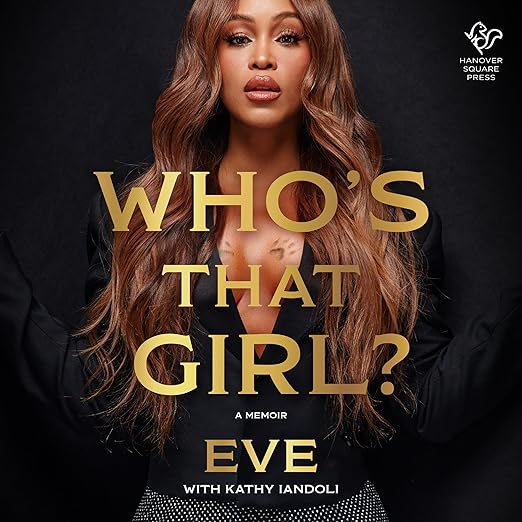
I was maybe twelve years old when Let There Be Eve dropped and the album cover was everywhere. I did not fully understand then what it meant for a woman to reach number one on the Billboard 200 in 1999 as a solo rapper; I just knew the music was insistent and that Eve seemed to occupy her space with a completeness that felt unusual. Listening to Who’s That Girl? felt, in part, like going back to understand something I had heard but not fully processed as a child.
Eve Jihan Cooper narrates her own autobiography, and the decision to self-narrate a memoir of this kind is almost always the right one. There is no mediation between the listener and the storytelling; when she describes what it felt like to enter the Ruff Ryders collective as a teenager from West Philadelphia’s Mill Creek Projects, you are hearing it in the exact register she chose. The autobiography covers the history that most fans will know, the debut album, the Grammy for Best Rap/Sung Collaboration with Gwen Stefani for Let Me Blow Ya Mind, the TV work and fashion, but it also moves into territory that feels genuinely unguarded.
Our Take on Who’s That Girl
The most compelling sections of this memoir are not the industry milestones. They are the chapters dealing with her internal battles: the years of conflict with her label after Lip Lock, the mental health struggles that accompanied sustained fame, and her experience navigating fertility issues before becoming a mother. Eve is frank about the way success in hip-hop was constructed around her in ways that did not always serve her, and her account of the gender dynamics at Ruff Ryders and in the broader industry of the late 1990s is specific and credible. One reviewer noted she was transparent with her many struggles and that she created a lane for female creativity that gave other female MCs a voice. That transparency is real and it elevates the book past the standard music biography format.
Why Listen to Who’s That Girl
Self-narrated memoirs live or die on whether the author’s voice on the page translates to the author’s voice in the recording booth, and Eve’s does. Her cadence is unhurried and the emotional beats land without theatrical inflation. The listening experience has the feeling of a long, honest conversation rather than a public relations document. That said, one reviewer noted some reticence around certain personal relationships and moments that felt deliberately left obscure, and that is a fair observation; there are places where Eve clearly chose what to share and what to protect, which is her right but may leave some listeners wanting more specific details from particular chapters of her life.
What to Watch For in Who’s That Girl
The deeper story behind her album Scorpion gets extended treatment here, and for listeners who followed her career through that difficult period it will provide significant context. The sections on her talk show work and the particular pressures of that environment are also more textured than most readers will have expected. Eve’s account of the difference between performing confidence in public and managing uncertainty in private is one of the recurring tensions the memoir holds with genuine complexity. The West Philadelphia sections, where she traces her path from Mill Creek to the Ruff Ryders studio, ground the later celebrity material in something specific and rooted.
Who Should Listen to Who’s That Girl
Hip-hop listeners who were present for the Ruff Ryders era will find the most specific pleasures here, but the memoir is accessible to anyone interested in the experience of a Black woman navigating entertainment industry structures in a period when those structures were particularly unforgiving. Listeners who want a tell-all that names names and settles scores will be disappointed; this is a memoir of reflection rather than grievance. At just over five and a half hours, it is also an efficient listen that does not overstay its welcome. Those who want to understand what it took to be the first woman through certain doors in late 1990s hip-hop will find Eve’s account honest and specific.
Frequently Asked Questions
Does the memoir cover Eve’s personal relationships in depth?
She addresses relationships including her marriage, but some reviewers noted she kept certain personal details deliberately private. The emotional honesty is more about her internal life and career than about other individuals.
Do I need to be an existing fan to enjoy Who’s That Girl?
Some familiarity with hip-hop from the late 1990s through the 2000s adds context, but the memoir’s themes around ambition, gender, mental health, and motherhood are accessible to any listener.
Is self-narration the right choice for this memoir?
Yes, strongly. The directness of Eve’s own voice reading her own experiences makes the more vulnerable passages feel earned rather than performed.
How does the memoir handle the mental health material?
Eve discusses her internal struggles with fame and her battles with her own confidence and identity with candor. The treatment is honest and grounded rather than sensationalized.