Beyonce References That Sharpen the Argument
Dr. Akilah Cadet structures this audiobook as a series of personal stories rather than a policy argument, and that choice turns out to be exactly right for what she is trying to accomplish. The title announces a thesis, but the body of the work is something more granular: a Black disabled woman working through what it actually looks and feels like to navigate institutions that were not designed with her in mind, and doing so with the precision that comes from spending years naming the dynamic professionally as the founder of Change Cadet. The clarity of voice in this book is not an accident. Cadet has had to develop language for experiences that standard professional discourse mostly refuses to acknowledge, and the result is prose that is direct without being simplified, and funny in a way that sharpens rather than deflects.
The Beyonce references appear more than once, and they are not decorative. Cadet uses popular culture as a way into structural analysis without losing the reader in abstraction, which is harder to do than it sounds. She is funny when she wants to be, which is frequently, and that wit serves the argument rather than providing relief from it.
Cadet Narrates, and the Candor Is Audible
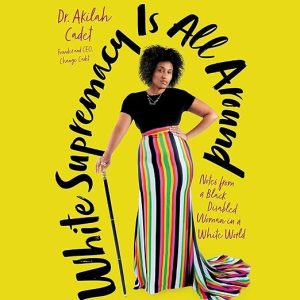
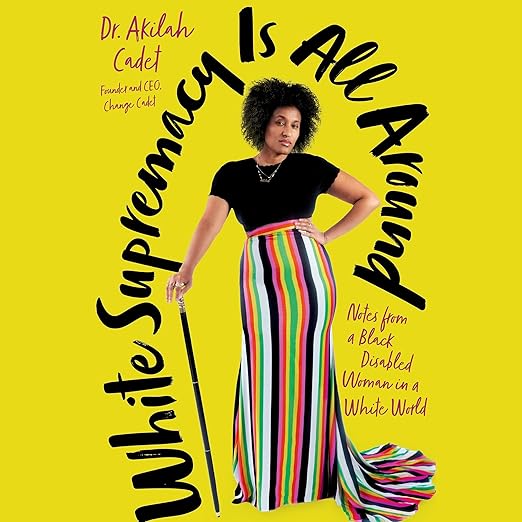
Akilah Cadet narrates her own book, and this is one of those cases where self-narration is not incidental but essential. The candor and wit that reviewers describe in the text are audible in the delivery. Cadet's voice carries the register of someone speaking from experience rather than theory, and that registers differently from professional narration regardless of how skilled the professional narrator might be. When she describes workplace discrimination or navigating disability in systems that resist accommodation, the weight of those passages is personal in a way that cannot be reproduced by a third-party narrator working from a script.
The book is explicitly addressed to two audiences simultaneously: BIPOC readers who want to feel seen and empowered, and non-Black allies and organizational leaders who want a framework for genuine contribution. Cadet holds both of those audiences in mind with unusual success. Frederick Joseph's description of the book as equipping readers 'with the knowledge to recognize the insidious nature of systemic racism' identifies what it does at its best: it makes visible something that people who do not experience it can genuinely fail to see.
One reviewer describes being unable to put the book down while simultaneously serving as the book's literal target audience as a white woman whose experiences are usually centered in such texts. That response speaks to the skill of Cadet's approach: she writes for Black readers without making the experience inaccessible to allies, and she writes for allies without softening the material to make it more comfortable for them.
She Was in the Rooms Where Decisions Were Made
The disability dimension of Cadet's perspective is present throughout but most developed in specific chapters rather than uniformly integrated. Readers who came specifically for her analysis of the intersection between race and disability may find some sections more focused on racial dynamics alone. That said, her position as a Black disabled woman shapes the entire analytical framework even when disability is not the explicit subject of a given chapter.
This is a memoir and framework document, not an academic text. Listeners looking for comprehensive citation, peer-reviewed sourcing, or systematic policy analysis will need supplementary reading. What the book offers is something different: a sharp, funny, honest account of what dismantling white supremacy requires from a practitioner who has spent years attempting to do exactly that inside American institutions, including during the 2020 summer of allyship when she was actively consulting with major brands.
The section addressing that 2020 moment is among the most valuable in the book for people who want to understand what went wrong with many well-intentioned organizational responses. Cadet writes from inside the institutional experience rather than from external commentary, and that vantage point gives her analysis a specificity that most accounts of that period lack. She is not reviewing what happened from the outside. She was in the rooms where the decisions were made, and she remembers what people actually said.
A note on the title for listeners who find it confrontational before they have opened the book: Cadet is using 'all around' in the literal, environmental sense rather than as hyperbole. Her argument, and it is a specific argument backed by documented incidents from her own professional and personal life, is that white supremacy functions as an ambient condition in American institutions rather than as an explicit ideology held by identifiable individuals. That distinction matters because it shifts the frame from interpersonal villainy to structural analysis, which is more accurate and ultimately more useful for anyone who wants to understand what change would actually require. The candor with which Cadet makes this case, and the wit she brings to it, are what keep the argument from feeling like a lecture.
Both Audiences Benefit From Hearing Cadet Narrate
This audiobook is valuable for two distinct audiences. BIPOC readers, particularly Black and disabled readers, will find it validating, accurately named, and delivered in a voice that prioritizes their experience rather than performing for an outside observer. White readers, organizational leaders, and people who describe themselves as allies will find it a direct and honest account of what accompliceship actually requires versus what feels good in the moment. Both audiences will benefit from hearing Cadet narrate her own work. Readers looking for academic or policy-level analysis should supplement this with more technical texts; readers looking for the experiential grounding that policy texts often miss will find exactly what this book offers.
Good to Know
Is this audiobook primarily a memoir or a practical guide for dismantling white supremacy?
Both, held together by personal stories. Cadet uses her own experiences as primary material and derives the analytical framework from them. It is structured as a memoir but functions as a guide for both BIPOC readers and white allies in organizational settings.
Does this audiobook address disability alongside race or primarily focus on race?
Both are present throughout, with the intersection between Black identity and disability explicit in several chapters. Cadet's position as a Black disabled woman shapes the entire analytical lens, though some chapters foreground disability more explicitly than others.
How does the audiobook handle the 2020 moment of widespread allyship declarations by organizations?
Directly and specifically. Cadet was consulting with major brands during that period and writes from inside the institutional responses rather than from external commentary. Her account of what those organizational commitments actually produced, and failed to produce, is among the most substantive sections of the book.
Is White Supremacy Is All Around a comfortable listen or does it make demands on the listener?
It makes demands, particularly on white listeners whose experience is usually centered in public discourse. Cadet is not writing to make that audience comfortable; she is writing to make what she has experienced legible. The wit and candor in the narration make those demands more human than confrontational.