The Short Version
- Performance: Eli McCann is credited as reader on his own essays, so the pauses and the local vocabulary come from inside the culture described.
- What it covers: Cultural Mormonism, leaving a faith, coming out, family and community
- Feel: Fond, funny, quietly generous
- Our call: A comic memoir that refuses contempt, though the cartoons named in the copy never reach the file.
How do you write warmly about a faith you left, without either flattering it or settling scores? That question runs beneath every essay in this audiobook, and Eli McCann answers it by declining to pick a side. These are personal essays collected from a humor column for The Salt Lake Tribune, covering a Utah childhood inside the Church of Jesus Christ of Latter-day Saints during the 1990s, coming out in adulthood, leaving the church, and building a family in Salt Lake City. McCann reads all four hours and twenty-three minutes himself, which matters more here than it usually does.
The Holy Ghost Goes to Bed at Midnight
Most instructive here is a reader well outside the target audience: not Mormon, in that account's own words a lapsed Catholic, and able to relate to these stories of growing up in Mormon culture regardless. Which is the whole trick. McCann writes about one specific community with enough particularity that it stops being about that community at all and becomes a book about how any inherited tradition holds people, and how it feels to walk out of one while continuing to love everybody still inside.
Evidence for that generosity sits in the details he chooses. A grandmother insisting that nineteenth-century Mormon pioneers would not trade places with those who live in 2025. Parents enforcing a curfew by explaining that the Holy Ghost goes to bed at midnight. Both are absurd, and neither gets presented as ammunition. McCann's line about the background noise of neighbors being neighbors, "the simple hum of a people gathered," is the register he keeps returning to. He wants the silliness and the belonging inside the same paragraph, and mostly he gets them both there.
McCann Holds His Own Narrator Credit
Laughing uncontrollably in places and shedding tears in others is how one response puts it, a swing you would expect from a memoir rather than from a humor column collection. That swing is the reason to choose this over a stack of funny essays. McCann is attempting something structurally harder than being funny: he is being funny about material that also hurts, and he never resolves the tension by making the hurt into a punchline or the punchline into an apology. The essays hold both at once.
Which brings up the reading. McCann holds the narrator credit on his own book, and for a newspaper humorist that is the right decision for a specific reason: a column's comedy lives in where the sentence stops. The setup runs short, the swerve arrives on a word you did not see coming, and a performer working from a script has to guess where the writer put the weight. The writer never has to guess. Four hours and twenty-three minutes also sits close to the natural attention span for essays.
Essay collections are, in fairness, the easiest audiobooks to abandon, since nothing pulls you from one piece into the next. This one carries an advantage: the essays share a single life, so a chronology accumulates without any individual piece leaning on the one before it. You can set it down after twelve minutes and return a week later without losing the thread, which is genuinely uncommon and makes it a good fit for broken, interrupted listening rather than one sitting.
The Cartoons Go Missing Between Print and Audio
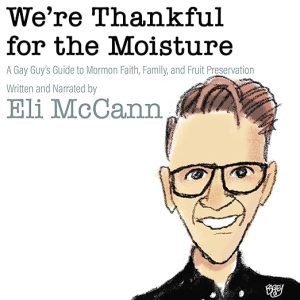
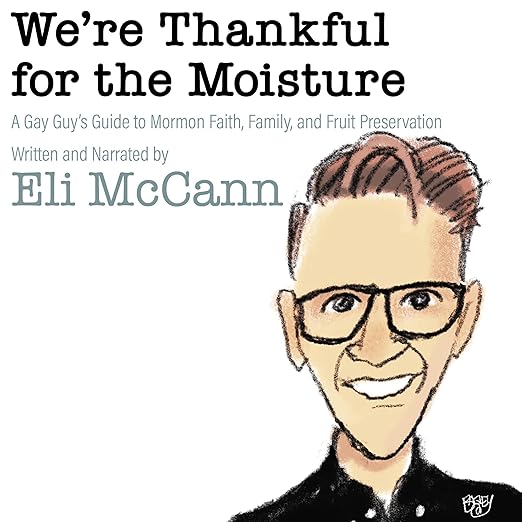
Something the description promises cannot survive this format. These essays arrive, in the copy's own words, along with corresponding cartoons by the Tribune's Pat Bagley, and a cartoon does not survive the trip into audio. Bagley appears nowhere in the byline, which lists McCann alone, and no bundled material is mentioned anywhere in the record's fields. A named collaborator's entire contribution goes missing between the print edition and this one, silently, and anyone drawn by the pairing of columnist and cartoonist receives half of what was advertised.
Readers arrive here from somewhere specific. One response recommends following McCann on TikTok alongside the book, which tells you where a good part of this audience is arriving from. Worth adjusting your expectations accordingly. Short-form video comedy runs on immediacy and volume; a collection of newspaper columns runs on structure and revision. This book moves more slowly than the platform that sold it, and its strongest passages are precisely the ones that would not survive being cut down to sixty seconds of vertical video.
Consider the title, which nothing on the record explains. We're Thankful for the Moisture appears without gloss in the description, in the tags and in the genre fields, and a buyer standing outside the culture it comes from cannot tell whether it is a joke, a quotation, or a phrase carrying real weight. The book presumably handles this. The listing does not, and on a title this opaque one explanatory line would have cost the publisher nothing while saving a fair number of people from guessing.
The More Foreign the World, the Better This Works
Heartwarming and hilarious, one response calls it, hoping it proves the first of many, which is the reaction this collection is built to produce and, judging by the column, reliably does produce. Former members will find their childhood rendered without contempt. Practicing members will find their community handled with more care than they may expect from somebody who walked away from it. Anyone raised inside a tight religious culture of any tradition will recognize the shape without needing the specifics translated.
Skip it if you want a deconstruction narrative with a clear villain, because McCann declines to supply one and that refusal is the book's entire position. Skip it too if the cartoons were the draw, since they do not travel. And if four hours of one voice reading essays about somebody else's childhood sounds thin, understand that the specificity is the appeal here. The more foreign the world, the better this works, which is the reverse of how most memoirs behave.
Common Questions
Does this audiobook work if you know nothing about Mormonism?
It does. The examples the copy chooses explain themselves as they arrive, and the humor works off the gap between a rule and the reason offered for it, which needs no background whatsoever. Specific vocabulary turns up without a glossary, but context carries every instance. Outsiders may laugh harder, because the absurdity lands cold.
How is the audiobook structured, and how long is each essay?
These began as newspaper columns, which sets their natural size: short pieces built around one incident and one turn. The record lists no table of contents and no piece count, so the exact number stays unknown from this page, but the column format means you can stop between any two without losing your place.