Quick Take
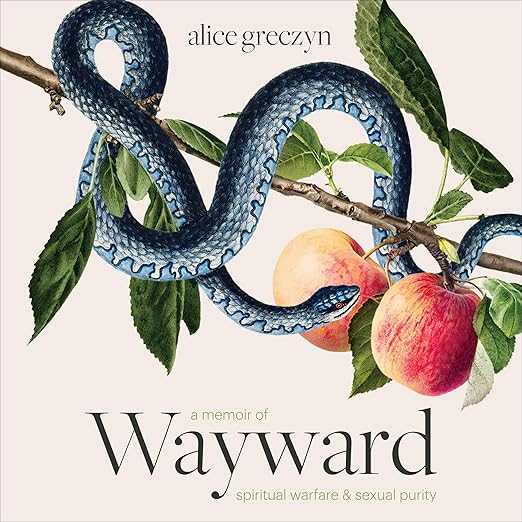
- Narration: Alice Greczyn reads her own memoir with the emotional transparency of someone who has already done the work of integration, present, honest, and without performance.
- Themes: Religious deconstruction, identity formation outside inherited frameworks, spiritual abuse and recovery
- Mood: Vulnerable and searching, with a quiet emotional precision
- Verdict: One of the most psychologically honest accounts of leaving a religious subculture written in recent years, and stronger still on audio because Greczyn is an actor who knows exactly what her own words cost.
I listened to Wayward over the course of a week in which I was also reading about the sociology of high-demand religious groups, and the juxtaposition was illuminating. The academic literature describes mechanisms. Greczyn describes what those mechanisms actually feel like from inside them, which is something that scholarly analysis rarely manages and that memoir, when it is done with this level of honesty, can accomplish in a way nothing else can. I was not expecting to be as affected as I was.
Greczyn narrates her own memoir, and that choice is load-bearing. She is a professional actress, and while that background brings technical capacity, what you actually hear in this recording is something more exposed than performance. She is reading material she has lived, about events she has spent years processing, and the places where the emotion breaks through feel entirely unrehearsed. There is a reviewer who describes needing to pause the book to self-reflect and digest what they had just heard, and I understand exactly what they mean.
Our Take on Wayward
The memoir covers Greczyn’s childhood and early adult life in a Christian subculture characterized by what she describes, carefully and specifically, as a theology that teaches children to be martyrs and women to be silent. Her parents made a faith-based decision to leave conventional employment and trust in God’s material provision, which in practice meant raising five children and a cat through a period of homelessness. Greczyn was homeschooled, held to a commitment of remaining unkissed until her wedding day, and was planning to become a missionary nurse when an unexpected door opened into acting in Hollywood. What follows involves an arranged betrothal she did not see coming and a psychological collapse that required her to construct a self outside the only framework she had ever been given. The structure of the memoir is carefully built, and the emotional intelligence Greczyn brings to her own history is evident on every page.
Why Listen to Wayward
The audio format adds a specific dimension here because Greczyn’s voice carries the history of what she is describing. When she reads passages about specific spiritual practices, speaking in tongues, being slain in the spirit, the particular emotional coercion of an arranged betrothal, the performance and the experience are a single register. One reviewer who had a Pentecostal upbringing described recognizing the experiences she describes almost immediately, including having faked speaking in tongues. Another, who moved from Pentecostal to conservative Mennonite to Old Order Amish communities, described a similarly precise recognition. That specificity of resonance is only possible because Greczyn resisted the temptation to generalize her experience for wider appeal. The subculture she describes is particular, and she keeps it particular throughout.
What to Watch For in Wayward
This memoir is written and narrated with the kind of vulnerability that requires something from the listener. It is not ambient. There are passages about psychological shattering that are rendered from inside the experience rather than from the retrospective safety of complete healing, and Greczyn is honest about the ongoing nature of that work. Reviewers describe the book as compulsively readable and potentially life-changing for those who have walked similar paths, but several also note that it raised emotions they needed time to process. Listeners who are currently inside a high-demand religious community or in an active period of religious crisis may find the material intensely resonant in ways that require care. This is not a warning against reading it; it is an acknowledgment of the book’s genuine power.
Who Should Listen to Wayward
Listeners who grew up in evangelical, Pentecostal, or fundamentalist Christian environments, and particularly those who have since left those communities or are questioning their relationship to them, will find this memoir unusually direct and useful. It also has strong appeal for readers interested in coming-of-age stories involving religious deconstruction more broadly, and for those who enjoy memoir that operates with psychological as well as narrative honesty. It is emphatically not only for women, as one reviewer points out explicitly: the emotional content crosses that boundary. This is a harder listen for people with no prior relationship to the subculture Greczyn describes, not because it is inaccessible but because the resonance that makes it exceptional for those who do recognize it will simply be experienced as interesting rather than revelatory.
Frequently Asked Questions
Is Alice Greczyn’s self-narration emotionally difficult to listen to given the subject matter?
At times, yes, in the productive sense. Greczyn is a professional actress who brings real emotional presence to material she has lived. Several reviewers describe needing to pause and process certain passages. The difficulty is inseparable from the memoir’s honesty.
Does Wayward address the Hollywood period specifically, or does it focus mainly on Greczyn’s childhood?
The memoir covers both, using the unexpected opportunity in Hollywood as a turning point that destabilizes the framework she was raised in. The childhood and religious upbringing are the foundation, and the acting career and arranged betrothal are where those foundations are tested.
Is this memoir critical of Christianity broadly, or is it specific about the subculture it depicts?
Greczyn is careful and specific throughout. The memoir targets a particular high-demand subculture rather than Christianity as a whole, and reviewers across different religious backgrounds describe finding it honest rather than polemical. The framing is psychological and personal rather than theological.
Has this book resonated particularly with listeners from specific religious backgrounds?
Yes, strongly with Pentecostal and evangelical listeners who recognize the specific practices and psychological dynamics Greczyn describes. Reviews from readers with Pentecostal and conservative Christian backgrounds describe a level of recognition that suggests she has documented a widely shared but rarely articulated experience.