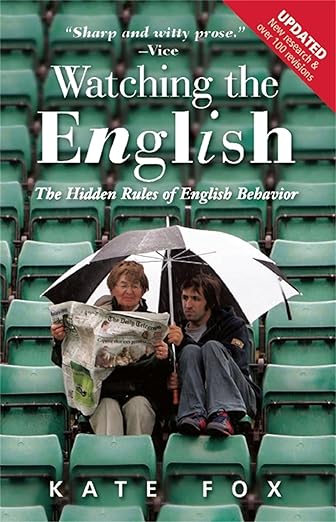
Quick Take
- Narration: Joan Walker reads with the kind of dry wit and light irony that the material demands, though the 21-hour runtime tests even sympathetic listeners.
- Themes: National identity and unspoken rules, class anxiety, cultural anthropology
- Mood: Witty and occasionally exhaustive, like a very long and very smart dinner party conversation
- Verdict: A thorough, affectionate, and often genuinely funny anthropological study of Englishness that is indispensable for anyone trying to decode British social behavior, even if it could have been shorter.
I came to Watching the English in the week I was preparing for a work trip to London, looking for something that would sharpen my instincts for British social dynamics. Kate Fox book had been recommended to me more than once by people whose taste I trust, usually described as essential preparation for anyone dealing with English colleagues or counterparts. What I found was a book that was simultaneously more academic and more entertaining than I expected, and that kept delivering insights well past the point where I thought I had absorbed everything it had to offer.
Fox is a social anthropologist, and she approaches the English in the same spirit she might approach any culture being examined: with genuine curiosity, systematic attention, and a willingness to follow her observations into uncomfortable places. The book was first published in 2004 and has since been updated with new research, including material on squaddies, bikers, and horse-riders that brings fresh specificity to the updated edition. The core argument remains: the English are governed by an elaborate set of unspoken rules that operate below the level of conscious awareness but shape almost every social interaction, and these rules are best understood as expressions of a deep, pervasive anxiety about class and belonging.
The Taxonomy of English Social Rules
What makes Watching the English work is Fox taxonomy. She does not simply describe behaviors; she identifies the rules underlying them and names them with the kind of precision that makes the reader feel a sudden retrospective clarity about things they have observed but never analyzed. The reflex apology rule, the ironic-gnome rule, the weather-speak function as social lubricant rather than actual communication about atmospheric conditions: these are not whimsical observations but rigorous structural claims about how a culture manages discomfort and maintains face.
The weather conversation is probably the most famous passage, and Fox earns the attention it has received. She demonstrates that English people talk about the weather not because they are dull or unable to find better topics but because talking about the weather serves as a socially approved mechanism for initiating contact with strangers without the presumption of genuine intimacy. The analysis is funny because it is accurate, and it is accurate because Fox did the anthropological work: going into public spaces, deliberately violating the conventions, and recording the reactions.
What Twenty-One Hours Asks of a Listener
The most significant challenge with Watching the English as an audiobook is the runtime. At twenty-one hours and twenty-five minutes, this is a long sit, and Fox methodology, thorough coverage of every subculture and social context she could get into, means some sections feel more immediately engaging than others. The reviewer who called it occasionally repetitive was being fair. Fox returns to the class anxiety thesis repeatedly throughout the book, applying it to different social contexts, and listeners who have absorbed the central insight early may find the application across later sections less revelatory than the core chapters.
Joan Walker narration handles the tonal range well. Fox writes with wit, and Walker does not flatten that wit into a neutral academic read. The book works as audio in the same way a smart lecture series works: you can listen at moderate attention for most of it and still extract substantial value, while the more concentrated passages reward closer listening.
Who Benefits Most From This Study
The book divides its readers roughly into three groups. The first are non-English readers who want to understand British social behavior; for them, this is close to a definitive guide. The second are English readers who find the externalized view of their own cultural habits by turns illuminating, funny, and slightly uncomfortable. The third are readers who already know England well and will find the analysis familiar, occasionally preachy as one reviewer noted, and more useful as confirmation than revelation.
For anyone in the first two categories, Watching the English remains among the most substantive and enjoyable works of popular anthropology published in the last two decades. It is the book that explains why English colleagues behave the way they do, why they apologize when they have been wronged, why irony operates as the primary mode of social bonding, and why enthusiasm is culturally suspect in a way that takes years of exposure to intuitively understand. Twenty-one hours is a significant investment, but for the right listener it pays back considerably more than it costs.
Frequently Asked Questions
Is Watching the English suitable for someone who has never been to England and knows little about British culture?
It may be the ideal book for that reader. Fox builds her framework from the ground up and explains the cultural rules with enough context that no prior experience is required. Multiple reviewers describe it as the book they wished they had before living or working in England.
How does the updated and revised edition differ from the original 2004 publication?
The updated edition includes new research and over 100 revisions, with fresh material on subcultures such as squaddies, bikers, and horse-riders. The core argument and structure are preserved from the original, but the additions bring specificity to the cultural portrait that was not in the first version.
Is the book as useful for understanding British culture today as it was when it was first published?
Fox insights are structural rather than topical, focused on deep rules of social behavior that change slowly rather than political or media trends that shift quickly. Most reviewers find it highly applicable to contemporary English culture, though some specific examples may feel dated.
Is Watching the English available as a free audiobook?
Watching the English is available on Audible at .00 per purchase. It may be accessible through Audible membership credits or Audible Plus depending on your plan. Check current availability for free audiobook access through your membership tier.