Before You Press Play
- Voice: Risner narrates her own story, and the lived weight in her voice is something a studio performer could not replicate.
- Big ideas: Chronic illness and disability, faith under prolonged suffering, betrayal and single motherhood
- Atmosphere: Heavy and unflinching, but never despairing
- Worth it?: A devotional-grade memoir for listeners ready to sit with real suffering inside a specifically Christian framework.
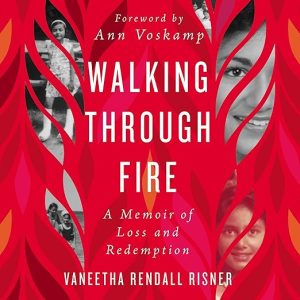
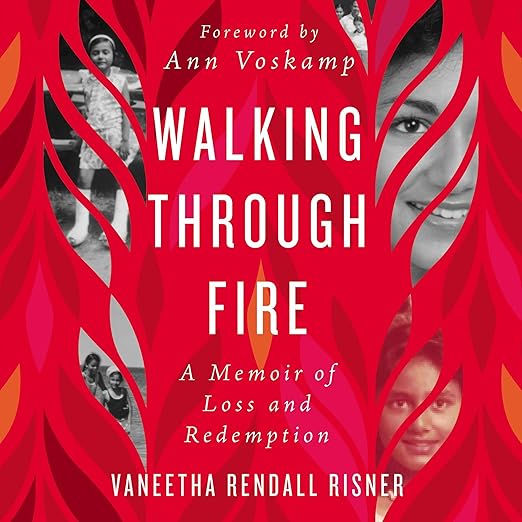
Polio struck Vaneetha Risner before she was a year old, and the misdiagnosis that followed left her with paralysis doctors never fully corrected. That single sentence could describe a straightforward survival memoir, but this audiobook covers far more ground than one illness: ten years of hospital stays, childhood bullying, a hard-won Stanford MBA, marriage, four miscarriages, the death of her infant son from a doctor's error, a post-polio diagnosis threatening further paralysis, and a husband who left her to raise two teenage daughters alone. Risner narrates all of it herself, and craft is the right word for what she does with material this heavy: she structures the suffering in waves rather than a single downward slide, so grief accumulates the way it actually does in a life, not the way it does in a tidy three-act redemption story.
A Job-Like Story That Keeps Reopening
The word choice in the synopsis itself is instructive: this is described as a Job-like story, and the comparison holds up better than most marketing language does. Risner's book does not build toward a single climactic recovery; it keeps reopening the wound after each apparent resolution. Carefree college years and a dream job in Boston give way to marriage and a Stanford MBA, which sounds like the end of the hard part. Then the miscarriages start, then her son dies from a documented medical mistake, then the post-polio syndrome diagnosis arrives with the possibility of quadriplegia, then her husband leaves. Reviewer Stuart calls the prose 'gripping' and compares the experience to 'stepping into the mind of the psalmists' during her 'deep wrestling with dark providence,' which is a precise way of naming what separates this from a standard inspirational memoir.
What keeps seven and a half hours of accumulating loss from becoming numbing is the specificity. Risner does not summarize her grief in abstractions; she names the doctor's mistake, the exact nature of her paralysis, the particular betrayal of a marriage ending while she was already facing a quadriplegia diagnosis. Reviewer Alison Talley describes the effect as feeling like Risner 'is in your very presence' while she 'shares candidly the raw details of her life...' A ghostwritten or heavily edited version of this same material could easily read as misery for its own sake. Because Risner narrates her own sentences in her own voice, the suffering never separates from the specific woman it happened to.
The psalms-of-lament comparison Stuart draws is worth taking further than a passing compliment. That biblical genre follows a recognizable pattern, complaint laid out in full before any pivot toward trust, and Risner's memoir follows roughly the same emotional logic rather than rushing to reassurance. Each major loss gets its full weight in the telling before the book allows itself to reach for meaning. That structural patience is part of why the ending doesn't feel like a bow tied on top of an audiobook's worth of grief; it feels earned by everything that came before it.
A Voice Shaped by the Events Themselves
Self-narration matters more here than in most memoirs, because the book's theological argument depends on tone. Risner is not simply reporting facts about loss; she is making a case that intimacy with God in suffering can be, in her own words, 'breathtakingly beautiful,' a claim that would sound hollow read by a professional voice actor without her lived investment in it. Hearing the actual survivor say those words, in a voice shaped by the events being described, is a different listening experience than hearing them performed. Reviewer Brenda notes that 'each chapter was clearly written from the heart,' and in audio form that heart is literally the narrator's own.
The book also benefits from audio's built-in pacing in a way a printed page doesn't offer. Chapters covering the hospital years, the miscarriages, and her son's death arrive with space between them rather than as one continuous scroll of text a reader might rush through. Brenda's review calls the book 'hard to put down and eager to finish,' which is a print-reading reflex; in audio, a listener has to sit with each chapter's weight for its full runtime, which suits material built around processing grief rather than consuming plot.
Grief memoirs often get consumed during physical activity, a walk, a commute, folding laundry, rather than in a dedicated reading chair, and listeners processing their own loss frequently find that motion helps them stay present with heavy material instead of shutting down partway through. Risner's own narration, unhurried and clearly written to be spoken rather than merely read aloud from a printed manuscript, supports that kind of half-attention, half-immersion listening without ever losing the thread of where a chapter is headed.
Theological Framework as the Story's Engine
This is explicitly a Christian memoir, and the theological framework is not incidental to the story, it is the story's engine. Every major loss gets interpreted through a specific evangelical lens on suffering and divine purpose, language listeners should expect going in rather than discover partway through chapter four. Listeners outside that framework can still find real value in the honesty about grief, marriage, and disability, but the book is not making a secular case for resilience; it is making a specifically Christian one, and it never pretends otherwise.
Worth naming plainly: this book covers a child's death from medical error, four miscarriages, degenerative paralysis, and marital betrayal in unflinching detail. None of it is exploitative, but none of it is softened either, and the runtime does not offer much relief between the heaviest chapters. Listeners who have experienced similar losses, particularly infant loss or a chronic degenerative diagnosis, may find real recognition here or may find it too close to sit with in one listen. No content warning is built into the audiobook itself beyond what the synopsis already signals, so go in with that context.
Never Compartmentalized From the Marriage or Miscarriages
The clearest audience is listeners already reading within Christian memoir and inspirational nonfiction, especially anyone drawn to writers who write directly from disability and loss rather than around it. Anyone processing their own suffering through a faith lens, or a support group or church community looking for a shared listen with real substance behind the encouragement, will find this holds up to scrutiny in a way lighter devotional titles don't. At 4.8 stars across 421 ratings, the audience response suggests the honesty is landing exactly as intended.
Compared to the broader shelf of chronic-illness and disability memoir, this one stands out for refusing to separate the physical suffering from the spiritual and relational fallout around it; polio and post-polio syndrome are never treated as a contained medical subplot kept apart from the marriage, the miscarriages, or the parenting. Listeners who've found other illness memoirs oddly compartmentalized, physical struggle in one chapter, emotional life in another, will notice the difference immediately.
Readers hunting for a purely secular resilience narrative, something closer to a clinical or psychological account of trauma recovery, should look elsewhere; the framework here is devotional first. A recommendation from a friend who loved the theology is worth confirming compatibility before committing seven and a half hours to a story this heavy, since the payoff depends entirely on being open to Risner's specific spiritual conclusions.
Does Vaneetha Risner narrate this audiobook herself?
Yes, Risner narrates her own memoir, which adds real emotional weight to a story built on direct, personal testimony about polio, loss, and faith.
Is the Walking Through Fire audiobook appropriate for listeners outside the Christian faith?
The book is built around a Christian theological framework for interpreting suffering, so listeners outside that tradition can still find value in the honesty about grief and disability but should expect the interpretation to stay faith-specific throughout.
How heavy is the content in this audiobook, specifically?
It covers infant loss through miscarriage, a son's death from medical error, degenerative paralysis from post-polio syndrome, and marital betrayal, all described directly rather than softened.
Does the book explain what happened to Vaneetha Risner after the events in the synopsis?
The synopsis focuses on the accumulation of losses through her diagnosis, her son's death, and her divorce, framed around what she found on the other side of them, rather than a separate later-life update.