Quick Take
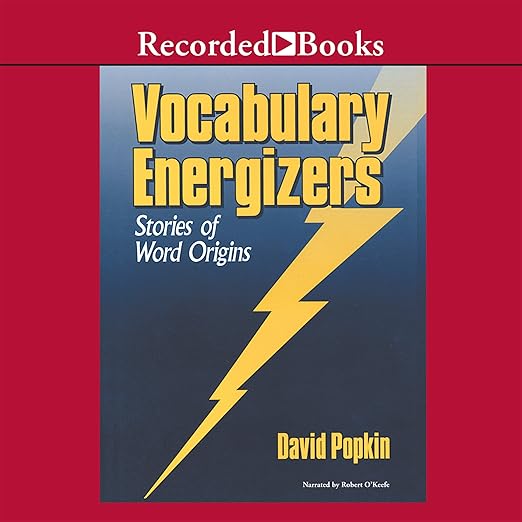
- Narration: Robert O’Keefe brings warmth and evident enthusiasm for etymology to the reading, which suits the material’s storytelling approach perfectly, this is a narrator who sounds like he is enjoying himself.
- Themes: Word origin stories, Greek and Latin roots, vocabulary as cultural history
- Mood: Curious and unhurried, like a pleasantly digressive linguistics lecture
- Verdict: If you have always wanted to build vocabulary without flashcards or rote memorization, David Popkin’s etymology-first method is the most genuinely enjoyable approach I have encountered in this genre.
There is a particular kind of frustration that comes from vocabulary-building resources: the ones that hand you lists, or mnemonic tricks that feel more clever than they are memorable, or exercises that test what you have not yet fully absorbed. I have worked through more than a few of these in the course of literary study, and I understand the reviewer Joseph Dewey’s relief at finding something different. Vocabulary Energizers Volume 1 is, at its core, a book that tells stories about words. The vocabulary improvement is a byproduct of genuine curiosity about where English words came from and what they used to mean.
David Popkin’s approach is to build a core vocabulary of 100 words through their histories, linking each entry to synonyms, antonyms, and related terms derived from the same Greek and Latin roots. The 100 headwords anchor hundreds of additional words through etymology rather than arbitrary association. By the time you have absorbed why a particular word means what it means, you have also absorbed a cluster of related terms that share that origin.
Etymology as Mnemonic
The pedagogical insight behind this approach is that meaning is memorable in a way that arbitrary definitions are not. Knowing that a word derives from the Latin for a specific concept, that it traveled through medieval French before entering English, that its original sense was slightly darker or lighter than its modern usage, that narrative creates a cognitive anchor that a dictionary definition cannot. When you encounter the word later, you do not retrieve a memorized definition; you retrieve a story, and the meaning comes with it.
Reviewer Sevinc, a non-native English speaker, specifically noted the effectiveness of this method for building genuine vocabulary rather than surface recognition. That is an important distinction for language learners: the difference between knowing a word when you see it and being able to use it accurately in your own writing. Etymology-based vocabulary acquisition tends to produce the latter, because the learner understands the word’s semantic core rather than just its surface definition.
The Listening Experience Specifically
At 2 hours and 50 minutes, this is a compact listen that rewards multiple passes. Robert O’Keefe’s narration is the right fit for the material: he treats the word histories as genuine stories rather than recitations, and his pace allows the etymological connections to land without feeling rushed. The informative exercises mentioned in the synopsis translate reasonably well into audio, they function as reinforcement rather than interactive testing, which is appropriate for the medium.
The Greek and Latin root sections are where the audio format earns its keep most clearly. Hearing the phonetics of root words and their derivatives reinforces the connections that the written page can present visually. When you hear how phil sounds in multiple compound words, or how a Latin root threads through several English terms that share it, the auditory pattern reinforces the etymological family in a way that reading does not always achieve.
What This Is Not
Vocabulary Energizers is not a test preparation tool. It will not systematically cover GRE word lists or academic vocabulary for a specific discipline. Its 100 headwords are selected for richness of etymology and breadth of derived vocabulary, not for any standardized examination’s frequency lists. If that is your goal, look elsewhere.
It is also worth noting that with only two ratings, both at five stars, the data is thin. But the reviews are substantive and consistent: the method works as described for the listeners who have engaged with it seriously. The word histories are interesting, the narration is warm, and the vocabulary that accumulates over the course of the 2 hours and 50 minutes will actually stick because of how it was acquired.
Frequently Asked Questions
Do you need a background in Latin or Greek to benefit from the etymology approach?
Not at all. Popkin builds the etymological context as he goes, explaining the meaning of root words alongside the English vocabulary they generated. A reader with no classical languages background will find the derivations explained clearly enough to be useful.
How does Vocabulary Energizers compare to other vocabulary-building audiobooks in terms of retention?
The etymology-based method tends to produce stronger long-term retention than flashcard or mnemonic approaches because the learner understands why a word means what it means rather than just associating it with a memory trick. Both reviewers cite actual vocabulary improvement rather than just enjoyable listening.
Is Volume 1 standalone, or do I need to continue with other volumes to get the full benefit?
Volume 1 is complete on its own, the 100 headwords it covers, along with their hundreds of associated terms, constitute a self-contained vocabulary expansion program. Volume 2 extends the same method with a different set of words, but the first volume does not leave anything unresolved.
Is this audiobook appropriate for non-native English speakers trying to improve their vocabulary?
Reviewer Sevinc specifically recommends it as a non-native speaker, noting it was effective where other methods had been less so. The word histories provide cultural and linguistic context that can make English vocabulary more intuitive, not just more extensive. The main requirement is comfortable listening comprehension in English.