Quick Take
- Narration: Virtual Voice AI narration on a horror-comedy ensemble novel is a meaningful mismatch; the synthetic delivery flattens the character differentiation this diverse cast requires.
- Themes: Community under siege, outsiders and outcasts, the horror-comedy of American margins
- Mood: Pulpy and energetic in conception, though the narration limits how far that energy carries
- Verdict: A genuinely creative zombie premise with a strong ensemble cast, but the Virtual Voice production is a real obstacle for a story that lives or dies on character distinctiveness.
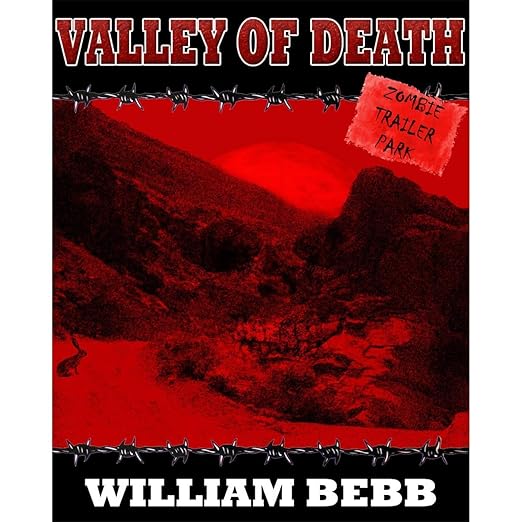
The premise here is legitimately good: a remote trailer park outside Albuquerque, home to a collection of the forgotten and the marginal, encounters a zombie outbreak when an industrial accident kills Juan, one of the undocumented workers, who then comes back and disposes of his neighbors one bite at a time. William Bebb has thought carefully about his setting. The residents of the Albuquerque Springs Trailer Park include illegal immigrants, a WWII veteran, a hermit who has turned his back on society, a meth-cooking family the local police have labeled the Redneck Gourmets, a grumpy old woman, and a beautiful young woman. This is exactly the kind of ensemble that good horror-comedy requires: a cross-section of American life that is both specific and archetypal, placed under pressure to reveal what it’s actually made of.
I want to review the book rather than simply the production, because the underlying novel has things going for it that the audiobook delivery partially obscures. But I also can’t pretend the narration doesn’t matter for a book like this.
Why a Synthetic Voice Struggles with Ensemble Horror-Comedy
Horror-comedy is a precise tonal instrument. The comedy depends on timing and on the ability to render distinct voices, you need to hear the difference between the meth-cooking patriarch and the WWII veteran, between the young undocumented worker and the hermit who’s turned his back on society. These are not the same person and they shouldn’t sound like the same person. Virtual Voice AI narration, regardless of which model is deployed, generates a synthesized voice that does not vary character by character with the naturalness human narrators achieve. In an ensemble novel with this many distinct personalities, the result is a flattening of exactly the material that makes the premise interesting. The Romero-style social commentary that one reviewer rightly identifies as a strength of the source material, the way zombie horror works as a lens on marginalized communities, requires you to care about the individuals in those communities. Voice differentiation is how audio builds that care.
The Premise and What Bebb Does With It
The zombie taxonomy question Bebb raises in the synopsis, are zombies the reanimated dead or the violently insane, and why not both?, is handled with more intelligence than the comic premise might suggest. Juan’s transformation and the subsequent spread through the trailer park community follow a logic that respects both the Romero tradition and the specific social geography of the setting. The angry rattlesnake comparison in the synopsis (when the least dangerous thing you encounter is a rattlesnake, you know you’ve taken a wrong turn) is representative of Bebb’s humor: dry, specific, region-conscious. There’s a version of this book that is very funny and also genuinely unsettling.
Josey’s Entry Point and the Novel’s Pacing
Bebb uses Josey driving his truck into the valley as the reader’s point of entry, which is a structurally sound choice for a novel that could otherwise get lost in its own ensemble. Josey functions as a classic horror-movie observer: someone who arrives after the setup is complete and has to piece together what’s already happened while trying to survive what’s happening now. Reviews describe the novel as visual, with strong descriptive passages of death and injury. At nearly twelve hours, there’s room for Bebb to develop his characters before the horror fully takes over, and the reviews suggest he uses that space productively.
Who Should Listen / Who Should Skip
If you’re a zombie fiction enthusiast who prioritizes plot and concept over narration quality, Valley of Death, Zombie Trailer Park offers a fresher premise than most of the subgenre. The Albuquerque setting and the diverse trailer park ensemble are more interesting than the standard military or suburban outbreak scenarios. If character voice differentiation is important to your audiobook experience, the Virtual Voice production is a real limitation. The source novel has clearly been enjoyed by readers as a print experience, and that may be the preferable format for this particular title.
Frequently Asked Questions
Is this part of the KECK series? Do I need to read anything before starting this book?
Valley of Death, Zombie Trailer Park is listed as Book 1 of the KECK series, so it’s the beginning of the story rather than a continuation. No prior knowledge required.
How does the zombie concept here differ from standard Romero-style outbreaks?
Bebb explicitly addresses the zombie taxonomy debate in the synopsis, proposing both the reanimated dead and the violently insane as valid zombie forms. The trailer park setting and the diverse cast of socially marginal characters also echo Romero’s social-commentary tradition rather than the more action-focused post-28-Days-Later subgenre.
The narrator is listed as Virtual Voice. How much does this affect the listening experience for a character-heavy novel?
Significantly. Virtual Voice AI narration generates a consistent synthesized voice that struggles to differentiate between the large ensemble cast, illegal immigrants, a WWII veteran, a meth-cooking family, a hermit. Character-driven comedy and horror both depend on voice distinctiveness, and this production format limits how fully the ensemble comes through in audio.
How graphic is the horror content? The reviews mention strong descriptions of death and injury.
This is not a sanitized zombie novel. There are detailed descriptions of zombie attacks, injuries, and violence that reviewers describe as visceral and visual. It’s aimed at horror fans who want the full genre experience, not readers who prefer their horror implied rather than depicted.