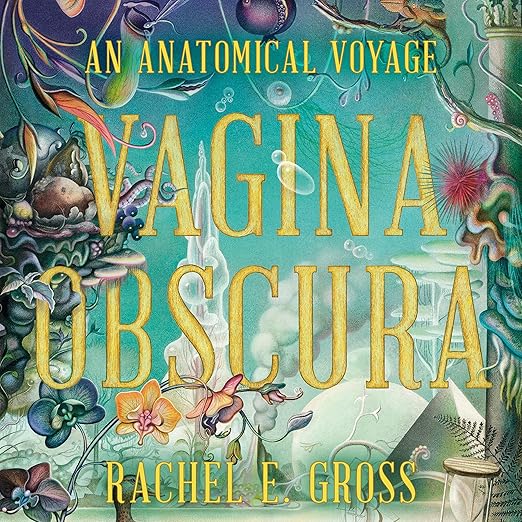
Quick Take
- Narration: Siho Ellsmore brings intelligence and composure to Rachel Gross’s anatomical odyssey – her delivery is confident without being clinical, which is exactly the tone the subject matter requires.
- Themes: The erasure of female anatomy from medical history, feminist science journalism, the politics of naming and shame
- Mood: Outraged, celebratory, and genuinely illuminating – Gross writes with wit that makes the anger productive rather than exhausting
- Verdict: One of the most important popular science audiobooks of recent years, covering territory that has been neglected and distorted for centuries with the rigor and readability it deserves.
I started Vagina Obscura on a Tuesday morning when I had a long train journey ahead and a stack of unread review material behind me. Ten hours later I had not looked at anything else. Rachel Gross’s book operates on the particular frequency of popular science writing that makes you feel simultaneously that you have been lied to for years and that you are finally beginning to understand something important. Both of those feelings are appropriate here, because both of them are accurate.
The book’s opening frame is the kind of detail that lodges in the mind and doesn’t leave: the Latin term for female genitalia, pudendum, means parts for which you should be ashamed. Until 1651, ovaries were called female testicles. The fallopian tubes are named for a man. This is not antiquarian trivia – it is an account of how language shapes medical knowledge and medical knowledge shapes care, and that account runs through every page of Vagina Obscura with the precision of someone who has done the research and understands what it means.
Our Take on Vagina Obscura
Gross is a journalist, not a polemicist, which matters enormously for how the book works. The outrage is present and warranted, but it’s held within a frame of scientific reporting that makes it more useful rather than less. The central argument – that a new generation of mostly women scientists is redrawing the map of female anatomy with modern tools and fresh perspectives, finding a biology of change and resilience within organs that were previously understood almost entirely through a reproductive lens – is documented rather than asserted. The uterus that regrows itself. The ovaries that may produce fresh eggs beyond what was previously understood. The clitoris understood as the shimmering pyramid of nerves that Gross describes, extending far beyond the external structure that most anatomical illustrations show.
Reviewer Pakinam Amer described finishing this book and feeling she had taken one giant leap toward understanding how society and the medical community have shaped women’s bodies over years. Reviewer Kevin Shepherd, writing with wry precision about medical textbooks that label the vulva as the part you should be ashamed of and the labia as the shame lips, captures the specific quality of Gross’s contribution: she explains not just the facts but the mechanisms by which facts were suppressed and distorted, which is a different and harder task.
Why Listen to Vagina Obscura
Siho Ellsmore’s narration is exactly right for this material. She reads with composure and intelligence – never sensationalizing the content, never backing away from it either. The anatomical terminology is handled with the same matter-of-fact confidence that Gross uses in the writing, which is important: the shame that the book’s title references is itself a mechanism that has kept this knowledge obscured, and a narrator who treated the subject with delicacy or hesitation would reinforce the very dynamic the book is trying to dismantle.
At nearly eleven hours, this is a substantial commitment, but the material justifies it. Gross moves through the anatomy – uterus, ovaries, vagina, clitoris – with chapters that function somewhat independently while building toward a larger argument about what the new science means for how we understand female bodies and care for them. Reviewer janie e, who calls herself a sixty-year-old educated white cis female, describes being shocked by the absolute abject failure of medical professionals driven by bias about what a female is supposed to be. That reaction, from someone well-positioned to have known better, tells you how effectively Gross has done her job.
What to Watch For in Vagina Obscura
The book covers medical history that includes practices that were genuinely harmful and that involved enslaved women and women with no power to consent. Reviewer Doug notes the history of how gynecology started, including what was done to enslaved women to advance the field. Gross does not sanitize this history, which is the correct approach and also the reason that some sections of the book are genuinely difficult to hear. This is not gratuitous – it is part of the honest account of how the knowledge was produced and at whose expense.
Gross’s frame is scientific journalism, which means the book is about research and researchers as much as it is about anatomy. Some of the most compelling passages are portraits of the women scientists currently doing the work – their frustrations with institutional resistance, their methodological innovations, the specific questions they are asking that the field has never asked before. For listeners primarily interested in the historical and political argument rather than the scientific process, these passages will still be engaging, but knowing they’re a significant part of the book helps you calibrate expectations.
Who Should Listen to Vagina Obscura
Reviewer janie e implores every adult woman and man to read this book, and I understand why – the ignorance it addresses is not demographic. The medical failures Gross documents affected and continue to affect anyone with female anatomy, and understanding how those failures happened is useful for anyone who has a doctor, is a doctor, or cares about someone who interacts with medical care. Endometriosis, which reviewer Regina specifically cites as a condition that wasn’t considered important enough for decades, is simply the most prominent example of what organized neglect looks like in practice. This book is essential for anyone who wants to understand what was missing and what’s being built to replace it.
Frequently Asked Questions
Is Vagina Obscura primarily a history book, a science book, or a feminist argument?
It’s genuinely all three, integrated rather than alternating. The historical erasure explains why the science was neglected. The current science reveals what the neglect cost. The feminist argument is embedded in the scientific and historical reporting rather than sitting on top of it. Gross is first a journalist, and the book reads as rigorous reporting with a clear point of view rather than advocacy dressed as science.
Does Vagina Obscura require a science background to follow?
No. Gross writes for general readers and the scientific concepts are explained clearly and accessibly. The anatomical details are handled with the same directness and clarity as the historical and political material. Reviewers across educational backgrounds describe finding the book entirely followable and frequently surprising.
How does Siho Ellsmore’s narration handle the anatomical terminology and the more difficult historical content?
Ellsmore brings composure and confidence to both registers. The anatomical terminology is read matter-of-factly, which is the right approach given that the book’s argument is partly about the shame that has been attached to this language. The more difficult historical content – including what was done to enslaved women in the development of gynecology – is handled with gravity without being dramatized.
Is Vagina Obscura specific to women’s experience, or does it have relevance for readers of all genders?
Gross and multiple reviewers explicitly argue that this book matters for all adults, not just women. The medical failures documented affect anyone with female anatomy and anyone who cares about those people – and the understanding of how bias shapes medical knowledge is relevant to medical care far beyond gynecology. Reviewer Kevin Shepherd, a man, reviews it in terms of what every adult should understand.