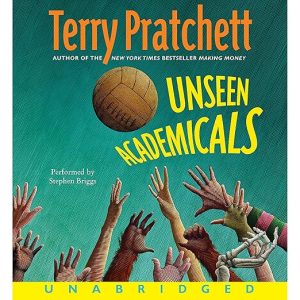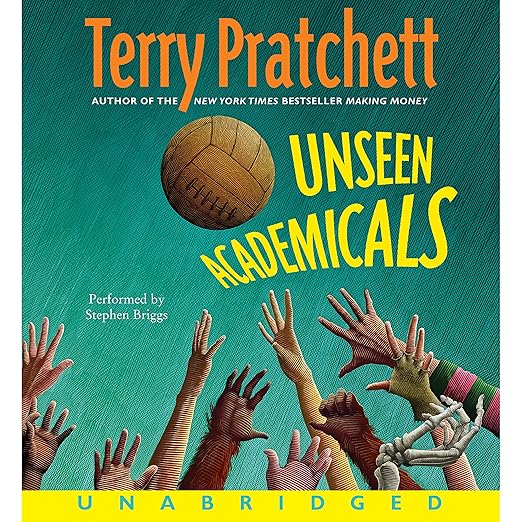
I came to Unseen Academicals having already spent a few months working through the Discworld back catalogue in rough order, which meant I arrived at Book 37 with both the context to appreciate how far Pratchett had traveled since the early parodies and the slight melancholy of knowing this would eventually end. The 2009 publication date puts it in the novelist's later, more reflective period, and it shows. The jokes are still here. The satire still bites. But there is something operating underneath the wit in this book that earlier Discworld novels did not carry.
The setup is elegant in that way Pratchett always managed: make the absurd premise feel inevitable. The wizards of Unseen University must field a football team or lose the funding for their nine daily meals. So begins Ankh-Morpork's reckoning with the beautiful game.
A Closer Look at Unseen Academicals
What the synopsis does not tell you is that the wizards are not really the center of this novel. The more interesting story belongs to Trev, Glenda, Nutt, and Juliet, four working-class characters whose lives run through the university kitchens and whose relationship with football is entirely different from the faculty's institutional curiosity. Nutt in particular is one of the more fascinating characters Pratchett created in his later career, an orc of unusual learning whose past and nature are revealed gradually across the novel's middle section. His arc gives the book its genuine emotional weight.
One reviewer described Discworld as evolving from light parody to something more serious as the series matured, noting that fantastic monsters became respectable members of the community and new kinds of horrors emerged: war, greed, prejudice. Unseen Academicals fits squarely in that tradition. The satire of football culture is sharp, but Pratchett is also writing about what sport does for people who have nothing else: the tribal belonging, the shared language, the way a game can contain an entire society's class anxieties in miniature.
What Makes Unseen Academicals Worth Hearing
Stephen Briggs is the Discworld narrator, and his thirty-plus-year familiarity with this world is audible on every page. He navigates a cast that spans Archchancellor Ridcully's cheerful bluster, Lord Vetinari's silky command, and the more naturalistic working-class voices of the kitchen staff without any of the characterizations feeling approximate. The twelve-and-a-half-hour runtime passes easily; Pratchett's prose has always had a rhythm that suits audio, and Briggs understands it at a structural level.
For those who have been reading the Wizards arc specifically, this is the seventh entry in that thread and it builds on those relationships in ways that reward continuity. That said, Discworld novels can be entered at almost any point, and while some jokes will be richer in context, the novel works as a standalone piece of satirical fiction about sport, identity, and what we mean when we say something is never just about football.
Things to Know Before Starting Unseen Academicals
This is not the sharpest Discworld novel. Some reviewers place it in the good-but-not-great tier of the series, noting that the earlier Wizards books set a high bar. The football plot can feel like it meanders in its early sections before the working-class character arcs pull the novel together. Those expecting the relentless comic invention of the Guards or Death subseries may find the pacing more patient than they want.
Pratchett was also writing with awareness of his own diagnosis at this point, and some readers detect a slightly more elegiac quality in his late work. Whether that registers as a flaw or a depth depends entirely on what you are looking for.
Who Terry Pratchett Is Writing For
Essential for existing Discworld readers working through the Wizards arc. Recommended for literary fiction listeners with an appetite for satirical comedy that takes its themes seriously. Football fans with a taste for literary humor will find the sport depicted with more affection and cultural insight than the premise suggests. Those who have not read any Pratchett and want a starting point should probably begin elsewhere, with Night Watch or Guards! Guards! offering stronger entry points into what makes this world worth inhabiting.