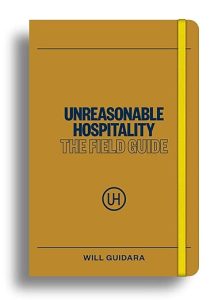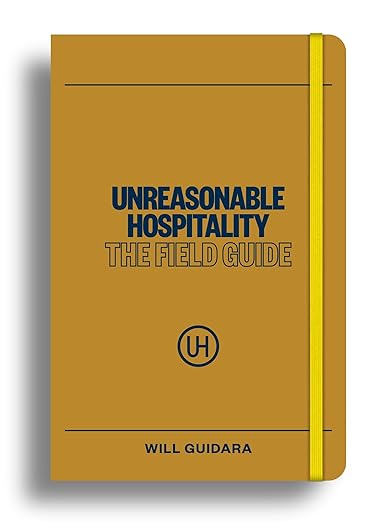
Will Guidara narrates the Unreasonable Hospitality audiobook himself, and the self-narration is the right call for material rooted this firmly in personal experience. Guidara built his reputation as co-owner of Eleven Madison Park, the New York restaurant that spent years on the list of the world's best, and the philosophy he distilled from that work centers on a deceptively simple premise: that the deliberate decision to make someone feel genuinely cared for is available to every business, not just restaurants with three Michelin stars. The synopsis for this recording describes what appears to be the Field Guide companion to the original bestseller - a practical workbook format with exercises, team-building frameworks, and Guidara's five components of hospitality culture: excellence, communication, collaboration, feedback, and repair.
That distinction matters for listeners. If you have already read or heard the original Unreasonable Hospitality, this recording offers the operational layer: the how rather than the why. If this is your entry point, the Field Guide still functions as a coherent argument for Guidara's ideas, with enough personal narrative woven in to make the framework feel earned rather than imposed. The 4.9 rating across more than 4,600 listeners is unusually high for business content, and it reflects the combination of Guidara's specific storytelling and the direct applicability of his ideas to anyone who has ever thought about how to treat people better.
The craft of what Guidara describes is not abstract. He is specific about what unreasonable hospitality looks like in execution: a team member overhearing a guest mention New York hot dogs and arranging for a street cart snack to appear at tableside; the systematic way Eleven Madison Park documented guest preferences across visits; the internal feedback culture that allowed the team to repair failures rather than paper over them. These are not inspiration-poster gestures. They are operational choices embedded in how a team is trained, what information it tracks, and what authority frontline staff are given to act on instinct.
Guidara reads this material with the ease of someone who has given these talks before. There is a rhythm to his pacing that suggests a practiced speaker rather than a reluctant author in a recording booth. The warmth is genuine without being saccharine, and he is honest about failures and missteps in ways that make the success stories more credible. His narration of the bespoke gesture sections - the how to create moments so specific to a guest that they cannot be replicated or commodified - carries the particular authority of someone who designed and executed exactly those moments at scale.
You Remember the Hot Dog Story First
Guidara's central argument translates well to audio because it is story-driven at its core. The Field Guide format introduces exercises and frameworks, but they are anchored to anecdotes that make abstract principles concrete. Listening to Guidara describe the culture at Eleven Madison Park - the morning meetings, the way guests were discussed before service, the repair conversations after things went wrong - is more instructive than any bulleted framework could be on its own.
The eight-and-a-half-hour runtime is appropriate for the material. This is not a short-form summary of obvious ideas. Guidara takes time with individual stories and lets the principles emerge from narrative rather than announcing them and then illustrating them. That structural choice makes the audiobook more useful for retention: you remember the hot dog story before you remember the principle it demonstrates, and that sequence is pedagogically sound. The exercises and frameworks that constitute the Field Guide structure appear throughout without interrupting the narrative flow that makes Guidara's voice compelling over a full listening session.
Workbook Prompts Translate Imperfectly to Audio
The Field Guide format means some sections are structured as exercises: prompts to write, reflect, or discuss with your team. These translate imperfectly to audio. Listeners who want to engage with the workbook dimension will need the physical or digital edition alongside this recording. As a pure listening experience, the narrative and framework sections land clearly; the interactive prompts are worth noting but do not interrupt the flow significantly.
The language of hospitality here is broad enough to apply outside restaurants and hotels. Guidara makes explicit claims about applicability to any service context, and the examples he uses from readers and listeners he has met extend the frame beyond the food and beverage industry. Whether you manage a retail team, run a healthcare practice, or lead a software support function, the underlying argument - that the human desire to feel taken care of is consistent across contexts - holds up under scrutiny. The five components framework (excellence, communication, collaboration, feedback, repair) is specific enough to function as an operational guide rather than a motivational gesture.
Guidara's Voice Makes Eight-and-a-Half Hours Efficient
Leaders in any service-oriented field who want a framework grounded in specific practice rather than motivational abstraction will find this audiobook productive. Listeners who have already read the original book and want the operational companion in audio form will find Guidara's self-narration adds weight to exercises that might feel impersonal in print.
Skip this if you are looking for a quick-summary business listen - Guidara is methodical and the Field Guide format requires attention rather than background listening. Also note that the companion guide nature of this recording means some of its richest content assumes familiarity with the original book's foundational ideas. Those entirely new to Guidara's work may prefer to start with the original Unreasonable Hospitality before turning to this companion.
The broader applicability of Guidara's framework is one of this audiobook's most underrated qualities. A manager in a dental office, a team leader in a warehouse, a director of customer experience at a software company - the hospitality philosophy Guidara articulates translates to any role where the primary output is how someone feels at the end of an interaction. That scalability, delivered in Guidara's own voice with the confidence of demonstrated results, makes the eight-and-a-half hours an efficient investment for almost anyone who works with other people professionally.
Key Details
- Read by: Will Guidara reads his own material with the measured cadence of a practiced speaker - warm, purposeful, and confident without being performative. The self-narration adds credibility to stories about his own team and restaurant.
- At its heart: Service culture, leadership through generosity, turning ordinary moments extraordinary
- Vibe: Energizing and practical, with genuine warmth underneath the business framework
- Short version: The audiobook format suits Guidara's storytelling voice, and at just over eight hours it delivers a coherent case for hospitality as a philosophy of work - though listeners should verify whether they are purchasing the original book or the Field Guide companion.
Before You Listen
How does Will Guidara perform as narrator of his own audiobook?
He narrates with the ease of a practiced speaker rather than a reluctant author, which makes a significant difference. His pacing is warm and confident, and the self-narration adds credibility to stories about his own team at Eleven Madison Park.
Does the interactive workbook format translate well to this audiobook?
Partially. The narrative and framework sections work very well in audio. The written exercises and reflection prompts are present but work better alongside the physical or digital edition. As a listening experience it remains coherent and valuable.