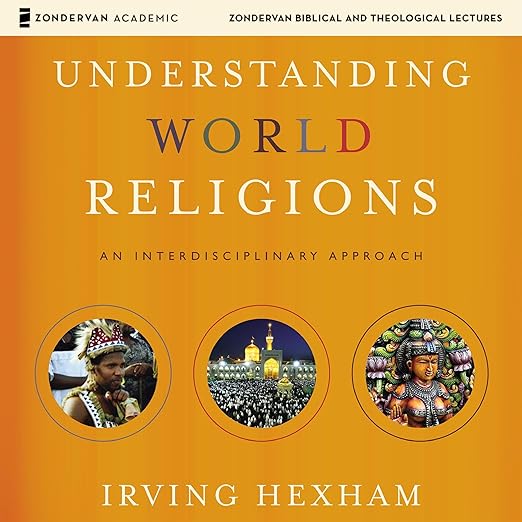
Quick Take
- Narration: Irving Hexham reads his own lectures, which produces a classroom quality that is either engaging or slightly formal depending on your tolerance for academic delivery.
- Themes: Comparative religion as cultural and historical study, responsible critique, the African and Yogic traditions often missing from mainstream surveys
- Mood: Academic but accessible, genuinely informative rather than dryly exhaustive
- Verdict: A well-organized college-level survey of world religions that earns its place as both a formal course companion and a resource for independent learners who want more depth than popular religion titles provide.
I have heard a lot of audiobooks about religion over the years, and most of them fall into one of two failure modes: either they treat comparative religion as an exercise in listing facts about unfamiliar traditions, or they allow the author’s own theological commitments to color the analysis in ways that become obvious fairly quickly. Irving Hexham’s Understanding World Religions: Audio Lectures avoids both problems with what seems like genuine scholarly discipline, and the result is one of the more useful surveys in the category.
This is a Zondervan Biblical and Theological Lectures release, which means it is grounded in a Christian academic publishing context. Hexham is transparent about this, and about his view that a certain degree of objectivity and critique is inherent in the study of religion, a position that frames the project honestly. The lectures are college-level recordings rather than a traditional audiobook narration, which gives them a distinctive quality that longtime audiobook listeners will notice immediately.
Our Take on Understanding World Religions
The book’s organizational framework divides religions into three broad categories: African Religions, the Yogic Traditions (which encompasses both Hinduism and Buddhism), and the Abrahamic traditions. That structure is not unique, but what distinguishes this survey is the serious treatment of African religions, which Hexham explicitly notes have been absent from many major religion texts. Devoting substantial time to traditions that standard comparative religion curricula typically exclude or compress into a brief overview is a meaningful editorial decision, and it gives the lectures a breadth that reflects contemporary scholarship rather than mid-twentieth-century canon assumptions.
The Islam sections receive particular praise from reviewers for their depth. One reviewer who used the book for homeschooling noted that the Islam chapters were by far the strongest, and that those sections recontextualized the presentation of other chapters throughout. The observation rings true: Hexham brings genuine analytical depth to Islamic history, belief, and conviction that goes beyond the surface treatment the subject often receives in survey formats.
Why Listen to This Rather Than Read It
The live lecture format is both an asset and a qualification. Hexham is a clear speaker, and the recordings have the quality of listening to an actual expert in their subject, there is a natural cadence to spoken academic material that differs from prose read aloud. Listeners who enjoyed college lectures, or who learn well from spoken explanation rather than written text, will find the format immediately comfortable. Those expecting the smoothness of a professional audiobook narrator will need to adjust their expectations.
At seven hours and forty-seven minutes, the survey is appropriately sized for the scope of its subject. It covers a lot of ground without becoming superficial, though it is explicitly an introduction rather than a comprehensive treatment of any single tradition. One reviewer noted it works well as a four-to-six week course module, which is a useful calibration of the depth on offer. The Zondervan companion materials, videos, quizzes, flashcards, add significant value for structured learners, though they require access to the publisher’s platform separately from the audio.
What to Watch For in the Comparative Method
Hexham’s approach treats religion as a complex matrix of history, philosophy, culture, beliefs, and practices rather than primarily as a theological question. This framing makes the lectures genuinely useful for listeners of any religious background or none, because the analysis does not depend on insider commitment to any of the traditions surveyed. The globalization context, the observation that twenty-first-century people encounter adherents to a wide variety of traditions and that stereotypes hamper real understanding, provides a contemporary rationale for the study that feels relevant rather than academic for its own sake.
The limits worth noting are those inherent to any survey: breadth is achieved at the cost of depth on any given tradition, and listeners who arrive with significant prior knowledge of Hinduism or Buddhism, for example, will find the Yogic Traditions section too introductory. The lectures are calibrated to the genuinely curious newcomer rather than the specialist.
Who Should Listen to This Recording
Formal students using this as a course supplement, homeschooling families looking for a substantive world religions resource, and independent learners who want a structured academic introduction to the major traditions will all find this useful. Listeners with significant existing knowledge of any particular tradition should approach those sections as review rather than new learning. Anyone looking for a deep dive into a single religion rather than a comparative survey should look elsewhere, this is explicitly introductory in scope, and its value is in the breadth and balance of coverage rather than depth in any one tradition.
Frequently Asked Questions
Does the Zondervan/Christian academic publishing context affect how non-Christian religions are presented?
Hexham is transparent about his approach: he treats all traditions as worthy of serious analysis and frames the study as inherently involving objectivity and critique. Most reviewers do not report a sense that the Christian context skews the treatment of other religions. The Islam sections in particular are praised for their depth and fairness. Listeners with strong commitments to the traditions surveyed should be aware this is an academic rather than devotional treatment.
What does the live lecture format sound like compared to a typical audiobook narration?
Hexham reads his own lectures in an academic register, clear and well-organized but without the production polish of a professional narrator. The cadence is more like listening to a recorded class session than a commercially produced audiobook. This works well for listeners comfortable with academic delivery and may feel slightly formal for those expecting audiobook smoothness.
Does the survey cover African traditional religions as substantially as the Abrahamic traditions?
Hexham explicitly flags that African religions are frequently absent from major religion texts and devotes meaningful coverage to them. While the Abrahamic traditions receive the most page time given their global reach, the African religions section is a genuine feature of this survey rather than a token inclusion.
Are the Zondervan companion materials, quizzes, videos, flashcards, necessary to get full value from the audio lectures?
The audio lectures stand independently as a complete survey. The companion materials add value for formal students or structured self-learners who want reinforcement and assessment. They are accessed through Zondervan’s platform separately from the audiobook purchase and are entirely optional for listeners who are approaching the material as general interest rather than formal study.