Key Details
- Performance: Kirby Heyborne brings his characteristic warmth and comic ease to Drew Hayes's voice - a near-perfect match for material that blends self-deprecating craft advice with outright absurdist humor, never losing control of either register.
- What it covers: The practical economics of independent authorship, the discipline of writing through uncertainty, finding humor in the gaps between advice and reality
- Feel: Generous and genuinely funny, with enough craft specificity to make the advice sections earn their keep alongside the comedy
- Our call: Drew Hayes has built something unusual here - a writing guide that functions as entertainment first and practical reference second, without betraying either purpose.
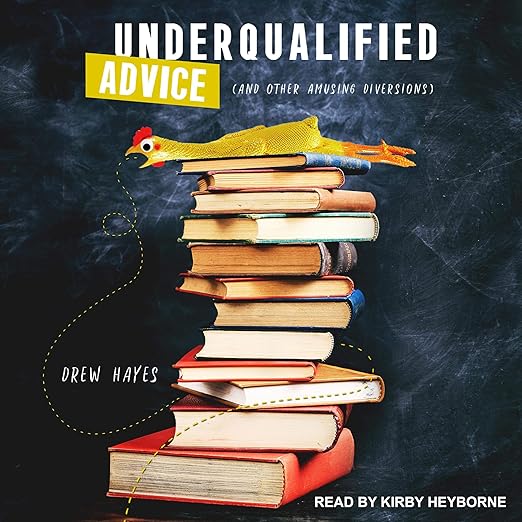
Drew Hayes opens this audiobook by naming its central tension directly: the title, he notes, is not false modesty. Underqualified Advice, read by Kirby Heyborne across nearly twelve hours, is explicitly framed as lessons from someone who has spent six years making a living as a writer - twenty books published, hundreds of thousands of words produced, and a career built through independent publishing rather than through traditional gatekeeping. That framing is not a disclaimer so much as a positioning statement, and it shapes everything that follows in ways that make this audiobook more interesting than the standard writing-craft title. The modesty is functional: it tells the listener exactly what kind of authority is speaking and where that authority stops.
Half Craft Advice, Half Unapologetic Flash Fiction
The book splits its runtime roughly in half: one portion devoted to craft and industry navigation, the other to what Hayes calls pure fun - essays on extremely specific topics, flash fiction, and material that resists easy categorization. That structure might sound unfocused, but in practice it creates something with a distinctive texture. The writing-advice sections carry more authority precisely because they sit alongside content that proves Hayes takes entertainment as seriously as utility. He has skin in the game on both counts.
The craft sections cover territory that will be genuinely useful to writers in the early-to-middle stages of a self-publishing career: navigating the economics of independent authorship, managing the psychological instability of variable income, understanding how mid-section works and why it fails. Reviewer Ali K. noted that Hayes addresses exactly the problem she had been struggling to articulate - how to maintain focus through the connective tissue of a long project - with the timing of someone paying close attention to the questions his actual readers were asking. That responsiveness to a real readership is visible throughout the advice sections, and it distinguishes them from the more generic writing guides that address imaginary audiences.
Reviewer Matthew Dodd, with appropriate self-awareness about his own hyperbole, called this the definitive bible for aspiring authors before immediately walking the claim back - which is, in its own way, an accurate reflection of how the book operates. It does not pretend to be comprehensive. It is honest about its limits, specific about what it covers, and more useful for that honesty than a more ambitious title that oversells itself would be. Hayes earns reader trust by refusing to overclaim, and that earned trust makes the advice land more effectively when it arrives.
Heyborne Handles Every Tonal Shift Cleanly
Kirby Heyborne is the right choice for this material in a way that goes beyond competence. His narration has a natural warmth and comedic timing that matches Hayes's voice without imposing on it - the flash fiction sections land their absurdist notes cleanly, the self-deprecation in the craft sections reads as genuine rather than performative, and the transitions between serious advice and outright humor do not feel jarring. For a book that asks its listener to follow it through tonal shifts that most nonfiction would avoid, having a narrator who handles those shifts invisibly is a real asset. Heyborne's work on Hayes's fiction series will be familiar to some listeners, and that established register carries over productively into this nonfiction context.
The twelve hours are paced well, and Hayes's instinct for when the listener needs relief from directness keeps the longer sections from becoming lectures. The reviewer who approached this after reading Fred the Vampire Accountant #5 noted that the craft sections held up well even without prior context from Hayes's fiction, which suggests the book can be approached cold. But listeners familiar with his fictional work will catch additional resonances in the craft discussions, which occasionally illuminate decisions visible in those novels in ways that enrich both the advice and the fiction in retrospect.
Fun and Craft Talk to Each Other
The flash fiction and essay sections are not padding - they are doing something specific. Hayes's argument, implicit in the book's structure, is that a writer's relationship with fun is not separate from their relationship with craft. The two halves are in conversation rather than in sequence. Whether you take the book primarily as entertainment or primarily as an industry guide, the twelve hours will feel coherent rather than uneven, because Hayes has built the structure to work either way.
It is also worth noting that Hayes's experience is specifically in independent publishing, and he is clear about that boundary. The sections on industry navigation skew toward self-publishing economics, the direct-reader relationship, and the particular mental discipline of a career without institutional support structures. Writers pursuing traditional publishing routes will find the craft advice applicable but may find the industry sections less directly relevant to their circumstances.
The advice Hayes delivers in the craft sections is the kind that tends to become more useful over time rather than less - the section on mid-novel structure, in particular, is the sort of practical guidance that writers return to not because they forgot it but because the problem it addresses keeps recurring at different scales.
Independent Publishing Writers Benefit the Most
Writers at the beginning or middle of a self-publishing career will get the most direct value from the craft sections, but the book is not exclusively for writers with commercial ambitions. Anyone interested in how a working independent author thinks about their practice - the financial realities, the structural challenges, the mental discipline required - will find the advice sections worth the time. The comedic half of the book is genuinely enjoyable for a general listener who does not need the craft guidance at all. Skip it only if you need comprehensive coverage of traditional publishing, which Hayes largely sets aside as outside his domain of direct experience.
A Few Questions About Underqualified Advice
Does Kirby Heyborne's narration suit Drew Hayes's writing style in this audiobook?
Exceptionally well. Heyborne has a natural warmth and comedy timing that matches Hayes's voice without overplaying either the humor or the more earnest craft advice. The tonal shifts between absurdist flash fiction and sincere writing guidance land cleanly under his delivery, which is not a simple feat across twelve hours.
How does this audiobook handle the combination of comedy and practical writing advice?
By keeping both halves honest. The craft sections do not oversell their scope, and the comedic sections are not filler - Hayes argues implicitly through the book's structure that a writer's relationship with fun and craft are inseparable. The two halves illuminate each other rather than diluting each other.
Is the Underqualified Advice audiobook accessible to listeners who have not read Hayes's fiction?
Yes. Reviewers approaching this cold from Hayes's fiction still found the writing-advice sections substantive and the humor accessible. Listeners familiar with his Fred the Vampire Accountant series or other fiction will catch additional resonances in the craft discussions, but prior familiarity is not required.