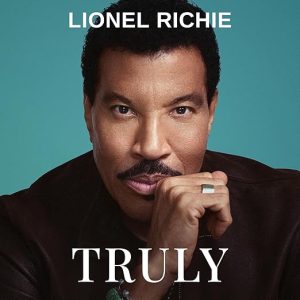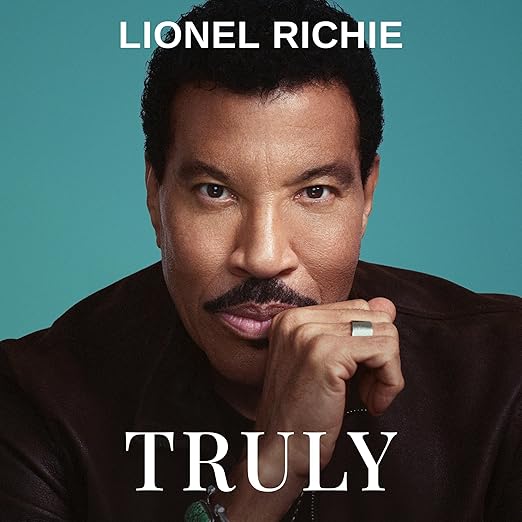
Blair Underwood is named as the reader in the publisher's own description of this audiobook, and the narrator field on the same page credits Lionel Richie. Both cannot be right, and the description is the more specific of the two, since it goes on to say that Richie supplies an introduction and Underwood reads the rest. Fourteen hours and one minute of memoir hang on that distinction, because a listener choosing a musician's life story is often choosing to spend two days inside the musician's own voice.
A Non-Singing Sax Player Who Wrote Anthems
The life on offer is unusually well shaped for a memoir, which is not something you can say about most celebrity books. It begins in Tuskegee, Alabama, on a university campus during the heyday of the Civil Rights movement, moves through the Commodores, a coming-of-age in late-1960s Harlem and the culture shock of playing gigs on the French Riviera, and only then arrives at Motown. What follows is the part everyone knows, a solo career, an Olympics performance the copy says two billion people watched, the writing and recording of We Are the World, and eventually a television judging chair.
The thesis holding it together is stated plainly: this is the story of a painfully shy, tragically late bloomer. A November 4 entry sharpens that better than the jacket does, pointing out that Richie arrived in the Commodores as a non-singing, weak sax player who happened to have a grandmother who taught music. That is the interesting version of the story. A man with no obvious instrument became the composer of songs the description fairly calls the soundtrack of a lot of lives, and the distance between those two facts is the actual subject.
Kirkus Calls It a Love Letter to Tuskegee
The register stays warm without turning weightless. Kirkus, quoted in the description, calls Richie refreshingly open and describes the result as a love letter to music and to his beloved Tuskegee, and the second half of that phrase matters: place does more work here than celebrity does. Turbulence, loss and near-calamity are all promised, and a memoir this affectionate has to earn the darker passages rather than gesture at them. On the evidence of the material selected for the copy, it does the work in scenes rather than in confession.
The Audie-Winning Reading That Sounds Like Richie
Take the audio credentials seriously, whichever voice you end up hearing. The description announces a 2026 Audie for best nonfiction narrator, which is an award for the reading and not for the writing, so a jury somewhere sat with this file rather than with the printed pages. What a buyer is actually purchasing, if the copy is accurate, is an actor's sustained reading with the author's own voice framing it at the top. Compare the introduction Richie delivers against the first chapter that follows it, because the gap between those two voices is either the charm of the production or the thing that will nag at you for fourteen hours.
The words themselves survive the handoff, which is the more surprising outcome. A January 11 entry reports recognizing them immediately as Richie's own, and calls the result light-hearted and specifically encouraging for shy late bloomers with a dream. Ghost-assisted celebrity memoir usually announces itself in the syntax within a chapter. When a reader who knows the subject's speech says the voice on the page is his, the book has cleared the bar that most books on this shelf fail.
An Industry Story, Not Just a Playlist
For anyone interested in twentieth-century popular music as an industry rather than a playlist, the middle of this is the reason to buy. Motown from the inside, an Alabama university campus during the Civil Rights years, Harlem at the end of the sixties, a working band on the Riviera: those are settings that rarely appear together, and they are attached here to somebody who was present rather than reconstructing. The famous events land better because the unfamiliar ones came first.
A Credits Page and a Rating, Both Wrong
The credit problem is not pedantry, it is a purchase decision. Fans buying a memoir by a performer they have listened to for decades often want the performer reading it, and a page that names Richie in the credits while the description hands the book to an actor sets those buyers up for a surprise several minutes in. The listing also mentions a supplemental enhancement file arriving with the audio and says nothing about its contents, which for a music memoir probably means images and probably means something you will never open.
Precision is the problem with the score. A displayed 4.7 requires a tenth-of-a-star resolution, and a resolution that fine is something only a crowd can produce: one voter moves in whole steps, and the counter beneath this badge registers exactly one rating. Meanwhile the single entry below five stars is not about the recording at all. An October 2025 four-star is annoyed by a cover that would not stay put, praises the book itself, and closes by saying that next time the reviewer would probably just listen to it, which is a fair verdict on a physical object and no verdict at all on this file.
For Fans of the Songs, Not the Scandal
Motown obsessives and readers of music-industry history are the core audience, along with anyone who came up on these songs and wants the circumstances behind them. It also works for a broader listener with no particular investment in the catalog, because the shy-kid-makes-good structure is genuinely well told and the Tuskegee material stands on its own as social history. Anyone who enjoys hearing a performer account for luck as honestly as for talent will find plenty here.
Listeners hoping for scandal, score-settling or a reckoning with the darker corners of the industry will find this frustrating, since generosity is the governing mode and the copy says so upfront. Anyone who specifically wants Richie's speaking voice for the duration should check the sample first, because on the publisher's own account they will get it for an introduction and no longer. An abundance of love and gratitude is what was advertised, and it is what the book delivers.
- Voice: Blair Underwood reads on the publisher's account, Richie only introduces, and the copy claims a 2026 Audie for the performance.
- Big ideas: Tuskegee and the Civil Rights years, the Commodores, Motown, late-blooming ambition, charity-single fame.
- Atmosphere: Warm, anecdotal, generous to almost everyone.
- Worth it?: A well-shaped music memoir worth fourteen hours, as long as you know before buying whose voice you are getting.