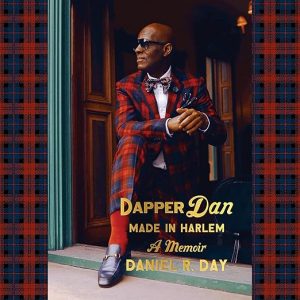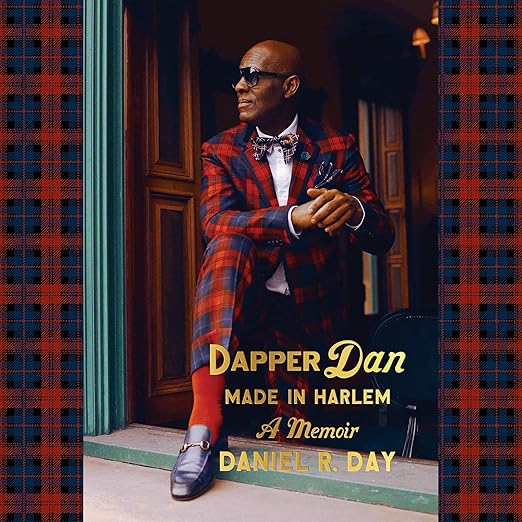
Can a fashion memoir function as serious American social history? Daniel R. Day's Dapper Dan: Made in Harlem answers that question in the affirmative, and this audiobook makes it impossible to argue otherwise. Day has lived more lives in one timeline than most memoirs cover across multiple volumes: a childhood defined by poverty, a teenage career hustling drug dealers at cards, a prison cell that turned into a library, a fashion shop on 125th Street that became a cultural institution, and a decades-long run at the intersection of high culture and street credibility. The audiobook holds all of it.
I started listening on a commute and kept the session going past my stop. That says something about the book's pace and about the way Day structures his story: not as a linear rise narrative but as a series of discoveries, each one feeding into the next, that gradually reveal a coherent philosophy about creativity, race, and reinvention in America. By the time I reached the chapters about staying open twenty-four hours a day for nine years to meet demand, the internal logic of who Dapper Dan is had already been fully established.
Hardwick's Casting Seems Obvious in Retrospect
Omari Hardwick's narration is casting so precise it almost seems obvious in retrospect, though it required someone to see it first. Hardwick has the authority and the cultural fluency to inhabit Day's voice without editorializing through performance. He reads the hunger of the early chapters with a particular quality of contained intensity, then shifts register as the book moves into the fashion years and later into reflection without losing the throughline of Day's personality. The memoir has genuine tonal range, from playful to poignant to thrilling to sobering within a single chapter sometimes, and Hardwick navigates those shifts without the tonal inconsistency that breaks listener trust in a long memoir narration. The eight-and-a-half hours feel earned rather than endured.
Full Complicity and Full Condemnation at Once
The reason to listen is not primarily the fashion history, though that history is genuinely compelling. Day invented what we now call luxury streetwear before the concept had a name, working with luxury brand logos he remixed into designs that the brands themselves had refused to sell to Black clients. The story of how he learned to treat fur himself because no one would sell him finished fur coats is the kind of detail that could carry a chapter on its own. Day gives it the weight it deserves without turning the account into grievance. He understood the market he was serving, the cultural value he was creating, and the system he was operating around, and he writes about all three with clarity and without false modesty.
What elevates the book beyond fashion memoir is the moral seriousness underneath the surface. Day writes honestly about profiting from drug money, about the drug epidemics he witnessed with full complicity and full condemnation operating simultaneously, about the credit card frauds that funded international travel, and about the neighborhood kids he paid to jog with him to keep them away from the same streets. He does not reconcile these contradictions neatly, which is what makes the memoir worth the time it takes. A reviewer described it as filling a generational gap, and that function extends beyond any single community to anyone who wants to understand the cultural landscape Day shaped.
Ava DuVernay and Andre Leon Talley Blurb This
The book covers more than seventy years, and some periods receive more attention than others. The years before the store's founding get rich, granular treatment. The sections dealing with the rise of the luxury fashion relationships and the eventual legitimization of Day's creative influence move more quickly, in ways that readers interested in the fashion industry specifically may find unsatisfying. The book is primarily a memoir of character and survival rather than a fashion industry insider's account, and listeners who come primarily for the business story of Dapper Dan's brand should calibrate their expectations accordingly.
The external praise framing the book, including blurbs from Ava DuVernay, Marcus Samuelsson, and Andre Leon Talley, positions it within a lineage of Black American creative achievement. That framing is accurate, but it slightly over-manages the book's reception in ways the work itself does not need. Day is his own most interesting analyst of what he built and what it cost him.
Logistical Problems, Not Triumphs Over Racism
The book's account of how Day approached the technical side of his craft is also worth singling out as a listening experience. The chapter in which he describes learning to treat fur himself because no one in the industry would finish fur coats for a Black designer is rendered with the matter-of-fact problem-solving energy that defines his approach to every obstacle in the memoir. Day does not frame these moments as triumphs over racism in any declarative sense; he frames them as logistical problems that required creative solutions. That refusal to editorialize the most resonant moments in his story is one of the things that makes the audiobook feel like a genuine primary account rather than a shaped narrative for public consumption.
The book's account of how Day approached the technical side of his craft is also worth singling out as a listening experience. The chapter in which he describes learning to treat fur himself because no one in the industry would finish fur coats for a Black designer is rendered with the matter-of-fact problem-solving energy that defines his approach to every obstacle in the memoir. Day does not frame these moments as triumphs over racism in any declarative sense; he frames them as logistical problems that required creative solutions. That refusal to editorialize the most resonant moments in his story is one of the things that makes the audiobook feel like a genuine primary account rather than a shaped narrative for public consumption.
A First Choice Over Print Itself
This audiobook is for listeners interested in American social history told through an extraordinary individual life, for anyone who wants to understand the origins of luxury streetwear from someone who built it rather than wrote about it, and for readers who value memoir that refuses easy moral resolution. Omari Hardwick's performance makes the audio version a genuine first choice over print. Skip it if you are looking primarily for fashion industry analysis or business case study content rather than personal narrative. The cultural significance is real, the storytelling is consistently engaging, and the combination of those qualities is rarer than either one alone.
- Voice: Omari Hardwick brings controlled intensity and cultural fluency to Day's voice, tracking the book's full tonal range from street hustle to reflection without losing consistency.
- Big ideas: Race and creativity in America, reinvention, the origins of luxury streetwear
- Atmosphere: High-energy and morally serious, with a memoir's appetite for contradiction
- Worth it?: A genuinely important American memoir made more powerful by Hardwick's narration, not just a fashion story but a survival story with style.