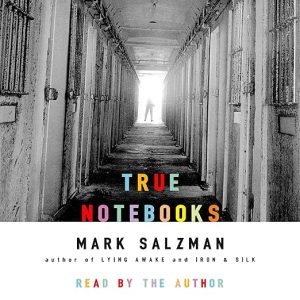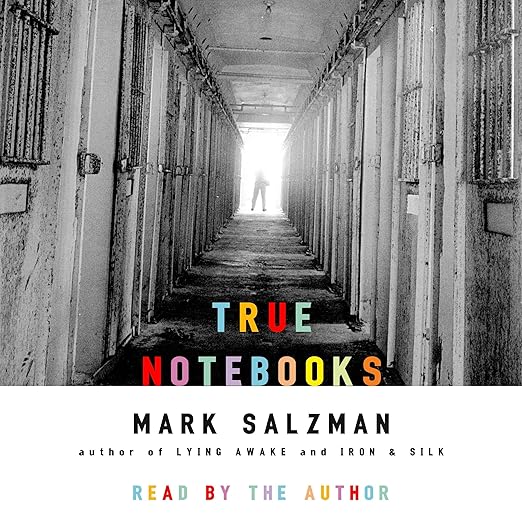
Nothing on this listing prepares you for the premise, which is a strange thing to say about an audiobook from a major publisher, but the page offers one rating, no written responses and a genre label filing it under education. Here is what it actually is. A novelist gets invited to visit a writing class inside Central Juvenile Hall, a lockup for the most violent teenage offenders in Los Angeles. He scrambles for a polite reason to decline, goes anyway expecting the worst, and ends up teaching there himself for years. Five hours and twenty-six minutes, released in 2019, and a listing that tells you almost nothing else.
Reluctant at First, Then Years of Teaching
Mark Salzman's own framing is the best thing about the setup: he did not want to go. The invitation came, he looked for a courteous way out, and the description is honest that he expected the worst. That reluctance keeps the book clear of the genre it could so easily have become, in which an outsider arrives bearing a gift and collects gratitude. What he found instead was a room of teenagers who could write, and the account is built around what they wrote rather than around how he felt about them. The copy states it plainly: we come to know his students as he did, in their own words.
Subjects the students choose are listed without softening. What led them to crime and to gangs. Love for their mothers and anger toward their mostly absent fathers. Guilt for the pain they have caused. What it is like to face life in prison at seventeen. Set against that, the promise of insight and humor reads like a category error until you remember that a writing class is a room where people are trying to be interesting on purpose. The word the description keeps returning to is process, and this is finally a book about what happens to a person who starts putting sentences down and finds out what they contain.
Impossible and Irresistible, in the Same Breath
The students themselves get the most honest description in the copy: at times impossible and at times irresistible. That pairing is the reason to trust the book. A teacher who found his class only irresistible would be writing publicity, and a teacher who found them only impossible would not have gone back. The list of qualities the description credits them with, intelligence, candor and strength, sits beside a list of what they write about, and the two lists do not flatter each other. Salzman's contribution is described in the same register, insight and humor rather than compassion or courage, which suggests a writer who understood that the class did not need him to be moved by it.
Boehmer Voices Teacher and Students Both
Casting is the question worth settling before you buy. Student writing appears throughout the text, which means the recording has to carry two registers: a working writer recounting his own hesitation, and teenagers in a lockup writing about their fathers. The publisher credited one reader, Paul Boehmer, for both. That is defensible and it is consequential. A multi-voice production would have turned the students into characters, while a single voice keeps them inside the teacher's account, which is precisely where the book places them, and puts the whole burden of differentiation on one performance.
Filed under writing and publishing, the book earns the tag, and that is the second reason to take it seriously. This is a working document about teaching people to write when the stakes are not remotely literary, and the copy closes by calling it a meditation on the process, power and meaning of writing. Anyone who has run a workshop will recognize the specific problem it circles: how do you respond honestly to a page written by somebody whose life has been worse than your material? I have rarely seen that question posed so squarely.
Third, the scale is right. A memoir holding this much would normally run twice as long, and the compression works entirely in its favor. A book about juvenile incarceration stretched to fifteen hours would turn into a study, with statistics and a policy chapter bolted on. At this length it stays what the description calls it, an account of first years, shaped like a school term rather than like an investigation, and it ends roughly where a term ends rather than where an argument would.
One Rating, No Way to Skim This
Look at the page itself first. One rating, displayed as a perfect five, with no written response behind it. A five built on one vote is not a consensus; it is one person, and it tells a prospective buyer nothing about fit, pacing or delivery. For a 2019 release from a major audio house that emptiness is the real anomaly on the listing, and it means every judgment available here rests on the text and on the production choices rather than on anyone's account of listening to it.
Then the material. This is not a redemptive-teacher story with a tidy ending, and the description never promises one; it lists upsetting alongside charming and hopeful. Listeners who work in education, social services or the courts should expect specific accounts of violence, family collapse and life sentences handed to seventeen-year-olds, delivered in the students' own sentences rather than paraphrased into safety. Audio also removes the ability to skim, which is how most readers manage material like this on the page. Whatever you would have skipped, you are going to hear.
Hope Arrives on the Students' Own Terms
Teachers, workshop leaders, anyone working with incarcerated or court-involved young people, and readers who would rather be handed primary documents than conclusions: this is built for you. It also suits anyone who wants a memoir in which the author is the least interesting person in the room and knows it. Policy analysis is not on offer, because the book is a classroom rather than an argument about sentencing, and the uplift the genre usually supplies never arrives, since an account ending with teenagers still inside cannot supply much.
The description closes on a list of adjectives that reads as a warning as much as a pitch, surprising and charming and upsetting and enlightening and, last, hopeful. Whoever wrote it put hopeful at the end deliberately, and the honest thing to say is that the hope arrives on the students' terms rather than on the reader's. If the bare page is what stops you, weigh it against the publisher and the length rather than against that number. A single vote is not a verdict in either direction.
Questions Listeners Ask
Does this audiobook work if you want to study the students' writing closely?
Less well than print. The pages you would most want to reread arrive once, at the reader's pace, with no way to mark a passage or hold two of them side by side. For a first encounter that is fine and arguably better. For teaching from the text, buy something you can annotate.
How difficult is the subject matter for a classroom or a reading group?
Difficult, and no content warning appears on the page. The description itself lists crime, gangs, absent fathers, guilt and seventeen-year-olds facing life sentences. Groups have handled harder material, but assign it knowing the worst passages are written by the teenagers themselves rather than summarized by an adult.
Why is this audiobook filed under education rather than memoir?
The genre label says education and learning while the tag says writing and publishing, and only the tag really describes the book. It is a first-person account, not a textbook or a teaching manual. If you found it by browsing instructional titles, adjust your expectations toward narrative before you start.