The Short Version
- Performance: Daniel May delivers a measured, unhurried performance that matches Hutto's contemplative field-naturalist voice without becoming sedating. The quiet authority suits seven years of patient observation.
- What it covers: Human-animal connection, ecological grief, patience as practice
- Feel: Tender and meditative, with flashes of heartbreak
- Our call: For listeners who want their nature writing to carry genuine intellectual weight alongside the wonder, this audiobook earns its nearly ten-hour length.
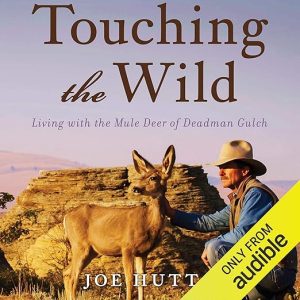
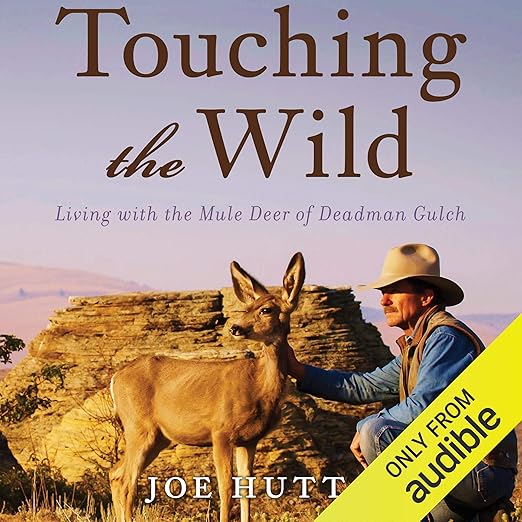
Joe Hutto's credentials are unusual enough to demand attention upfront. An Emmy Award-winning filmmaker and trained naturalist, he had already spent years living among wild turkeys before turning his focus to mule deer in the Wind River mountains of Wyoming. This audiobook edition of Touching the Wild, narrated by Daniel May, distills almost seven years of daily contact with a wild herd into something closer to field philosophy than conventional nature writing, and the gap between those two modes turns out to matter enormously for how the material lands on audio.
The opening question Hutto poses is deceptively simple: why would anyone choose to live among mule deer? His answer, that the real question is how could you not, reveals a sensibility that refuses to treat wildness as spectacle. That refusal is the intellectual backbone of the book, and May communicates it well. His narration keeps the pace deliberate without ever feeling withheld, which is exactly the right call for material that asks listeners to inhabit a kind of sustained, receptive attention most of us rarely practice in our daily lives.
A Closer Look at Touching the Wild
What distinguishes Touching the Wild from the crowded shelf of human-animal encounter books is Hutto's insistence on specificity. He does not describe a generalized herd. He describes individual deer, named and known, with distinct personalities and behavioral patterns that he traces across multiple seasons and years. One small doe's curiosity is what initiates the entire relationship, and that initial contact evolves into something far more complex as Hutto earns access to the herd's internal dynamics, social hierarchies, and the subtle communication systems that govern daily movement. Reviewers note that even dedicated deer hunters came away learning things they had never known about mule deer behavior, which says something about the depth and originality of observation recorded here.
There is real grief in this audiobook, and Hutto does not soften it. Fawns die. Matriarchs pass away. The hunting season takes its toll in ways Hutto describes with unflinching honesty, even though he is himself a hunter. The result is a book without easy sentimentality. It respects the deer too much for that. But it is also without cynicism. The emotional register is rare: clear-eyed tenderness, the kind that can only be earned through years of sustained presence rather than projected from a comfortable distance.
What Works
The audiobook format works particularly well for this material because Hutto's prose is built for listening, with long, carefully constructed sentences that carry the listener forward through seasons and encounters without manufactured urgency. May's reading has a quality that multiple reviewers have called absorbing. One described finishing the audiobook and being unable to get the deer out of her mind for an entire week. That kind of persistent afterimage is hard to manufacture. It comes from writing that has genuinely changed the writer, and that change transmits through May's careful pacing.
There is also a scientific dimension that gives the book real ballast. Hutto documents the ecology of the Wind River range with considerable care, including the role of environmental pressures on mule deer populations, the species' status as a big game animal under threat from habitat loss and development, and the specific rhythms of Wyoming highland seasons that govern the herd's movements. Listeners who come primarily for the emotional arc will find the research enriches rather than interrupts it. And listeners who come for the natural history will find the personal dimension gives the data somewhere to land rather than floating free as accumulated fact.
Before You Commit to Touching the Wild
One reviewer mentions that the first chapter reads as a slow burn, densely descriptive about all the life surrounding Hutto's home before the deer relationship fully establishes itself. On audio, this opening stretch requires patience. May's narration does not rush it, nor should it. But listeners who push through will find the narrative quickens substantially once the herd accepts Hutto's presence, and the depth of observation in the later chapters is worth the measured opening. Think of it as the audiobook requiring the same quality of attention that the subject matter demanded of its author across seven years.
The question of Hutto's relationship to hunting also surfaces here and is worth noting before you begin. He is himself a hunter, and he does not resolve that tension neatly or conveniently. For some listeners that complexity will feel like honesty. For others it may create friction. Either way, it makes for a more interesting audiobook than one that simply celebrates wildness from a place of comfortable remove. The tension between his love for these specific animals and his continued practice of hunting is carried through the audiobook without false resolution.
Who Joe Hutto Is Writing For
The audiobook also works as an unexpected companion to environmental writing about the American West more broadly. Hutto's Wyoming is specific enough in its geography and ecology to serve as a counterweight to the landscape abstraction that plagues a lot of conservation writing.
Listeners who have found conventional wildlife documentaries too shallow and conventional nature writing too anthropomorphic will find exactly what they were looking for in this audiobook. It also rewards anyone familiar with Hutto's earlier turkey work in Illumination in the Flatwoods. The two books function as companion pieces in his larger project of sustained interspecies observation, each grounded in years of daily presence rather than occasional field visits. Hunters curious about mule deer behavior from a genuinely different vantage point will find it unexpectedly valuable. Listeners who need narrative momentum in their nonfiction and find contemplative pacing frustrating should probably look elsewhere. This is a book that asks something of its audience, and the ask is real.
Before You Listen
Do you need to have read Illumination in the Flatwoods before listening to this audiobook?
No prior reading is required. Hutto briefly references his earlier turkey work, but Touching the Wild stands entirely on its own and introduces the mule deer project from the beginning.
Is this audiobook suitable for listeners who are not naturalists or wildlife enthusiasts?
Broadly yes, though it helps to have some tolerance for close observation over dramatic action. Readers of Annie Dillard or Robert Macfarlane who appreciate nature writing that doubles as philosophy will find the sensibility familiar and rewarding.
Does the audiobook address the ethics of hunting given Hutto's own relationship with the deer?
Yes, and without resolution. Hutto is a hunter who has also formed deep bonds with individual wild animals, and that tension runs through the audiobook honestly rather than being explained away. It is one of the more intellectually serious aspects of the book.