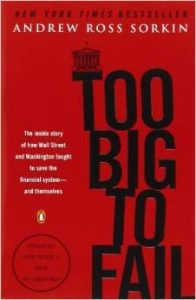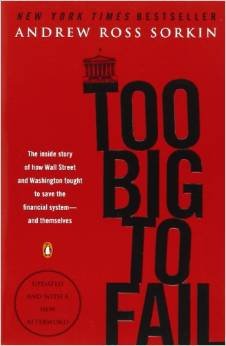
'We've got to get some foam down on the runway,' a sleep-deprived Timothy Geithner tells Hank Paulson early in this audiobook, and that single exhausted metaphor captures the tone of Andrew Ross Sorkin's account of the 2008 financial collapse better than any summary could. Too Big to Fail reconstructs, in genuinely granular detail, how the world's financial system came within days of total failure.
Sorkin, a New York Times journalist with unprecedented access to the people actually in the room, moves between Lehman Brothers' corner office, secret meetings as far away as South Korea, and the corridors of Washington, tracking the specific individuals whose decisions, egos, and blind spots shaped how the crisis unfolded. The synopsis calls this a real-life thriller with a cast who themselves believed they were too big to fail, and the structure genuinely earns that framing.
Sorkin Writes Scenes Instead of Summaries
What separates this from a dry policy retrospective is Sorkin's insistence on writing scenes rather than summaries: specific rooms, specific phone calls, specific moments of genuine panic among people used to being the most powerful figures in any room they entered. Lehman's collapse gets the most sustained attention, but the book's real achievement is tracking how that single failure rippled outward through banks, regulators, and eventually ordinary depositors within days.
Sorkin resists easy villains, which some listeners may find frustrating if they came in wanting a clean morality tale about greed. Instead, the book stays focused on decision-making under genuine uncertainty, people who did not know in real time whether their choices would save the system or accelerate its collapse, which is a harder, more honest story to tell than a simple accountability narrative.
Sorkin's day job founding and running The New York Times' DealBook section gave him a genuinely unusual vantage point for this book, years of direct sourcing relationships with the same bankers and regulators who populate its pages, built before the crisis rather than scrambled together afterward for a single project. That existing trust is a big part of why sources who rarely speak candidly to reporters apparently did so here.
Sorkin's reporting extends into the immediate aftermath as well, tracking how emergency measures assembled in real time, the Troubled Asset Relief Program chief among them, were debated and implemented under conditions of genuine improvisation rather than any pre-existing playbook. That improvisational quality, officials inventing solutions under extreme time pressure with the global economy's stability genuinely in question, is a through-line the book never lets the listener forget.
Hughes Keeps a Sprawling Cast Distinct
At just over twenty-one hours, this is a substantial commitment even by narrative-nonfiction standards, and that length is doing real work: Sorkin needs the room to track dozens of named executives, regulators, and institutions without collapsing them into interchangeable suits. Listeners with a genuine appetite for financial history will find the runtime justified rather than bloated.
William Hughes narrates, and the central technical demand here is significant: keeping a very large real-world cast, Geithner, Paulson, Ben Bernanke, Lehman's Dick Fuld, and dozens of lower-profile bankers and officials, distinct enough that a listener can track who's speaking without the benefit of a printed page's paragraph breaks and attribution tags. I could not find any prior audiobook credits for Hughes, so this assessment rests on the book's own demands rather than a confirmed track record, worth a sample listen to judge for yourself.
The book's reach extended well beyond readers when HBO adapted it into a television film in 2011, with William Hurt playing Hank Paulson, which speaks to how cinematically Sorkin structured the original material in the first place. That same scene-by-scene construction, distinct rooms, distinct confrontations, distinct turning points, is exactly what makes the audiobook format work as well as it does; you can follow the crisis almost like a screenplay unfolding in real time.
The book's chapter breaks tend to fall at genuine cliffhangers, a phone call left unanswered, a meeting about to begin, rather than at convenient narrative pauses, which keeps momentum high across a runtime this long but does mean the audio format rewards longer listening sessions over frequent short interruptions.
Published in 2009, Before Dodd-Frank Arrived
This is dense, name-heavy nonfiction, and listeners without at least a passing familiarity with 2008-era financial institutions may find the early chapters disorienting before the major players become familiar by repetition. It rewards patience rather than casual background listening.
The genre tags here, history, money-finance, and politics-social-sciences, all genuinely apply rather than representing a mismatch, which is worth noting since mistagged nonfiction is common enough on audio platforms generally that an accurate set of category tags deserves a mention when you actually get one. This one is accurately filed.
One limitation worth naming: because the book was published in 2009, close to the events themselves, it captures the crisis and the immediate emergency response in extraordinary detail but doesn't cover the longer regulatory aftermath, Dodd-Frank reforms and later stress-testing regimes among them, that followed over the subsequent decade. Listeners wanting that fuller regulatory history will need a different, more recent title to complete the picture.
Worth noting for listeners specifically interested in a single institution's story: while Lehman Brothers' collapse anchors much of the narrative, the book gives real, sustained attention to several other institutions simultaneously, Merrill Lynch's last-minute sale, AIG's federal bailout, Washington Mutual's failure, so it functions more as a systemic portrait than a single-company case study.
For Readers Who Found The Big Short Compelling
This rewards listeners with a genuine interest in financial history, current events, or institutional decision-making under pressure, readers of access-driven journalism generally, and anyone who wants the 2008 crisis explained through the specific people who lived it rather than through abstract economic theory.
It also rewards listeners who enjoyed other access-driven financial journalism, or anyone who found the 2015 film adaptation of The Big Short compelling and wants that same era's events explained with even greater specificity and a wider cast of real, named participants.
It also rewards listeners specifically curious about crisis management and improvised decision-making under extreme institutional pressure, a lens that extends usefully well beyond finance into any field where leaders must act on incomplete information with enormous consequences riding on the outcome.
Skip it if you want a short, simplified explainer of what caused the 2008 crisis, since twenty-one hours is a serious investment for listeners who just want the basic outline. Skip it too if dense financial terminology and a large real-world cast of names sound more exhausting than engaging, since neither eases up much across the runtime.
Frequently Asked Questions
Does the Too Big to Fail audiobook require a finance background to follow?
No prior finance background is required. Sorkin explains institutional mechanics as they come up, though the large cast of real names rewards patience over the first few hours.
At over 21 hours, is this audiobook worth the time investment for a general nonfiction listener?
For listeners with genuine interest in the subject, yes, since the length lets Sorkin track a genuinely large cast in detail. Listeners wanting a quick overview may prefer a shorter, more general explainer instead.