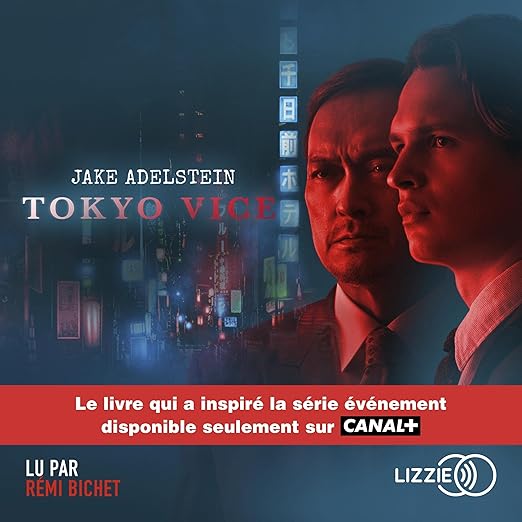
Quick Take
- Narration: Remi Bichet narrates the French edition with a cinematic energy that suits the underworld atmosphere of Adelstein’s Tokyo, propulsive and textured.
- Themes: Identity at cultural boundaries, the ethics of embedded journalism, organized crime’s relationship with institutional power
- Mood: Tense and disorienting in the best sense, the feeling of a place you do not fully understand and cannot stop trying to
- Verdict: A French-language edition of one of the best true-crime memoirs written about Japan, and a rare book that makes you feel the physical reality of Kabukicho.
I have read a reasonable number of books about Japan over the years, enough to be wary of the genre’s tendency toward a particular kind of foreigner’s rapture, the sakura-and-silence version of a country that is far more complicated than that framing allows. Tokyo Vice by Jake Adelstein is not that book. I came to this French edition narrated by Remi Bichet on the strength of a recommendation from a colleague who had seen the HBO adaptation and wanted something more granular, and what I found was a memoir that earns its place in the true-crime canon not through lurid detail but through the specific texture of a young American journalist learning, slowly and painfully, how little he understood about the country he had chosen to make his professional home.
Adelstein arrived in Tokyo in 1993 at twenty-four and passed the entrance exam to join the Yomiuri Shinbun, Japan’s largest daily newspaper, as a reporter on the police and justice beat. He was, by his own account, a gaijin who did not fully master the codes of a society built on relationship and hierarchy in ways that differ profoundly from anything his Missouri upbringing had prepared him for. The book covers the years of his beat reporting, during which he developed the network of police contacts and yakuza relationships that placed him in a genuinely unusual position: trusted by both sides of a boundary that the two sides in question were not supposed to have. That ambiguity is where the memoir lives, and it is what Bichet’s narration captures most effectively across thirteen-plus hours of audio.
The Double Life of a Crime Reporter in Tokyo
The French reviewers who called this book a plunge into Tokyo’s underground are not exaggerating. Adelstein’s access to Kabukicho, the Shinjuku entertainment and vice district that served as his primary beat, produced reporting that most Western journalists in Japan were not positioned to do. His relationships with specific yakuza figures, built over years through the particular protocols of Japanese social exchange that have no direct Western equivalent, eventually led to a specific story about a senior organized crime figure seeking a liver transplant in the United States. That story, and what happened when Adelstein pursued it, is the climax of the book’s second half, and it explains why he eventually needed to leave Japan for his own safety. One reviewer described the book as somewhere between a mob thriller and journalistic inquiry, and both registers are equally present; Bichet navigates between them without losing either.
What This Edition Offers in French
It is worth being direct about an important practical detail: this is the French-language edition of Adelstein’s memoir, narrated by Remi Bichet for a Francophone audience. The English original is available separately. Bichet handles the material with a cinematic register that French reviewers respond to warmly, and his narration of the Kabukicho sequences has the kind of nervous energy that suits a memoir where the narrator is frequently aware that he is operating outside his depth. The translation has been described by reviewers as well-rendered and easy to follow, capturing the original’s investigative momentum without losing Adelstein’s self-deprecating voice. At thirteen hours and forty-one minutes, Bichet’s pacing keeps the longer sections of institutional background from becoming exhausting, and his handling of the Japanese proper nouns and cultural specifics is consistent enough to build familiarity without requiring specialist knowledge.
The Ambivalence That Keeps It Honest
What distinguishes Tokyo Vice from straight crime reporting is Adelstein’s willingness to sit with his own complicity. He is not simply a reporter exposing corruption; he is a man who benefited from the relationships that corruption made possible, who occupied a position that required him to navigate between legal and illegal power in ways that were not always clean. The French reviewers who noted the blurriness of the line between his police contacts and his yakuza contacts are pointing at something real: Adelstein never fully resolves that ambivalence, and the book is more honest for it. The author states that he relates his findings and leaves readers to draw their own conclusions, which is the exact opposite of the moralizing that makes lesser crime memoirs predictable. That restraint is Seierstad-adjacent in its discipline, and it produces the same result: a document you trust precisely because it does not tell you what to think.
The Francophone Listener’s Best Entry into Adelstein’s Tokyo
This French edition is for Francophone listeners who want the best available memoir about Japan’s criminal underworld and its relationship with official institutions, told by someone who earned the access through years of genuinely embedded reporting. Listeners who have seen the television adaptation will find the book considerably darker and more morally complex than the series. Those who want Japan as an aesthetic backdrop rather than a subject of serious examination should look elsewhere. The free audiobook access makes it an easy entry for Francophone crime and journalism readers who have not yet encountered Adelstein’s work, and Bichet’s narration makes the thirteen hours feel less like a document and more like a place you have actually been. For Francophone listeners who have exhausted the major true-crime memoirs in French and are looking for something that operates in the genre while transcending it, Adelstein’s Tokyo Vice occupies a category of its own: it is reporting that reads like fiction, journalism that feels like confession, and a portrait of a city that refuses to resolve itself into anything comfortable. That refusal is the book’s highest quality, and Bichet serves it faithfully across every hour of the listen.
Frequently Asked Questions
Is this the French translation of Jake Adelstein’s original English memoir, and how faithful is it?
Yes, this is the French-language edition published under the title Tokyo Vice, translated for a Francophone market. French reviewers describe the translation as well-rendered and easy to read, capturing the original’s nervous energy and documentary tone. Listeners who prefer the English original will need to seek out the separate English-language audiobook edition.
Does Remi Bichet’s narration add anything to the memoir, or is it straightforwardly read?
Bichet brings a cinematic quality to the narration that suits the material. The Kabukicho sequences, with their late-night texture and persistent ambient threat, benefit from his delivery. He does not over-perform the danger, which is the right choice for a book where the author’s low-key tone is part of what makes the proximity to organized crime feel real rather than sensationalized.
How does Tokyo Vice compare to the HBO television series of the same name?
The book is considerably more morally complex and less conventionally dramatic than the series. Adelstein’s actual experience as a reporter is messier, slower, and more ambiguous than the series’ narrative arc suggests. Viewers who enjoyed the show will find the memoir rewarding but should not expect the same pace or the same kind of resolution.
Is this book appropriate for listeners who have no prior knowledge of yakuza or Japanese organized crime?
Entirely. Adelstein builds the world as he encounters it, explaining the specific structures and protocols of yakuza society from his own position as an outsider learning them in real time. The book functions as an initiation narrative as much as a reporting memoir, which makes it accessible to listeners without specialist knowledge.